Alabama Social Studies SS24.CWI.7
Standard Cluster
Outline the causes and progressions of current conflicts around the world, including interstate, intrastate, and extrastate conflicts. 7a Investigate and explain how individuals and non-governmental groups may cause or perpetuate conflict, citing specific cases. 7b Formulate possible means to prevent and resolve modern conflicts. 7c Draw conclusions about the effects of conflicts on populations.
2024 Alabama Course of Study: Social Studies
Cluster contents
Standards in This Cluster
SS24.CWI.7 is a cluster heading. These are the individual standards under it.
Teacher's field guide
What This Cluster Means
What Students Need to Do
- Students sort conflicts into fighting between countries, fighting within a country, and fighting between a country and an armed group beyond its borders. They trace what started the fighting, how it changed, and how people or groups kept it going. They use evidence to explain effects on people and suggest ways to reduce the violence.
What Mastery Looks Like
- A student builds a short timeline that separates an initial cause from later events that escalated fighting. They identify the conflict type, cite evidence of one person’s or group’s role, and explain an effect on civilians. Their proposed response names who would act and how it might help.
Common Misconceptions
- Students may call every fight across a border a war between countries, even when one side is an armed group. They may treat a recent attack as the only cause or assume peace talks alone will end the fighting. Some confuse people displaced within their country with refugees who crossed a border.
How to Assess It
- After students read a dated news brief on Sudan, use this exit ticket: “Name the conflict type, one cause, one later change, one person or group that prolonged the fighting, and one effect on civilians. Propose one response and cite two details from the brief.”
Lesson moves
Ways to Teach It
Print cards on Sudan’s army and RSF power struggle, April 2023 clashes, and later displacement; students build a cause-and-effect timeline.
Display a dated AP report on Sudan and ask, “Which leader or armed group prolonged fighting, and what detail supports that claim?”
Sort three case cards: Russia versus Ukraine, Sudan’s army versus the RSF, and 2024 US strikes on Houthis in Yemen; justify each label.
Have students mark refugee routes from Sudan into Chad on a map, then write one sentence linking displacement to school access and border aid.
Free download
Printable SS24.CWI.7 Worksheet
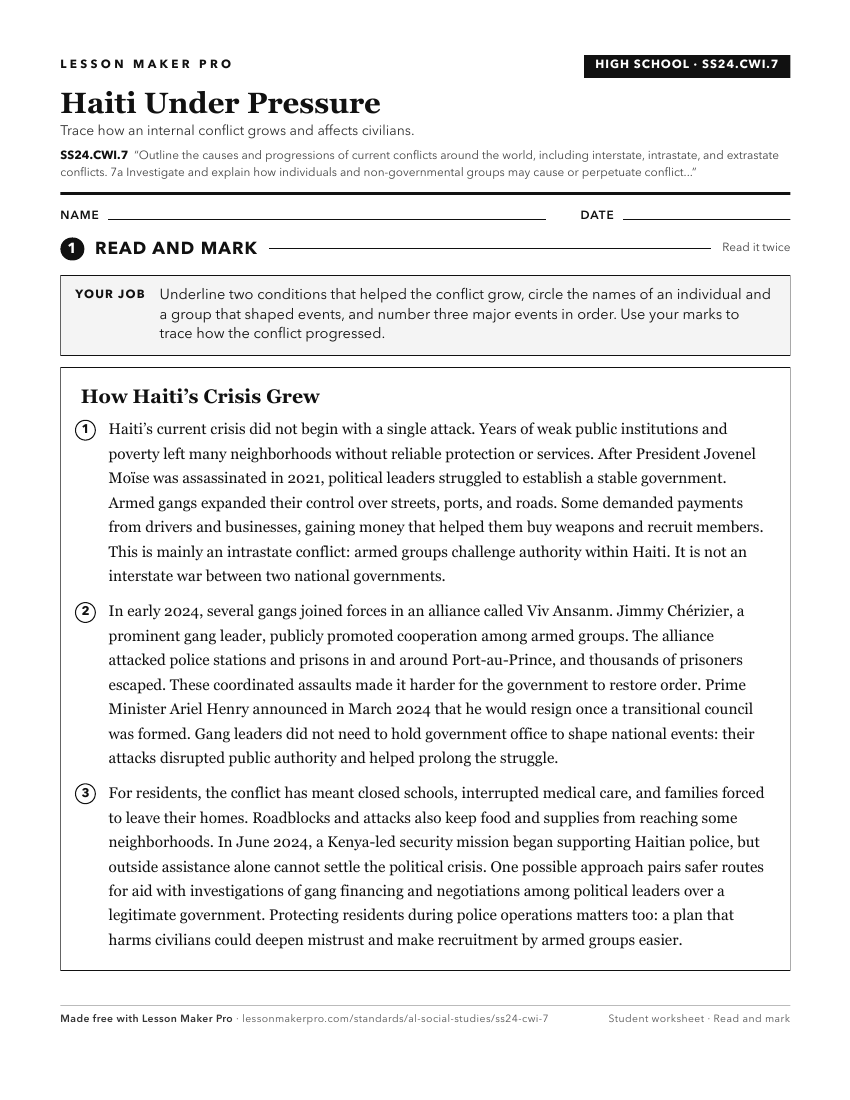
A ready-to-print activity worksheet aligned to SS24.CWI.7, with an answer key for the teacher on its own page. No account needed.
PDF, US Letter, prints cleanly in black and white.
Download the worksheetKeep exploring
Related Standards
- SS24.WH.16
Analyze the causes and effects of both regional and internal conflicts in the late twentieth and early twenty-first centuries.
- SS24.WH.7
Explain causes and consequences of World War I, including imperialism, militarism, nationalism, and the alliance system.
- SS24.WH.16e
Describe the influence of internal conflict, nationalism, and factional enmity in various nations and regions.
Turn this cluster into a lesson
Grade, subject, topic, and the complete cluster are prefilled. Create one free, no account needed.
Also for this cluster:Make a WorksheetMake a QuizMake a Sub Lesson