Alabama Science ES.6.a
The Standard
- ES.6
- Obtain, evaluate, and communicate information to describe the use of renewable and nonrenewable energy sources.
Analyze and interpret data on the origins and availability of renewable and nonrenewable forms of energy to predict consumption trends.
2023 Alabama Course of Study: Science · Earth and Human Activity
Teacher's field guide
What This Standard Means
What Students Need to Do
- Explain how fossil fuels form and how sunlight, wind, and flowing water are renewed. Read resource maps and use graphs to predict changes in energy use.
What Mastery Looks Like
- Given a resource map and a use graph, students can cite data, describe a trend, and make a prediction. They can explain why a renewable source may still be limited by location or weather.
Common Misconceptions
- Students may assume renewable means available everywhere at all times, or that fossil fuels never form again. They may confuse coal reserves with coal use or assume a short trend will continue unchanged.
How to Assess It
- Exit ticket: Coal use is 60, 50, 40 units and solar use is 10, 20, 30 units across three years. Predict the next values, explain where each source comes from, and name one limit to your prediction.
Lesson moves
Ways to Teach It
Place counters on printed U.S. wind-speed and coal-reserve maps, then compare where each resource is most available.
Discuss: Coal use drops from 60 to 40 units while wind rises from 10 to 30; what might happen next?
Give pairs source cards and a three-year use table; award points for matching origins, spotting a trend, and citing numbers in a prediction.
Look up your state's electricity mix and solar resource map; predict whether solar use could rise and cite a value from each.
Free download
Printable ES.6.a Worksheet
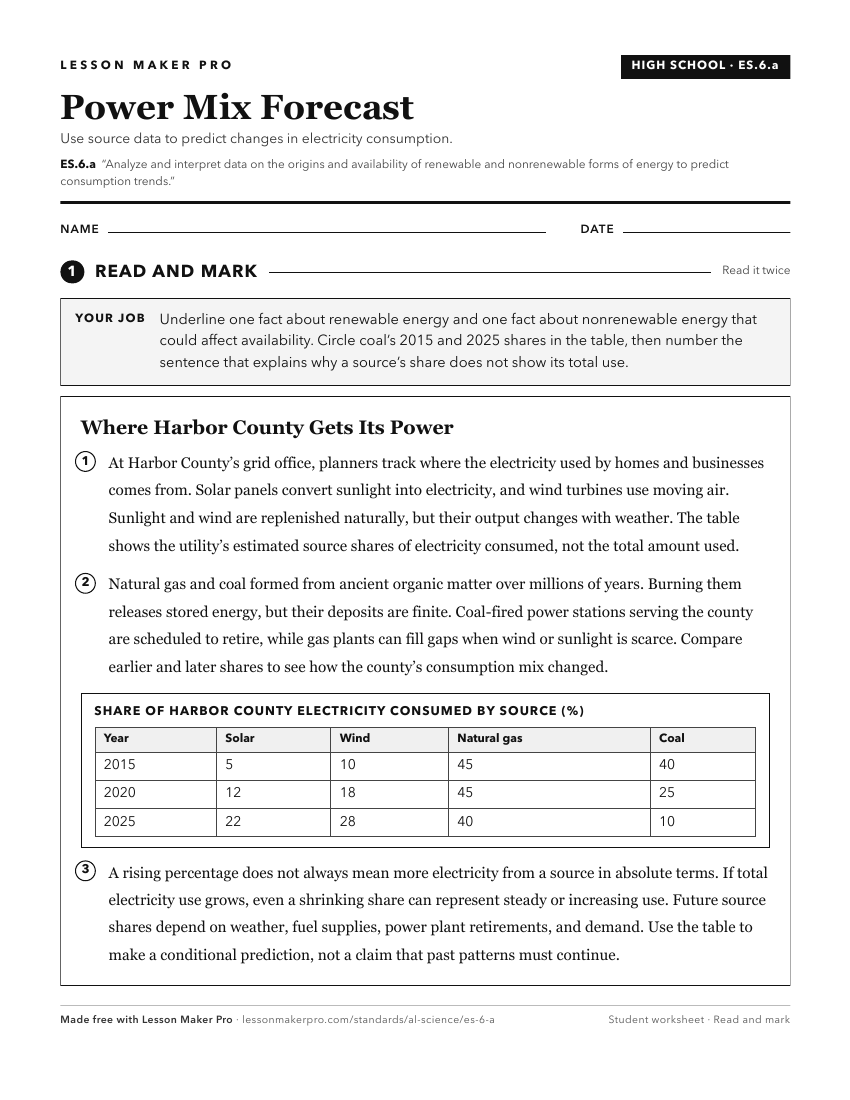
A ready-to-print activity worksheet aligned to ES.6.a, with an answer key for the teacher on its own page. No account needed.
PDF, US Letter, prints cleanly in black and white.
Download the worksheetKeep exploring
Related Standards
- ES.6
Obtain, evaluate, and communicate information to describe the use of renewable and nonrenewable energy sources.
- PS.3.f
Analyze and interpret data concerning the advantages and disadvantages of the energy sources used to produce electricity.
- 4.14
Gather information to describe how the use of energy derived from renewable and nonrenewable resources affects the environment.
- ES.6.b
Construct an argument based on data about the risks and benefits of using renewable and nonrenewable energy sources in Alabama.
Turn this exact standard into a lesson
Grade, subject, topic, and the complete standard are prefilled. Create one free, no account needed.
Also for this standard:Make a WorksheetMake a QuizMake a Sub Lesson