Alabama Science ES.6.b
The Standard
- ES.6
- Obtain, evaluate, and communicate information to describe the use of renewable and nonrenewable energy sources.
Construct an argument based on data about the risks and benefits of using renewable and nonrenewable energy sources in Alabama.
2023 Alabama Course of Study: Science · Earth and Human Activity
Teacher's field guide
What This Standard Means
What Students Need to Do
- Students compare renewable and nonrenewable energy sources used in Alabama. They use data to argue for an energy choice and explain its benefits and risks.
What Mastery Looks Like
- A student uses Alabama electricity data and emissions data to compare two sources. They name a benefit and a drawback of each, then explain why their choice is still the better option.
Common Misconceptions
- Students may call nuclear power renewable because it produces little carbon dioxide while generating electricity. They may assume solar and hydropower have no land or wildlife costs. Some treat the source Alabama uses most as automatically the safest.
How to Assess It
- Project an EIA chart of Alabama electricity generation by source and an EIA chart of carbon emissions by fuel. Ask: "Should Alabama add solar or natural gas power? Cite two chart values and one drawback of each choice."
Lesson moves
Ways to Teach It
Give groups cards with Alabama generation figures and notes on emissions and river impacts; have them sort each source's benefits and risks.
Ask pairs: "Should Alabama add solar farms or natural gas plants?" Have them cite two data points and challenge each other's claims.
Play claim-and-evidence match: students pair energy claims with EIA chart values, then identify a claim the numbers cannot support.
Locate an Alabama hydroelectric dam on a map; use its generation figure to weigh electricity benefits against effects on the river.
Free download
Printable ES.6.b Worksheet
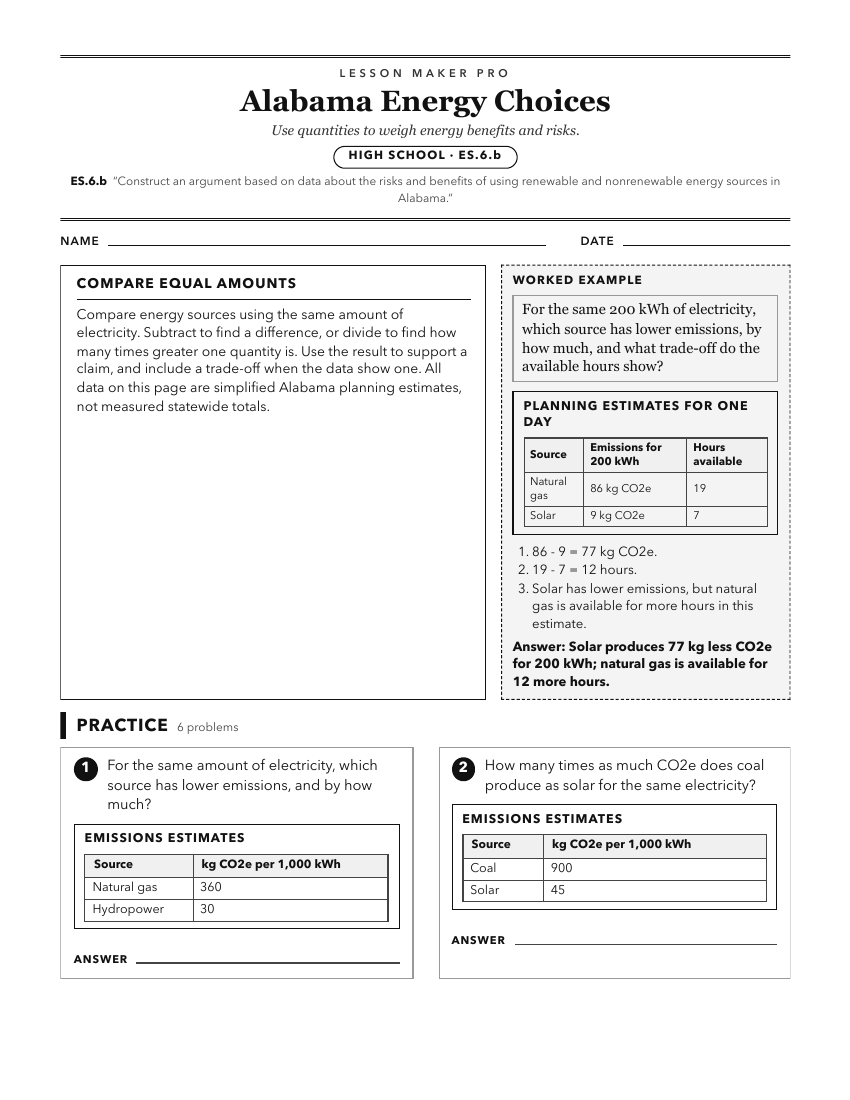
A ready-to-print activity worksheet aligned to ES.6.b, with an answer key for the teacher on its own page. No account needed.
PDF, US Letter, prints cleanly in black and white.
Download the worksheetKeep exploring
Related Standards
- PS.3.f
Analyze and interpret data concerning the advantages and disadvantages of the energy sources used to produce electricity.
- ES.6
Obtain, evaluate, and communicate information to describe the use of renewable and nonrenewable energy sources.
- PS.4.h
Generate and defend a data-based claim regarding the use of radioactive materials as an energy source.
- 4.14
Gather information to describe how the use of energy derived from renewable and nonrenewable resources affects the environment.
Turn this exact standard into a lesson
Grade, subject, topic, and the complete standard are prefilled. Create one free, no account needed.
Also for this standard:Make a WorksheetMake a QuizMake a Sub Lesson