Alabama Science ES.3.b
The Standard
- ES.3
- Construct an explanation of how biotic and abiotic factors affect biodiversity and populations in ecosystems.
Analyze and interpret data collected through geographic research and field investigations to describe Alabama’s biodiversity by region.
2023 Alabama Course of Study: Science · Unity and Diversity
Teacher's field guide
What This Standard Means
What Students Need to Do
- Students put field observations and species records on an Alabama map. They compare the kinds of species found in different regions. They use habitat and survey details to explain the patterns they see.
What Mastery Looks Like
- A student can count distinct species in each region and name species found in one region but not another. They support a comparison with records and check whether survey effort was similar.
Common Misconceptions
- Students may count three sightings of one species as three species. They may also assume that a region with fewer records has less biodiversity, even if fewer people surveyed it.
How to Assess It
- Exit ticket: Coastal records list green treefrog, eastern box turtle, and great blue heron. Northern records list spotted salamander and gray catbird. Survey time differed. Which region has more recorded species, and why is that not enough to decide which is more biodiverse?
Lesson moves
Ways to Teach It
Place one-meter squares of string on the school lawn and under a tree; tally plant species in each for five minutes.
Ask: Coastal surveys found 12 species in 20 visits; northern surveys found 9 in 5 visits. What can you claim, and what remains uncertain?
Give pairs ten species observation cards labeled by Alabama region; have them sort the cards on a map and count distinct species.
Filter iNaturalist bird observations to Mobile and Madison counties for one month; compare species counts and total observations before drawing conclusions.
Free download
Printable ES.3.b Worksheet
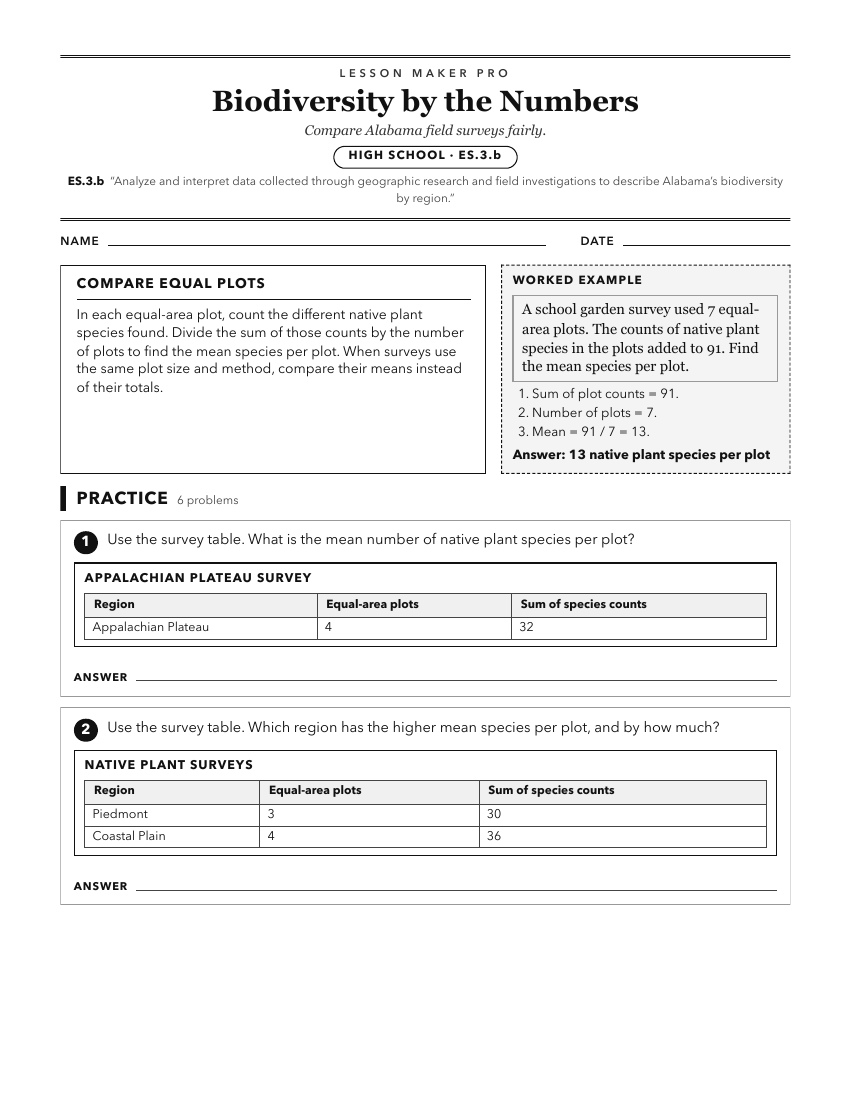
A ready-to-print activity worksheet aligned to ES.3.b, with an answer key for the teacher on its own page. No account needed.
PDF, US Letter, prints cleanly in black and white.
Download the worksheetKeep exploring
Related Standards
- BIO.9
Obtain, evaluate, and communicate data to explain how the biodiversity of Alabama contributes to ecosystem services in the state.
- ESS.4.e
Obtain and communicate information about significant geologic characteristics in Alabama and the southeastern United States.
- ESS.5.d
Obtain, evaluate, and communicate information about important tectonic and geologic events that have occurred in Alabama over geologic time.
- ESS.6.d
Analyze data to interpret seismic activity and assess the risk of volcanic eruptions and earthquakes in Alabama and other areas in the United States.
Turn this exact standard into a lesson
Grade, subject, topic, and the complete standard are prefilled. Create one free, no account needed.
Also for this standard:Make a WorksheetMake a QuizMake a Sub Lesson