Alabama Science BIO.9
The Standard
Obtain, evaluate, and communicate data to explain how the biodiversity of Alabama contributes to ecosystem services in the state. a. Obtain and evaluate data to describe human impact on various Alabama ecosystems.
2023 Alabama Course of Study: Science · Ecosystems: Interactions, Energy, and Dynamics
Teacher's field guide
What This Standard Means
What Students Need to Do
- Students find data on species in Alabama wetlands, forests, and reefs, then check who collected it and how. They use the data to explain how human activity affects biodiversity and services such as flood protection or fish habitat.
What Mastery Looks Like
- A student uses numbers from a named source to link species changes to a service, such as fish habitat around Mobile Bay oyster reefs. They compare sites and name a limit of the data.
Common Misconceptions
- Students may count only rare animals as biodiversity and overlook plants, mussels, and insects. They may treat a change in water quality as proof that one construction project caused it, without checking rainfall or sampling dates.
How to Assess It
- Give students this exit ticket: An undrained Alabama wetland has 18 plant species and 4 inches of floodwater; a drained one has 7 species and 9 inches after the same storm. Name the service, cite both number pairs, and identify one other factor to check.
Lesson moves
Ways to Teach It
Pour equal cups of water over trays of bare soil and grass; compare runoff, then connect plant cover to flood protection in Alabama wetlands.
Give pairs a mock Mobile Bay reef chart showing 12 versus 5 species; ask how reef loss might affect fish habitat.
Make four data cards with plant counts, turbidity, rainfall, and land-cover change; teams choose which support a runoff claim.
Mark Mobile Bay oyster reefs on a printed map, then use a local seafood menu to explain how reef loss could affect fishing jobs.
Free download
Printable BIO.9 Worksheet
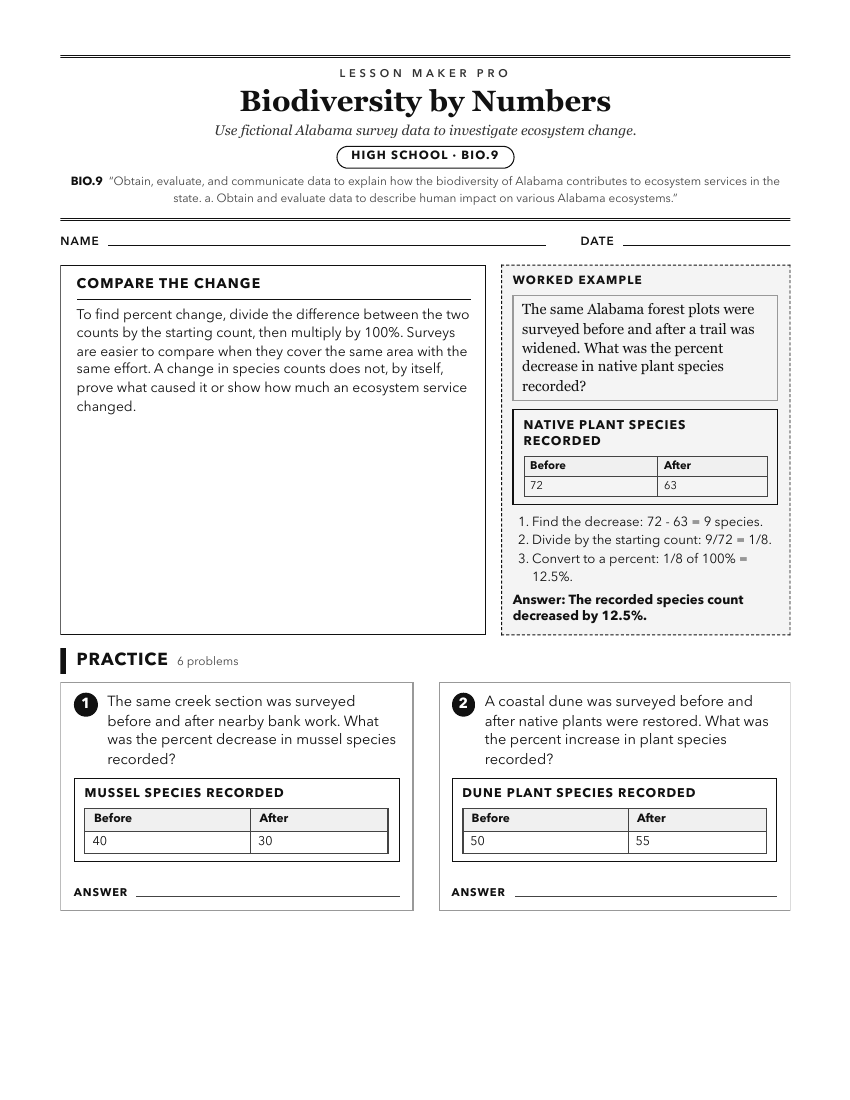
A ready-to-print activity worksheet aligned to BIO.9, with an answer key for the teacher on its own page. No account needed.
PDF, US Letter, prints cleanly in black and white.
Download the worksheetKeep exploring
Related Standards
- ES.3.b
Analyze and interpret data collected through geographic research and field investigations to describe Alabama’s biodiversity by region.
- ESS.5.d
Obtain, evaluate, and communicate information about important tectonic and geologic events that have occurred in Alabama over geologic time.
- ESS.4.e
Obtain and communicate information about significant geologic characteristics in Alabama and the southeastern United States.
- ESS.8.c
Communicate scientific information to explain the personal, local, and statewide implications of severe weather events in Alabama.
Turn this exact standard into a lesson
Grade, subject, topic, and the complete standard are prefilled. Create one free, no account needed.
Also for this standard:Make a WorksheetMake a QuizMake a Sub Lesson