Alabama Science 6.9.a
The Standard
- 6.9
- Use data analysis to monitor and predict weather changes and the impact of weather events, including severe weather.
Obtain, evaluate, and communicate data that describes characteristics of air masses, including temperature, pressure, and humidity.
2023 Alabama Course of Study: Science
Teacher's field guide
What This Standard Means
What Students Need to Do
- Students gather temperature, pressure, and humidity readings from weather reports. They compare the readings, decide which claims the data support, and explain their conclusions with numbers.
What Mastery Looks Like
- A student can describe one air mass as warmer or more humid than another and cite the readings. They can spot when a missing humidity reading makes a claim about moisture unsupported.
Common Misconceptions
- Students may confuse high humidity with high air pressure. They may assume warm air is always humid or that one station reading describes an entire air mass.
How to Assess It
- Exit ticket: Air A is 28°C, 1010 hPa, and 75% humidity. Air B is 12°C, 1022 hPa, and 30% humidity. Which is warmer and more humid, which has higher pressure, and what numbers support your answers?
Lesson moves
Ways to Teach It
Sort printed weather station cards by similar temperature and humidity readings, then compare the pressure readings within each group.
Show two air mass data cards and ask, "Can you call either one humid without a humidity reading? Why?"
Play a matching game: pair cards showing three weather readings with written descriptions, then explain any mismatches.
Compare National Weather Service readings for two cities, then write a two-sentence report using their temperature, pressure, and humidity numbers.
Free download
Printable 6.9.a Worksheet
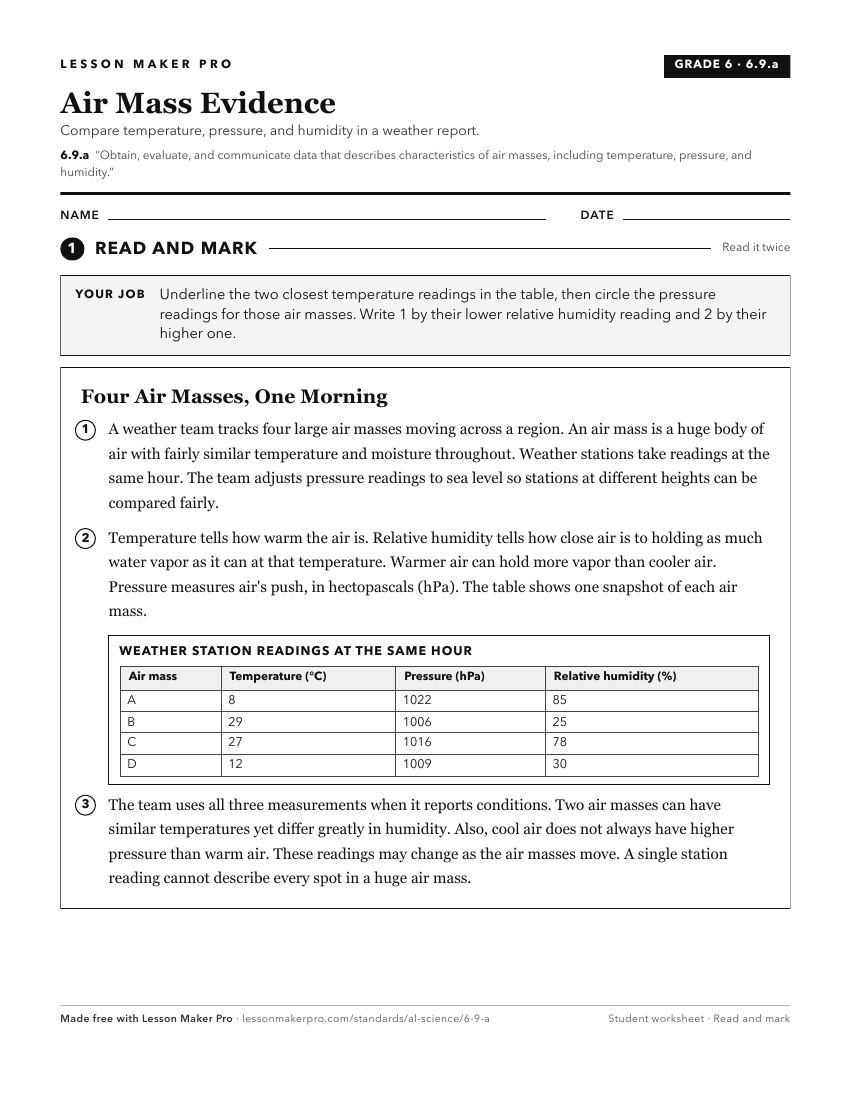
A ready-to-print activity worksheet aligned to 6.9.a, with an answer key for the teacher on its own page. No account needed.
PDF, US Letter, prints cleanly in black and white.
Download the worksheetKeep exploring
Related Standards
- ESS.7.a
Obtain and communicate information to explain how water cycles through the atmosphere, including condensation, evaporation, clouds, types of precipitation, rela...
- ESS.8.b
Analyze and interpret data to develop predictions about the formation of meteorological events.
- ESS.7.e
Analyze and interpret data to create a surface map, including high-pressure and low-pressure systems, isobars, wind barbs, cloud types, precipitation, and front...
- ESS.7
Obtain, evaluate, and communicate information about the role of energy transfer in wind, precipitation, cloud formation, and front formation.
Turn this exact standard into a lesson
Grade, subject, topic, and the complete standard are prefilled. Create one free, no account needed.
Also for this standard:Make a WorksheetMake a QuizMake a Sub Lesson