Virginia SOL LS.1.d.iii
The Standard
- LS.1
- The student will demonstrate an understanding of scientific and engineering practices by
constructing and critiquing conclusions and explanations differentiate between a scientific hypothesis and theory
Virginia Standards of Learning for Science · The student will demonstrate an understanding of scientific and engineering practices by
Teacher's field guide
What This Standard Means
What Students Need to Do
- Students distinguish a specific, testable hypothesis from a broad scientific theory supported by repeated evidence. They judge explanations by their scope, testability, and supporting evidence.
What Mastery Looks Like
- Students correctly classify examples and explain their choices using evidence and testability. They can revise a weak conclusion that misuses either term.
Common Misconceptions
- Students often think a theory is only a guess or that a hypothesis becomes a theory after one successful test. They may also confuse scientific theories with laws or personal opinions.
How to Assess It
- Exit ticket: “A scientist proposes that low light slows bean plant growth. Is this a hypothesis or theory? Explain using two features.”
Lesson moves
Ways to Teach It
Give pairs cards showing claims, evidence, hypotheses, and theories, then have them sort and defend each placement.
Ask students to write why repeated support for a hypothesis does not automatically turn it into a theory.
Play a team classification game using short examples, with points awarded only when students give an accurate reason.
Compare germ theory with a testable hypothesis about whether handwashing reduces bacterial growth on classroom surfaces.
Free download
Printable LS.1.d.iii Worksheet
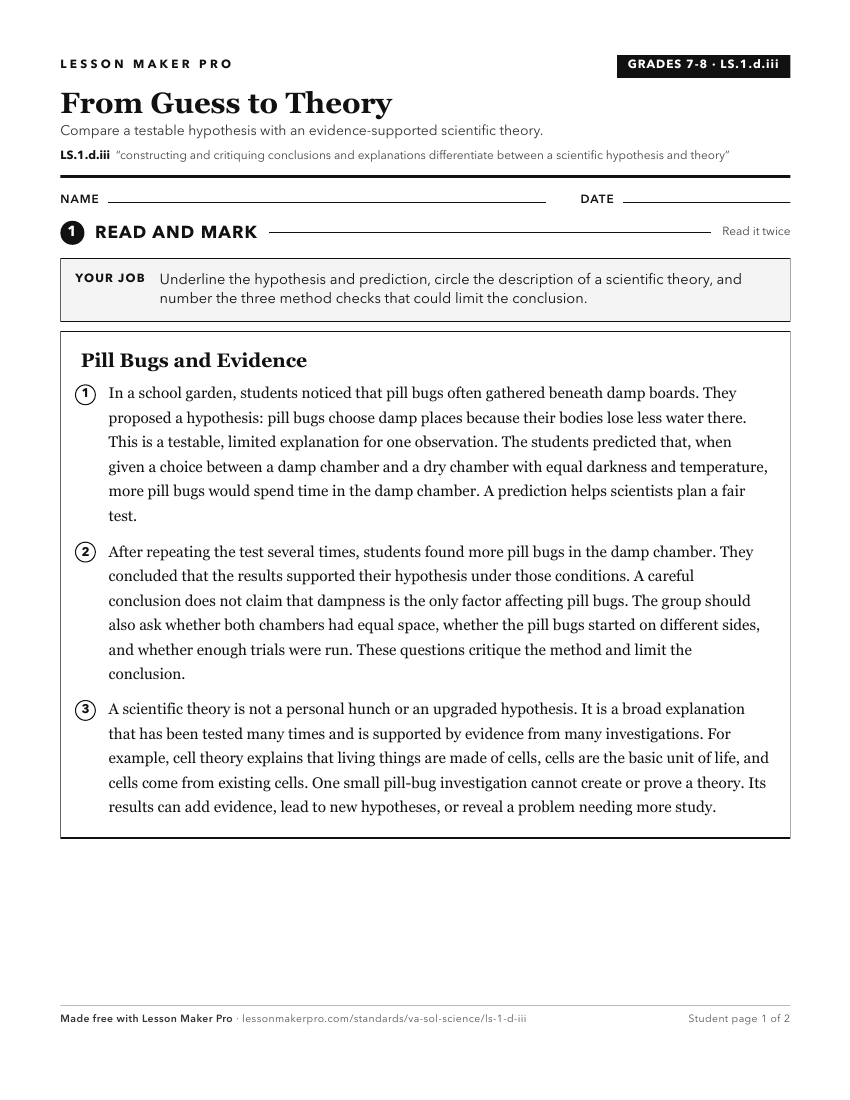
A ready-to-print activity worksheet aligned to LS.1.d.iii, with an answer key for the teacher on its own page. No account needed.
PDF, US Letter, prints cleanly in black and white.
Download the worksheetKeep exploring
Related Standards
Turn this exact standard into a lesson
Grade, subject, topic, and the complete standard are prefilled. Create one free, no account needed.
Also for this standard:Make a WorksheetMake a QuizMake a Sub Lesson