Virginia SOL K.3.c
The Standard
- K.3
- The student will investigate and understand that physical properties of an object can be described. Properties include
textures and feel
Virginia Standards of Learning for Science
Teacher's field guide
What This Standard Means
What Students Need to Do
- Students touch safe objects and describe how each one feels. They use words such as rough, smooth, soft, hard, bumpy, and fuzzy to compare and sort objects.
What Mastery Looks Like
- A student can choose an accurate word to describe an object's surface. The student can sort objects by feel and explain the sorting rule.
Common Misconceptions
- Students may describe color or shape instead of how an object feels. They may use opinion words like nice or yucky, or think every hard object is rough.
How to Assess It
- Place two objects in a mystery bag. Ask each student to feel them, name how each feels, and tell one difference.
Lesson moves
Ways to Teach It
Set out cotton, sandpaper, foil, felt, and craft foam for students to touch, label, and sort by feel.
Ask, “Which classroom object feels most different from your desk, and what words describe both surfaces?”
Play Texture Match by having students pair hidden bag samples with matching samples displayed on a table.
Examine clothing, towels, and playground surfaces, then discuss why different textures suit different uses.
Free download
Printable K.3.c Worksheet
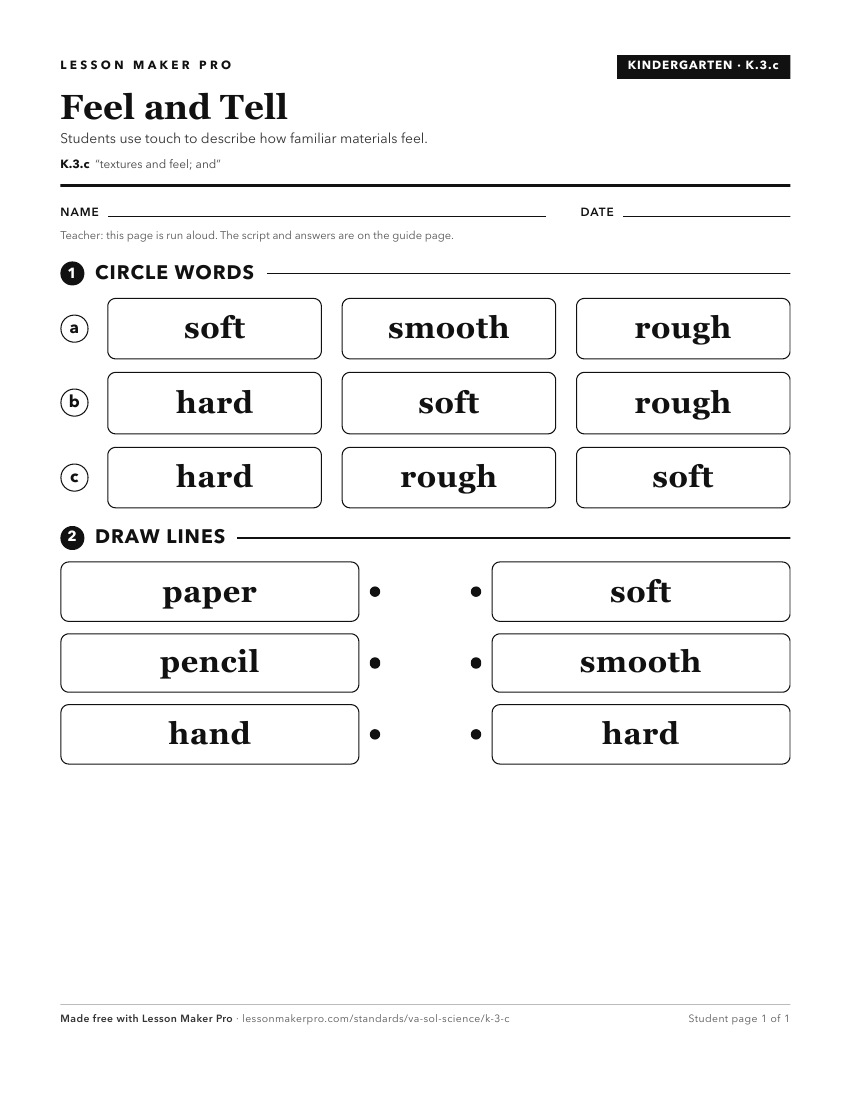
A ready-to-print activity worksheet aligned to K.3.c, with an answer key for the teacher on its own page. No account needed.
PDF, US Letter, prints cleanly in black and white.
Download the worksheetKeep exploring
Related Standards
Turn this exact standard into a lesson
Grade, subject, topic, and the complete standard are prefilled. Create one free, no account needed.
Also for this standard:Make a WorksheetMake a QuizMake a Sub Lesson