Virginia SOL 6.6.d
The Standard
- 6.6
- The student will investigate and understand that water has unique physical properties and has a role in the natural and human-made environment. Key ideas include
water has a role in weathering
Virginia Standards of Learning for Science
Teacher's field guide
What This Standard Means
What Students Need to Do
- Students explain how water breaks rock into smaller pieces through freezing, abrasion, and chemical reactions. They distinguish weathering from the movement of sediment by erosion.
What Mastery Looks Like
- Students can examine a rock example and identify how water caused physical or chemical weathering. They support their claim with evidence such as cracks, rounded edges, or dissolved minerals.
Common Misconceptions
- Students often call all rock movement weathering instead of erosion. They may think water only wears rock down by rubbing and overlook freezing, thawing, and chemical changes.
How to Assess It
- Show a photo of a cracked sidewalk after winter. Ask students to explain how water caused the crack and name the type of weathering.
Lesson moves
Ways to Teach It
Soak chalk pieces in water, freeze half overnight, then compare cracks and mass changes with the unfrozen pieces.
Ask students to explain why rocks in a stream become smoother and rounder over time.
Give teams scenario cards to sort into physical weathering, chemical weathering, or erosion, then require one reason for each choice.
Examine local photos of potholes, caves, or worn stream rocks and identify evidence that water changed the material.
Free download
Printable 6.6.d Worksheet
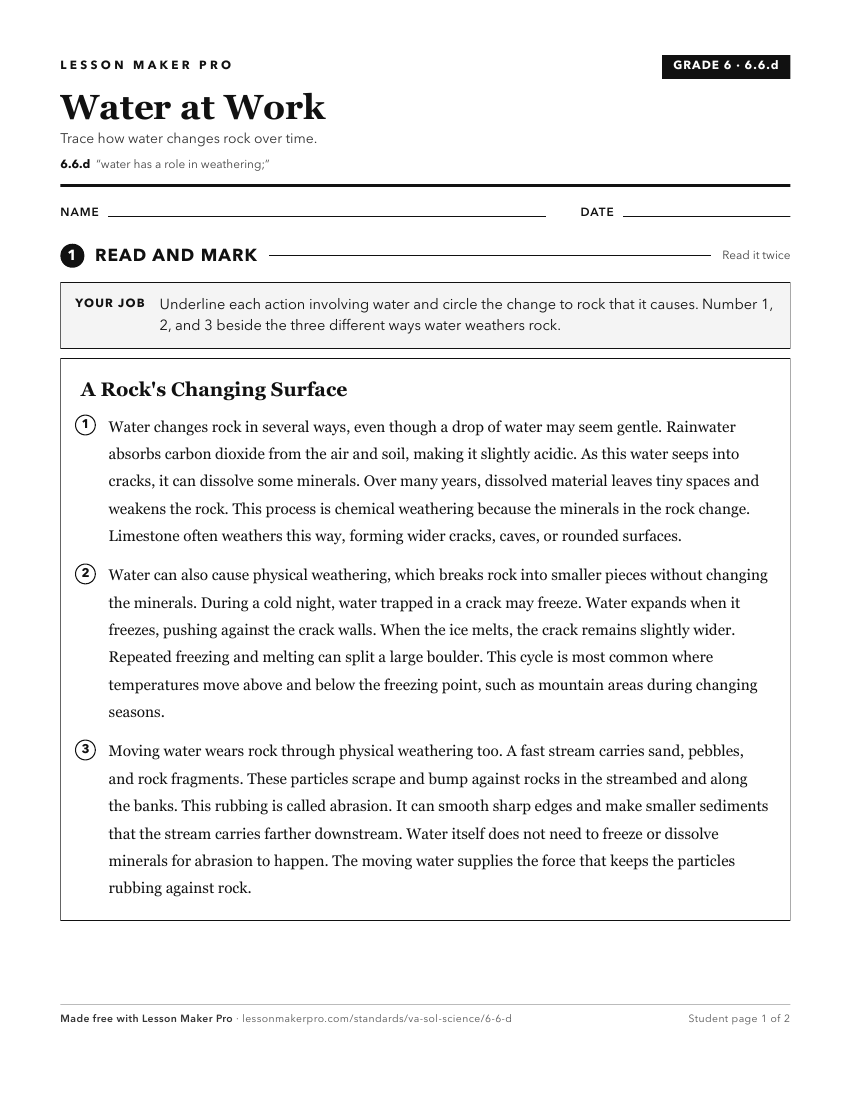
A ready-to-print activity worksheet aligned to 6.6.d, with an answer key for the teacher on its own page. No account needed.
PDF, US Letter, prints cleanly in black and white.
Download the worksheetKeep exploring
Related Standards
Turn this exact standard into a lesson
Grade, subject, topic, and the complete standard are prefilled. Create one free, no account needed.
Also for this standard:Make a WorksheetMake a QuizMake a Sub Lesson