Virginia SOL 5.5.a
The Standard
- 5.5
- The student will investigate and understand that sound can be produced and transmitted. Key ideas include
sound is produced when an object or substance vibrates
Virginia Standards of Learning for Science
Teacher's field guide
What This Standard Means
What Students Need to Do
- Students identify the back-and-forth movement that creates a sound. They use observations to connect what moves with what they hear.
What Mastery Looks Like
- Students can point to the moving part of a sound source, such as a guitar string or speaker cone. They can explain that stopping the movement stops the sound.
Common Misconceptions
- Students may think sound comes from hitting, blowing, or electricity rather than from the resulting movement. They may also think only visible movement can make sound.
How to Assess It
- Give students a picture of a ringing bell and ask, “What part is moving, and what would happen if that movement stopped?”
Lesson moves
Ways to Teach It
Pluck a ruler hanging over a desk edge, then change its length and observe its movement and sound.
Ask students to explain what moves when they hum, clap, or tap a drum.
Play Sound Source Match, pairing cards showing instruments with cards naming the moving string, skin, reed, or air column.
Place fingers gently on the throat while speaking, then connect the felt movement to talking, singing, and phone calls.
Free download
Printable 5.5.a Worksheet
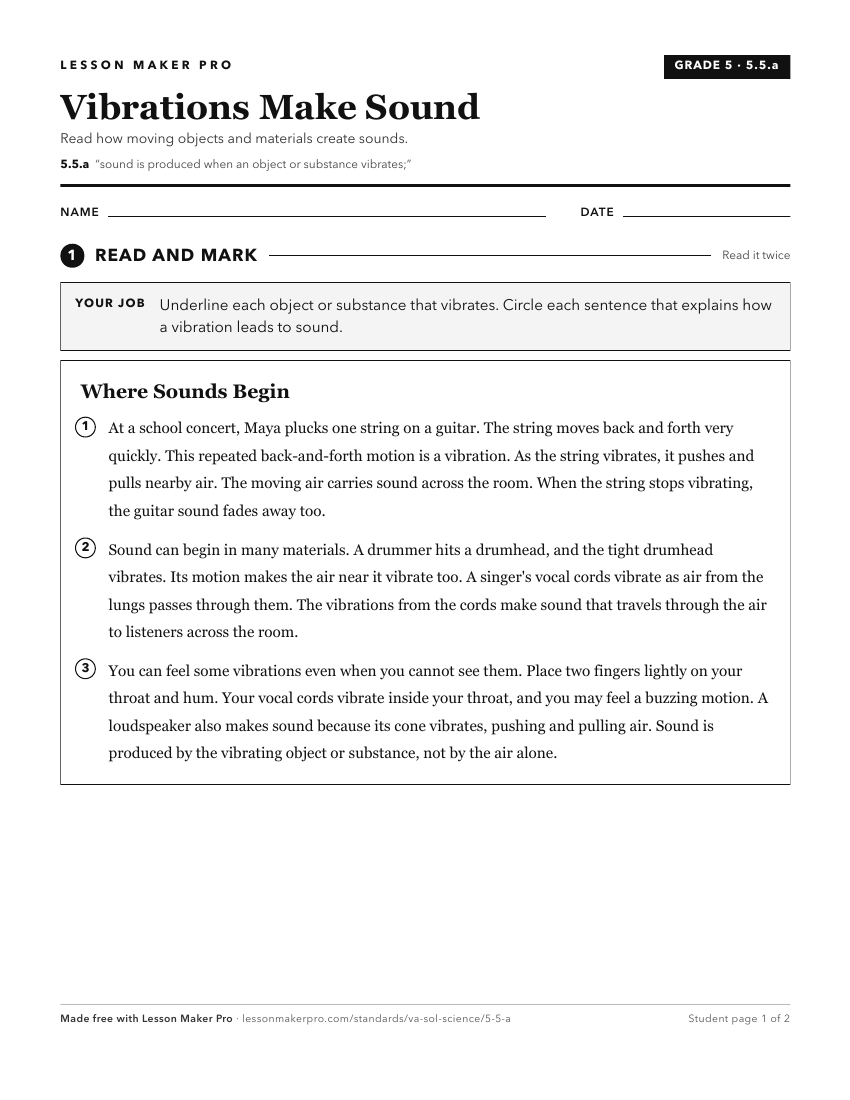
A ready-to-print activity worksheet aligned to 5.5.a, with an answer key for the teacher on its own page. No account needed.
PDF, US Letter, prints cleanly in black and white.
Download the worksheetKeep exploring
Related Standards
Turn this exact standard into a lesson
Grade, subject, topic, and the complete standard are prefilled. Create one free, no account needed.
Also for this standard:Make a WorksheetMake a QuizMake a Sub Lesson