Virginia SOL 5.4.d
The Standard
- 5.4
- The student will investigate and understand that electricity is transmitted and used in daily life. Key ideas include
electrical energy can be transformed into radiant, mechanical, and thermal energy
Virginia Standards of Learning for Science
Teacher's field guide
What This Standard Means
What Students Need to Do
- Students identify how electrical devices change electrical energy into light, heat, or motion. They trace the energy from the electrical source to the device’s output.
What Mastery Looks Like
- Students can examine a device and name its main energy output. They can explain that a toaster produces heat, a lamp produces light, and a fan produces motion.
Common Misconceptions
- Students may think electricity is a substance stored inside an appliance. They may name the device’s action without identifying the energy change, or assume each device has only one output.
How to Assess It
- Show pictures of a lamp, fan, and toaster. Ask students to name the main output energy for each and explain one answer in a sentence.
Lesson moves
Ways to Teach It
Connect a battery to a bulb and small motor, then record the electrical energy input and each device’s observable output.
Write a claim explaining which output energy is most useful in a hair dryer, then support it with two observations.
Play an energy match game using cards showing electrical devices and cards labeled light, heat, or motion.
Inspect classroom appliances and make a chart showing each device, its electrical source, useful output, and any unwanted heat.
Free download
Printable 5.4.d Worksheet
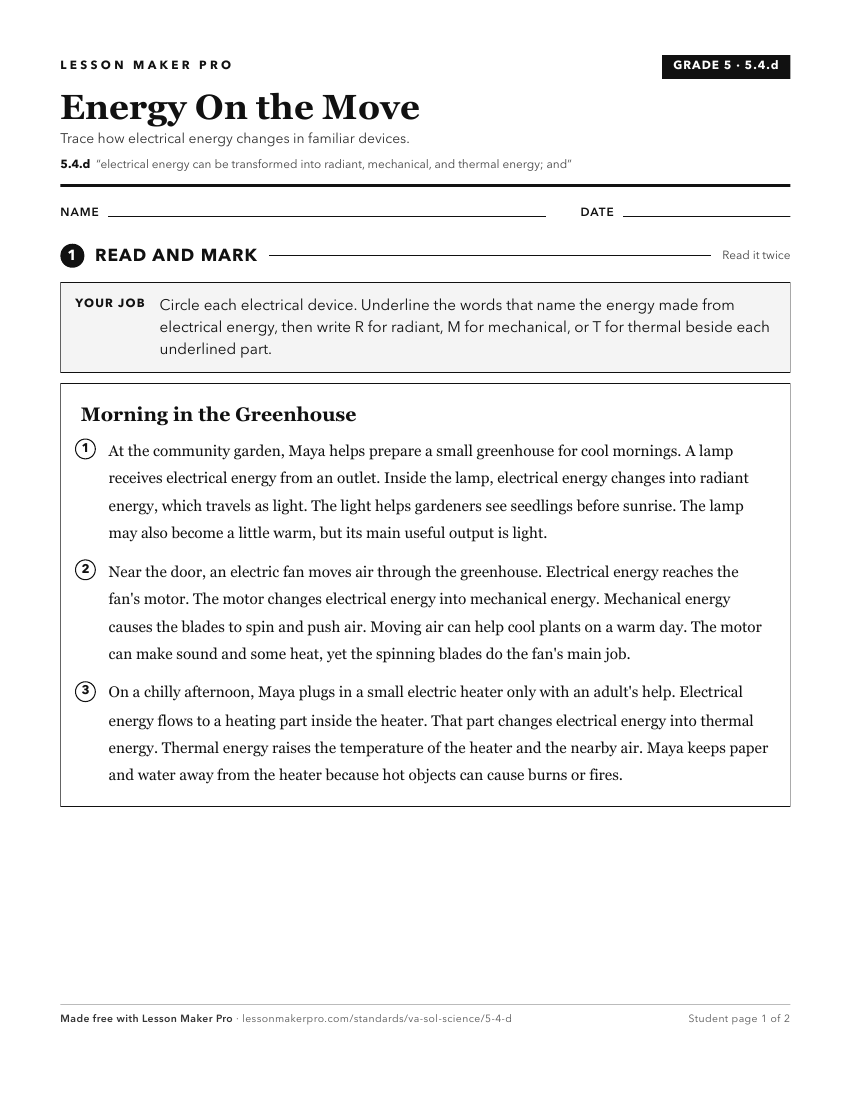
A ready-to-print activity worksheet aligned to 5.4.d, with an answer key for the teacher on its own page. No account needed.
PDF, US Letter, prints cleanly in black and white.
Download the worksheetKeep exploring
Related Standards
Turn this exact standard into a lesson
Grade, subject, topic, and the complete standard are prefilled. Create one free, no account needed.
Also for this standard:Make a WorksheetMake a QuizMake a Sub Lesson