Virginia SOL 5.2.c
The Standard
- 5.2
- The student will investigate and understand that energy can take many forms. Key ideas include
energy can be transformed
Virginia Standards of Learning for Science
Teacher's field guide
What This Standard Means
What Students Need to Do
- Students identify the energy forms entering and leaving an object or system. They trace changes among chemical, electrical, light, thermal, sound, and motion energy.
What Mastery Looks Like
- A student can trace a flashlight from chemical energy in the battery to electrical, light, and thermal energy. The student uses observations, such as light or warmth, as evidence.
Common Misconceptions
- Students may think energy disappears when a device stops moving or giving off light. They may also name only the intended output and miss sound or thermal energy.
How to Assess It
- Give students this exit prompt: “A battery powers a toy car. Name the starting energy form and two output forms, then explain your choices.”
Lesson moves
Ways to Teach It
Build a battery circuit with a bulb and motor, then label the energy entering each device and the outputs.
Write an explanation of how energy changes when bread is placed in an electric toaster.
Play a card-chain game by connecting energy sources, devices, and outputs into accurate transformation sequences.
Choose one classroom appliance and create a labeled diagram showing its energy input and all observable outputs.
Free download
Printable 5.2.c Worksheet
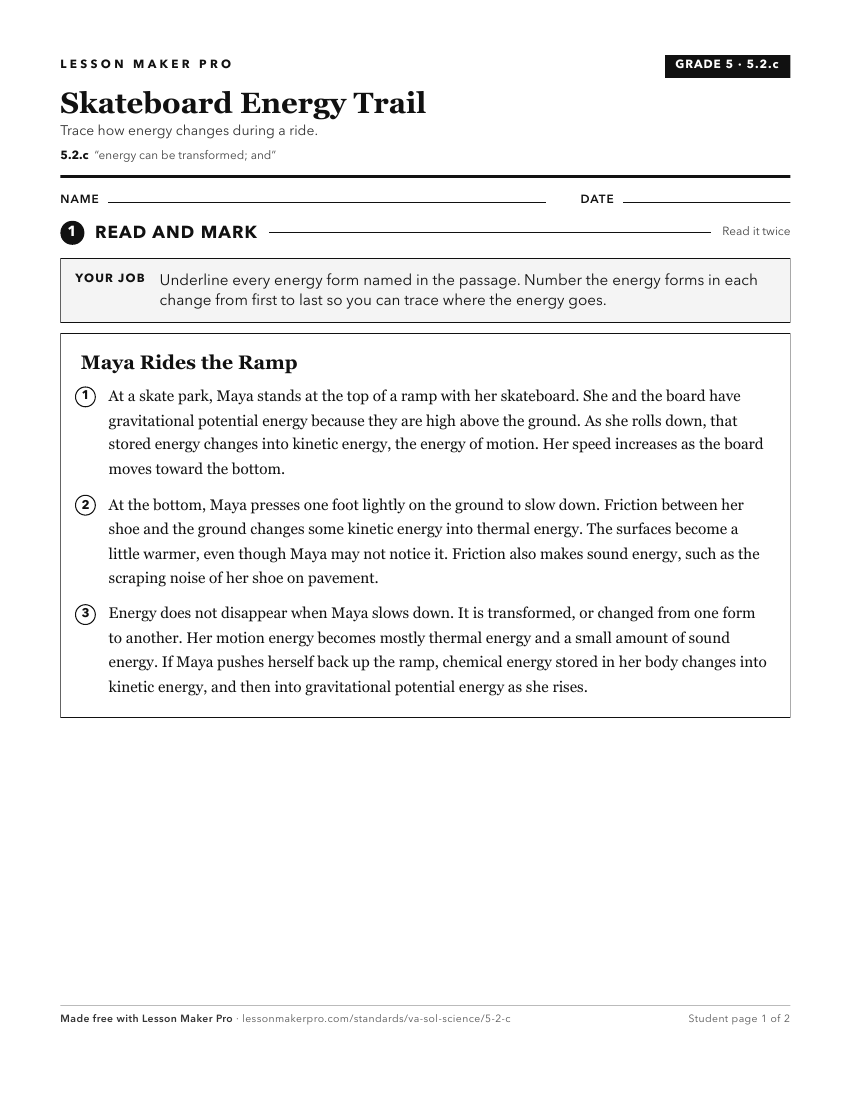
A ready-to-print activity worksheet aligned to 5.2.c, with an answer key for the teacher on its own page. No account needed.
PDF, US Letter, prints cleanly in black and white.
Download the worksheetKeep exploring
Related Standards
Turn this exact standard into a lesson
Grade, subject, topic, and the complete standard are prefilled. Create one free, no account needed.
Also for this standard:Make a WorksheetMake a QuizMake a Sub Lesson