Virginia SOL 5.4.c
The Standard
- 5.4
- The student will investigate and understand that electricity is transmitted and used in daily life. Key ideas include
static electricity can be generated by rubbing certain materials together
Virginia Standards of Learning for Science
Teacher's field guide
What This Standard Means
What Students Need to Do
- Students rub two materials together and observe signs of static charge, such as attraction or repulsion. They identify which material pairs produce a noticeable effect.
What Mastery Looks Like
- Students can generate static charge with materials such as a balloon and wool. They can describe the rubbing, predict an effect, and use observations as evidence.
Common Misconceptions
- Students may think rubbing creates new electrons or that every material pair produces the same result. They may also confuse static electricity with current flowing through a wire.
How to Assess It
- Give students a balloon, wool cloth, and paper bits. Ask them to create static charge, demonstrate its effect, and explain what caused the effect.
Lesson moves
Ways to Teach It
Rub balloons with wool, hair, and cotton, then measure how many paper bits each balloon attracts.
Ask students to write why a rubbed balloon can stick to a wall without glue.
Play a prediction game where teams choose material pairs, predict static effects, test them, and record results.
Examine dryer cling and explain how tumbling clothes can build static charge.
Free download
Printable 5.4.c Worksheet
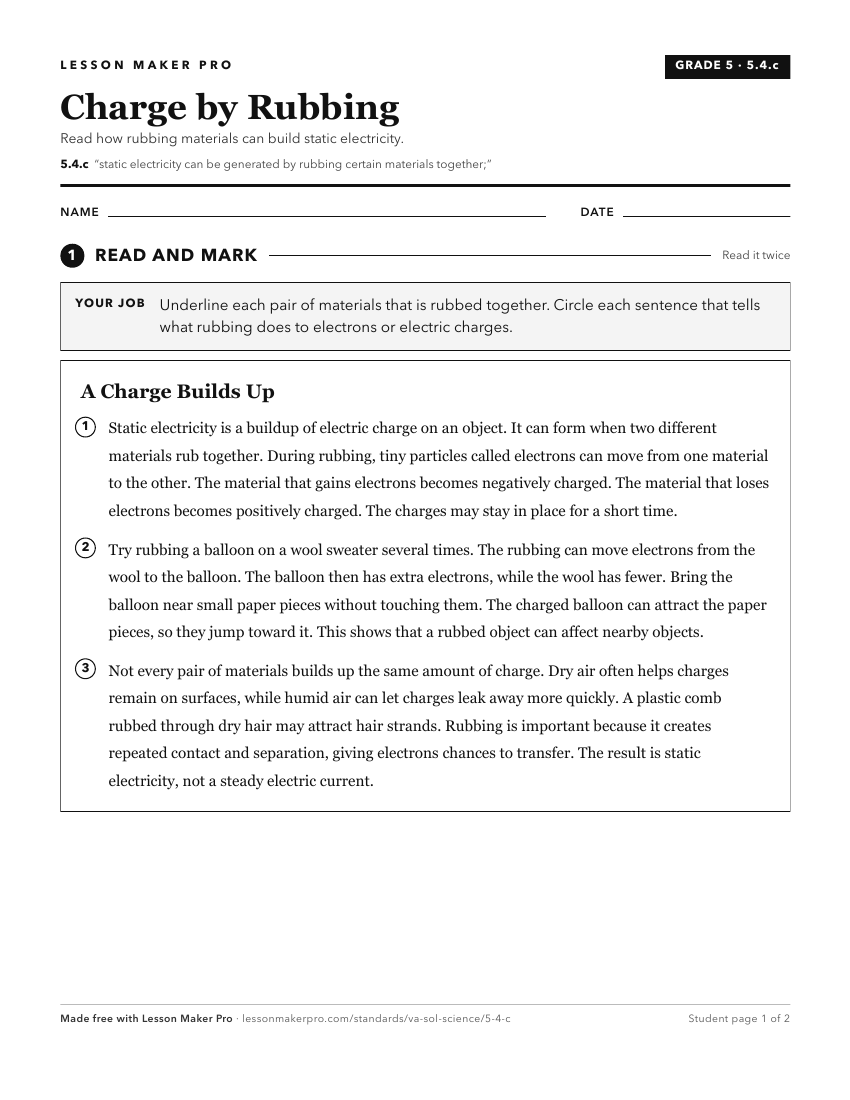
A ready-to-print activity worksheet aligned to 5.4.c, with an answer key for the teacher on its own page. No account needed.
PDF, US Letter, prints cleanly in black and white.
Download the worksheetKeep exploring
Related Standards
Turn this exact standard into a lesson
Grade, subject, topic, and the complete standard are prefilled. Create one free, no account needed.
Also for this standard:Make a WorksheetMake a QuizMake a Sub Lesson