Virginia SOL PS.9.a
The Standard
- PS.9
- The student will investigate and understand that there are basic principles of electricity and magnetism. Key ideas include
an imbalance of charge generates static electricity
Virginia Standards of Learning for Science · The student will investigate and understand that there are basic principles of electricity and magnetism. Key ideas include
Teacher's field guide
What This Standard Means
What Students Need to Do
- Students explain how electrons move between materials through rubbing or contact. They use charge imbalance to predict attraction, repulsion, and a sudden discharge.
What Mastery Looks Like
- A student can identify which object gained electrons and which lost them. The student can explain why charged objects attract, repel, or produce a spark.
Common Misconceptions
- Students may think protons move between objects or that rubbing creates new charge. They may also assume every charged object attracts every other charged object.
How to Assess It
- Give this exit prompt: “A balloon rubbed on wool gains electrons. What charge does each material have, and why can the balloon attract paper?”
Lesson moves
Ways to Teach It
Rub balloons with wool, then test their effects on paper bits, hair, and another charged balloon.
Ask students to write where electrons move when a sock slides across carpet, then explain the shock from touching a doorknob.
Play a charge prediction game using cards labeled positive, negative, and neutral, with students matching pairs to attraction or repulsion.
Examine photos of lightning, then connect charge buildup and discharge to smaller shocks from clothes, carpets, and car doors.
Free download
Printable PS.9.a Worksheet
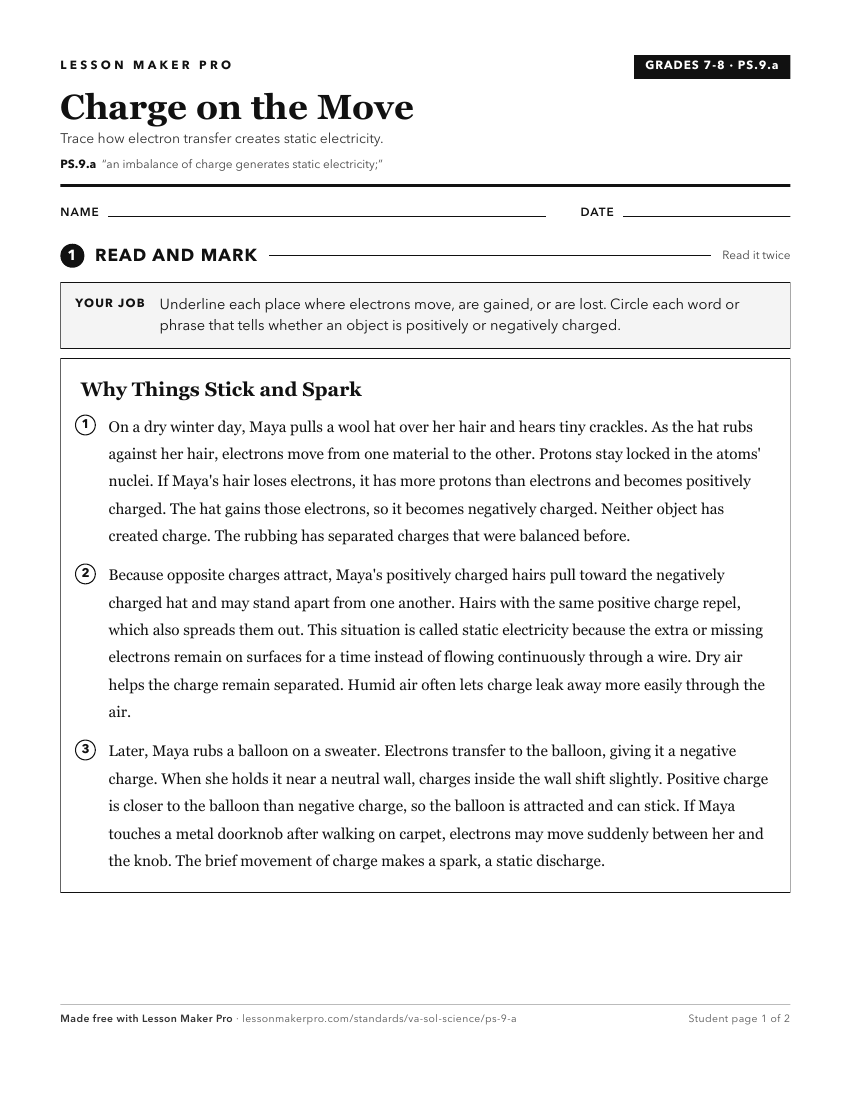
A ready-to-print activity worksheet aligned to PS.9.a, with an answer key for the teacher on its own page. No account needed.
PDF, US Letter, prints cleanly in black and white.
Download the worksheetKeep exploring
Related Standards
Turn this exact standard into a lesson
Grade, subject, topic, and the complete standard are prefilled. Create one free, no account needed.
Also for this standard:Make a WorksheetMake a QuizMake a Sub Lesson