Virginia SOL 5.2.b
The Standard
- 5.2
- The student will investigate and understand that energy can take many forms. Key ideas include
there are many different forms of energy
Virginia Standards of Learning for Science
Teacher's field guide
What This Standard Means
What Students Need to Do
- Students identify common forms of energy, including mechanical, thermal, radiant, electrical, chemical, and sound energy. They use observations and evidence to name the energy present in an object or event.
What Mastery Looks Like
- Students correctly classify examples such as a moving bicycle, lamp, battery, hot plate, and ringing bell. They explain their choices using observable clues such as motion, heat, light, or sound.
Common Misconceptions
- Students may think energy is only electricity or that objects contain no energy when they are still. They may confuse an energy form with its source, such as naming the Sun instead of radiant energy.
How to Assess It
- Show pictures of a toaster, flashlight, rolling ball, and speaker. Ask students to name one form of energy shown in each picture and give one clue for each answer.
Lesson moves
Ways to Teach It
Set up stations with a flashlight, hand warmer, rubber band, and bell, then have students identify the energy observed at each station.
Ask students to explain which forms of energy they notice during a school morning and cite evidence for each example.
Play an energy sorting game using picture cards labeled lamp, battery, drum, campfire, bicycle, and stretched spring.
Have students examine a household appliance and list the forms of energy they can observe while it operates.
Free download
Printable 5.2.b Worksheet
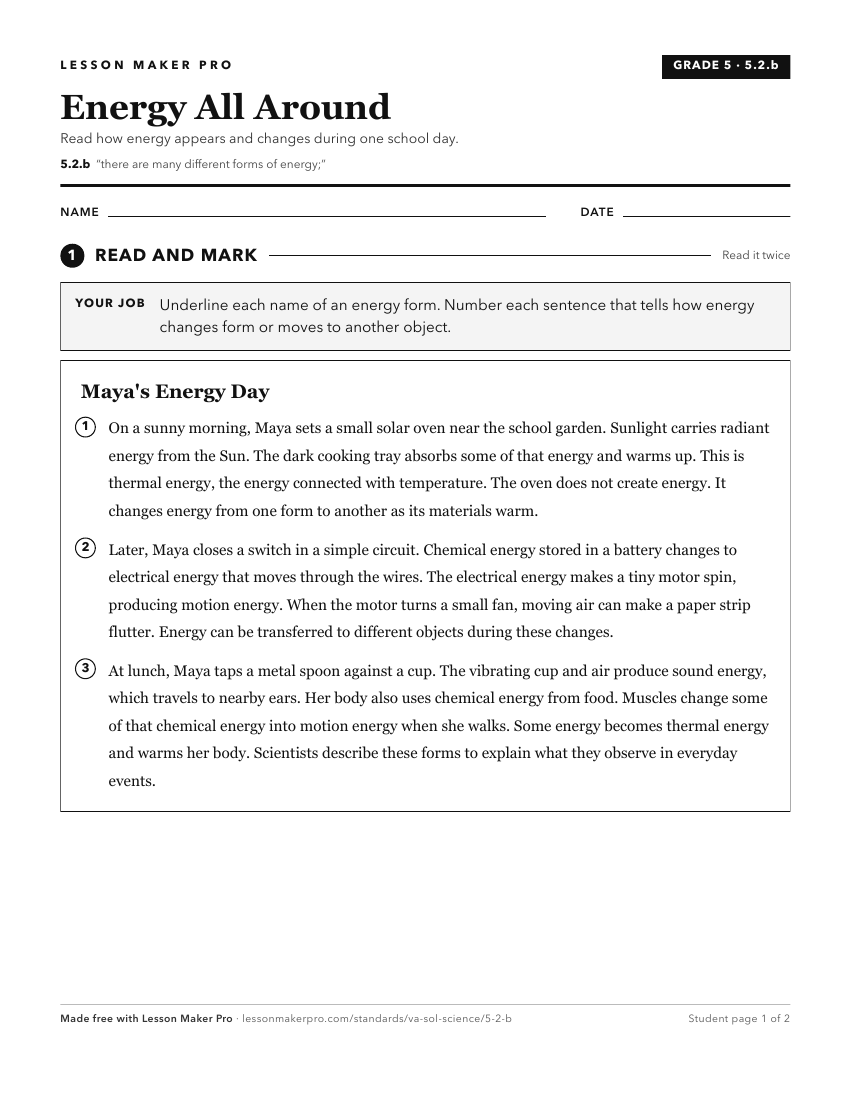
A ready-to-print activity worksheet aligned to 5.2.b, with an answer key for the teacher on its own page. No account needed.
PDF, US Letter, prints cleanly in black and white.
Download the worksheetKeep exploring
Related Standards
Turn this exact standard into a lesson
Grade, subject, topic, and the complete standard are prefilled. Create one free, no account needed.
Also for this standard:Make a WorksheetMake a QuizMake a Sub Lesson