Virginia SOL 4.8.c
The Standard
- 4.8
- The student will investigate and understand that Virginia has important natural resources. Key resources include
minerals, rocks, and ores
Virginia Standards of Learning for Science
Teacher's field guide
What This Standard Means
What Students Need to Do
- Students identify minerals, rocks, and ores as natural resources and explain how the terms differ. They connect Virginia examples to common products and uses.
What Mastery Looks Like
- A student can explain that most rocks contain minerals, while ores contain materials people can extract and use. The student can connect limestone, granite, sand, coal, and iron ore to common uses.
Common Misconceptions
- Students often use rock and mineral as synonyms, or think every mineral is shiny and crystal-shaped. They may think ore is a separate substance, rather than rock or mineral material mined for something useful.
How to Assess It
- Exit ticket: For quartz, granite, and an iron-rich rock mined for iron, label every term that applies: mineral, rock, or ore. Explain one label.
Lesson moves
Ways to Teach It
Give pairs quartz, granite, limestone, and iron ore samples to observe, then label each and record evidence for every label that applies.
Students respond to the prompt, “How can the same material be both a rock and an ore?” with a claim and one example.
Play Resource Match with cards showing Virginia materials, their locations, and products, such as limestone, quarries, and cement.
Examine a classroom object, such as a steel stapler, and trace its materials from mined ore to manufactured product.
Free download
Printable 4.8.c Worksheet
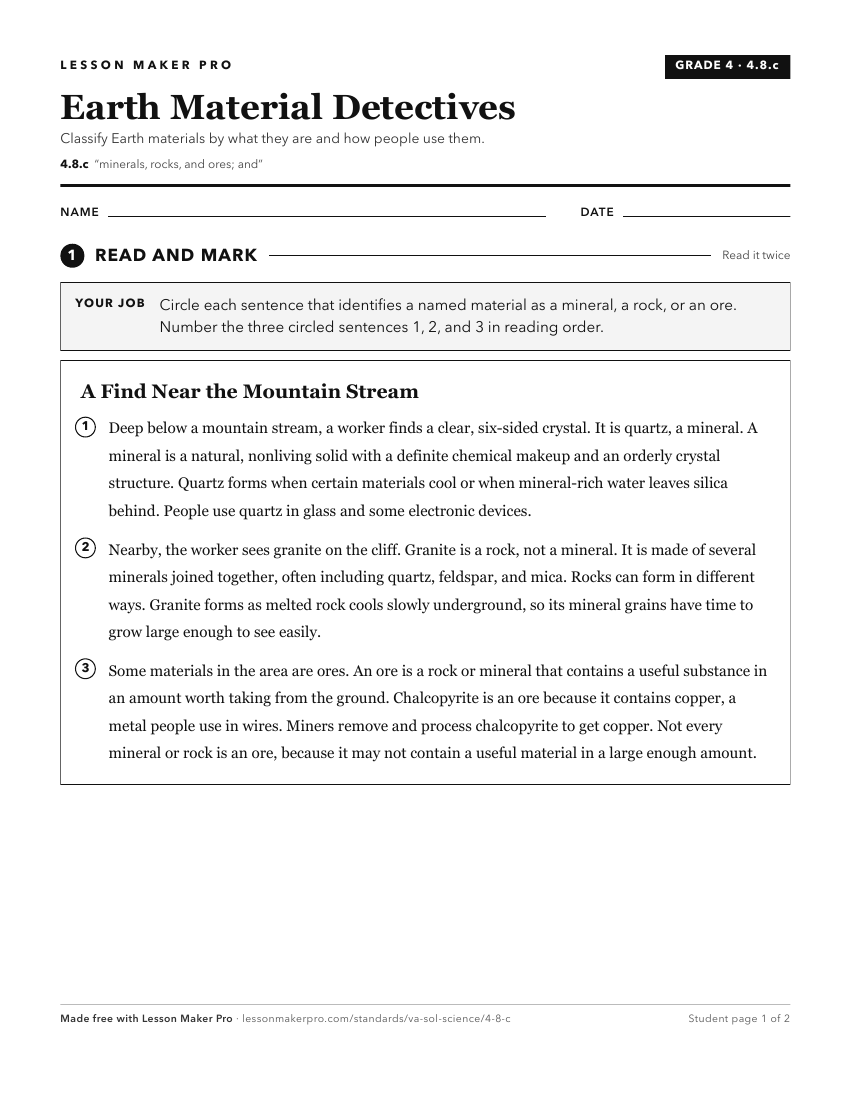
A ready-to-print activity worksheet aligned to 4.8.c, with an answer key for the teacher on its own page. No account needed.
PDF, US Letter, prints cleanly in black and white.
Download the worksheetKeep exploring
Related Standards
Turn this exact standard into a lesson
Grade, subject, topic, and the complete standard are prefilled. Create one free, no account needed.
Also for this standard:Make a WorksheetMake a QuizMake a Sub Lesson