Virginia SOL 4.8.d
The Standard
- 4.8
- The student will investigate and understand that Virginia has important natural resources. Key resources include
forests, soil, and land.
Virginia Standards of Learning for Science
Teacher's field guide
What This Standard Means
What Students Need to Do
- Students explain how people use forests, soil, and land in Virginia. They describe benefits, damage caused by poor use, and ways to protect these resources.
What Mastery Looks Like
- Students can connect forests with timber, wildlife habitat, and recreation, and soil with farming and plant growth. They can explain how erosion, pollution, or development affects land and suggest a practical conservation step.
Common Misconceptions
- Students may think forests grow back quickly after any type of cutting. They may also treat soil as ordinary dirt, or assume land development has no effect on habitats and runoff.
How to Assess It
- Give students a picture of cleared land beside a stream. Ask them to name one likely problem and one action that would protect the soil or water.
Lesson moves
Ways to Teach It
Use two soil trays, one bare and one covered with leaves, then pour equal water and compare runoff and erosion.
Write which land use, farm, neighborhood, or park, best fits a site and explain one benefit and one environmental cost.
Play a card sort matching forests, soil, and land with uses, threats, and conservation actions.
Examine a local development map and mark where trees, gardens, or protected land could reduce runoff and preserve habitat.
Free download
Printable 4.8.d Worksheet
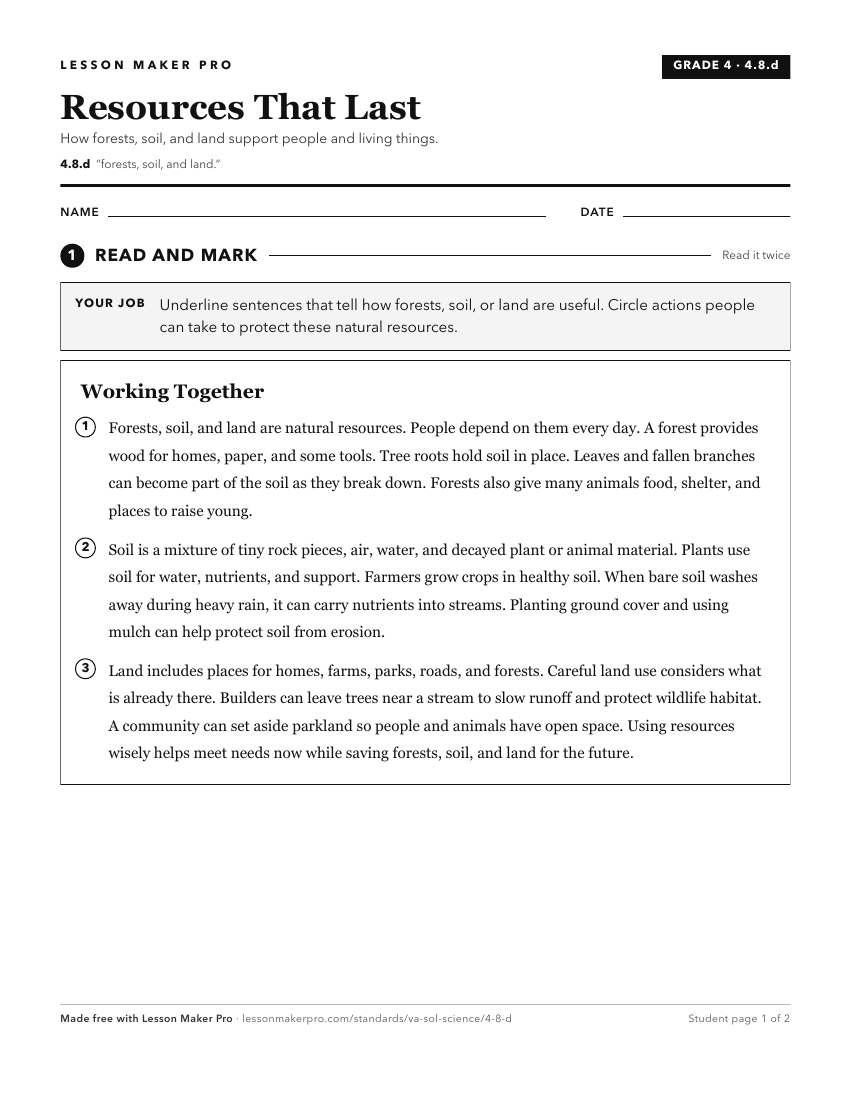
A ready-to-print activity worksheet aligned to 4.8.d, with an answer key for the teacher on its own page. No account needed.
PDF, US Letter, prints cleanly in black and white.
Download the worksheetKeep exploring
Related Standards
Turn this exact standard into a lesson
Grade, subject, topic, and the complete standard are prefilled. Create one free, no account needed.
Also for this standard:Make a WorksheetMake a QuizMake a Sub Lesson