Virginia SOL 3.6.a
The Standard
- 3.6
- The student will investigate and understand that soil is important in ecosystems. Key ideas include
soil, with its different components, is important to organisms
Virginia Standards of Learning for Science
Teacher's field guide
What This Standard Means
What Students Need to Do
- Students identify soil components such as rock particles, humus, water, and air. They explain how these components provide food, water, air, and shelter for organisms.
What Mastery Looks Like
- Students can examine a soil sample and name several components. They can connect each component to a plant, worm, insect, or other soil organism.
Common Misconceptions
- Students may think soil is only crushed rock or that humus means the food dip. They may also think all soils are alike and soil matters only to plants.
How to Assess It
- Show a diagram of soil containing roots, rocks, water, air spaces, humus, and a worm. Ask students to label four components and explain two ways the soil supports life.
Lesson moves
Ways to Teach It
Give pairs soil samples, hand lenses, trays, and craft sticks to separate and record visible components.
Ask students to write: How would removing humus, water, or air from soil affect a worm or plant?
Play a card match game pairing soil components with their roles, such as air spaces with root respiration.
Collect soil from a school garden and sidewalk edge, then compare which sample could support more organisms and why.
Free download
Printable 3.6.a Worksheet
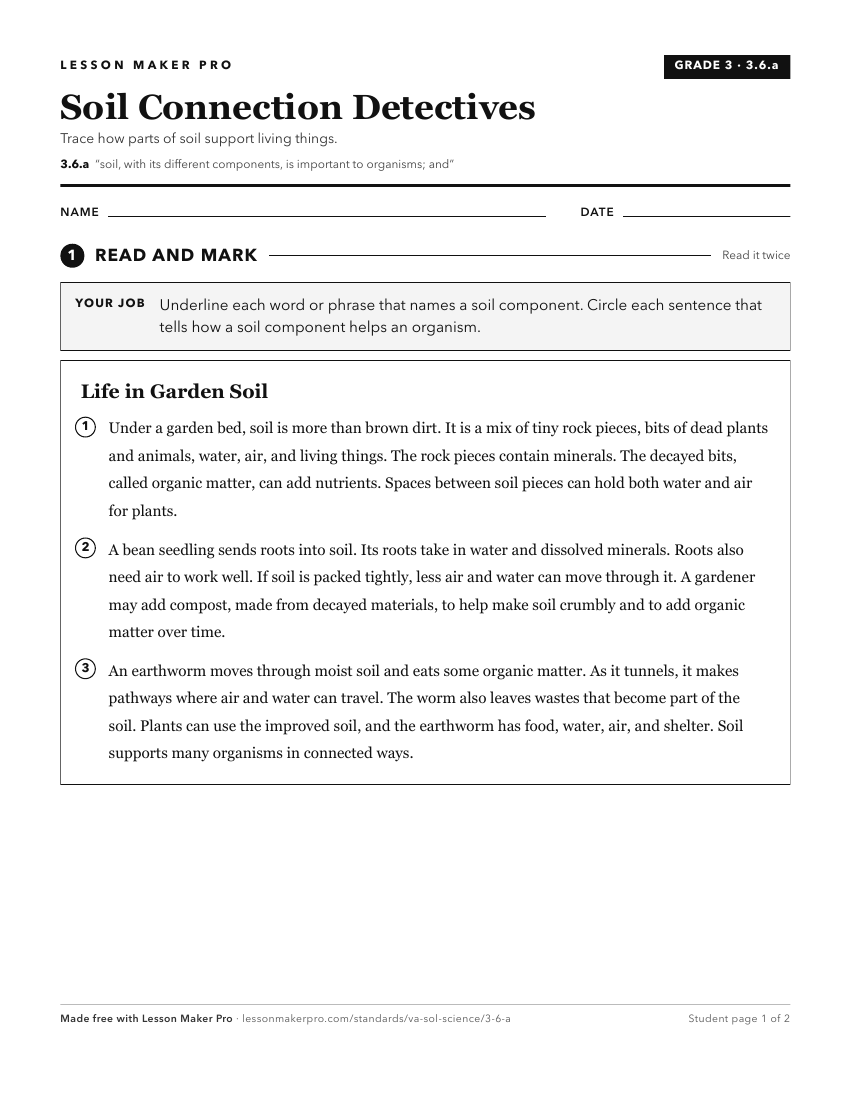
A ready-to-print activity worksheet aligned to 3.6.a, with an answer key for the teacher on its own page. No account needed.
PDF, US Letter, prints cleanly in black and white.
Download the worksheetKeep exploring
Related Standards
- 3.6
The student will investigate and understand that soil is important in ecosystems. Key ideas include
- 3.6.b
soil provides support and nutrients necessary for plant growth.
- 3.8.d
soil is a natural resource and should be conserved.
- 3.5.a
ecosystems are made of living and nonliving components of the environment
Turn this exact standard into a lesson
Grade, subject, topic, and the complete standard are prefilled. Create one free, no account needed.
Also for this standard:Make a WorksheetMake a QuizMake a Sub Lesson