Virginia SOL 1.1.e
SOL Standard (Key Ideas Cluster)
- 1.1
- The student will demonstrate an understanding of scientific and engineering practices by
developing and using models use physical models to demonstrate simple phenomena and natural processes
Virginia Standards of Learning for Science · The student will demonstrate an understanding of scientific and engineering practices by
Cluster contents
Key Ideas in This Standard
1.1.e is a Standards of Learning science standard. These are the key ideas and practices under it.
Teacher's field guide
What This Cluster Means
What Students Need to Do
- Students build or use objects to show how something in nature works or changes. They point to parts of the model and explain what each part represents.
What Mastery Looks Like
- A student can arrange materials to model a process such as rain falling and collecting. The student uses the model to explain the order of events and connects each part to the real process.
Common Misconceptions
- Students may think a model must look exactly like the real object. They may treat the model as a toy or miss that each part represents something real.
How to Assess It
- Give students a cup, cotton ball, and blue paper strips. Ask them to model rain falling from a cloud and explain what each material represents.
Lesson moves
Ways to Teach It
Use clay, pebbles, and a tray of sand to build a model showing how water moves downhill.
Ask students, "How is our rain model like real rain, and how is it different?"
Play Model Match by pairing picture cards of natural events with physical models made from classroom objects.
Build a shade model with a flashlight and paper tree, then connect it to finding a cooler place on the playground.
Free download
Printable 1.1.e Worksheet
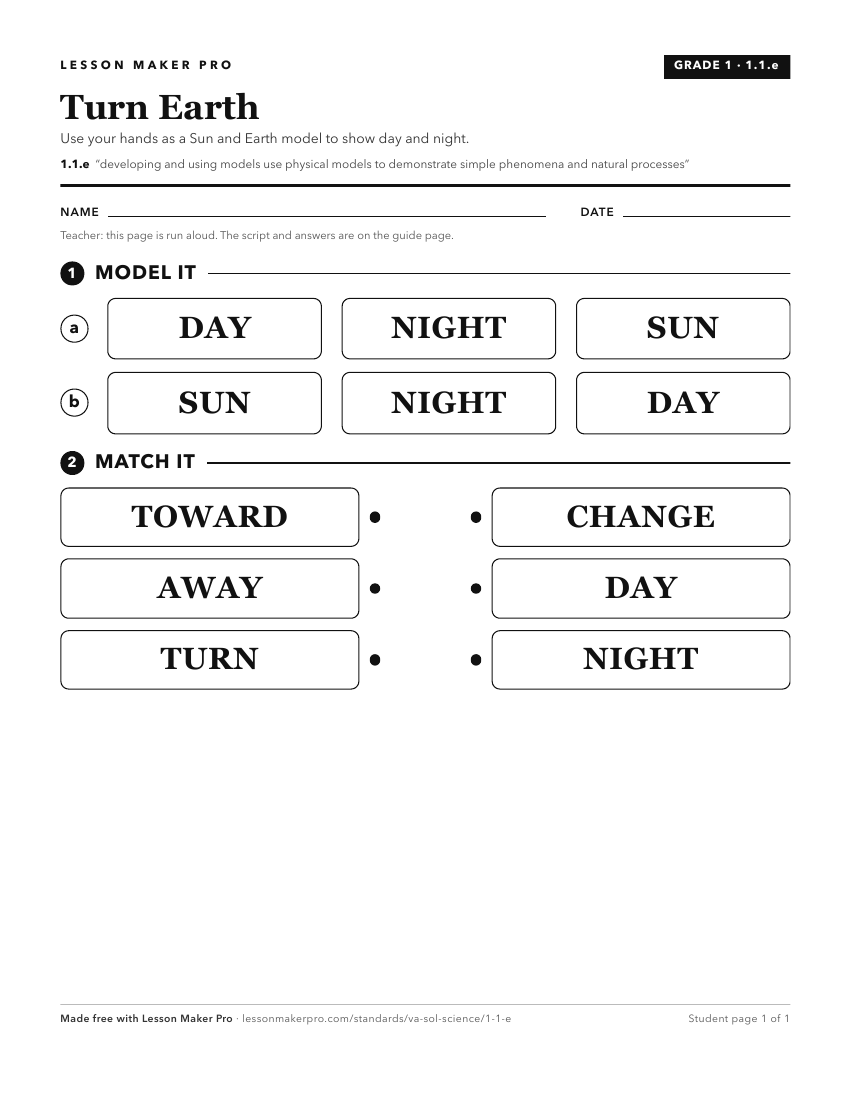
A ready-to-print activity worksheet aligned to 1.1.e, with an answer key for the teacher on its own page. No account needed.
PDF, US Letter, prints cleanly in black and white.
Download the worksheetKeep exploring
Related Standards
Turn this cluster into a lesson
Grade, subject, topic, and the complete cluster are prefilled. Create one free, no account needed.
Also for this cluster:Make a WorksheetMake a QuizMake a Sub Lesson