Virginia SOL 1.1.d.i
The Standard
- 1.1
- The student will demonstrate an understanding of scientific and engineering practices by
constructing and critiquing conclusions and explanations make simple conclusions based on data or observations
Virginia Standards of Learning for Science · The student will demonstrate an understanding of scientific and engineering practices by
Teacher's field guide
What This Standard Means
What Students Need to Do
- Students study pictures, measurements, or notes from an investigation and say what the evidence shows. They check whether a conclusion matches the observations instead of relying on a guess.
What Mastery Looks Like
- A student states a simple conclusion and points to an observation or data point that supports it. The student can explain why another conclusion does not fit the evidence.
Common Misconceptions
- Students may repeat one observation instead of stating what the observations show together. They may use opinions, add facts not in the evidence, or claim that one thing caused another without support.
How to Assess It
- Show plant heights of 2 cm on day 1, 4 cm on day 3, and 6 cm on day 5. Ask, “What conclusion can you make, and which numbers support it?”
Lesson moves
Ways to Teach It
Place two ice cubes, one in sun and one in shade, record changes, then state which melted faster.
Show three leaf observations and ask, “What can we conclude, and which observation supports it?”
Play Conclusion Match by pairing picture evidence cards with conclusion cards, then rejecting one conclusion that does not fit.
Keep a five-day weather chart and use it to conclude which type of weather occurred most often.
Free download
Printable 1.1.d.i Worksheet
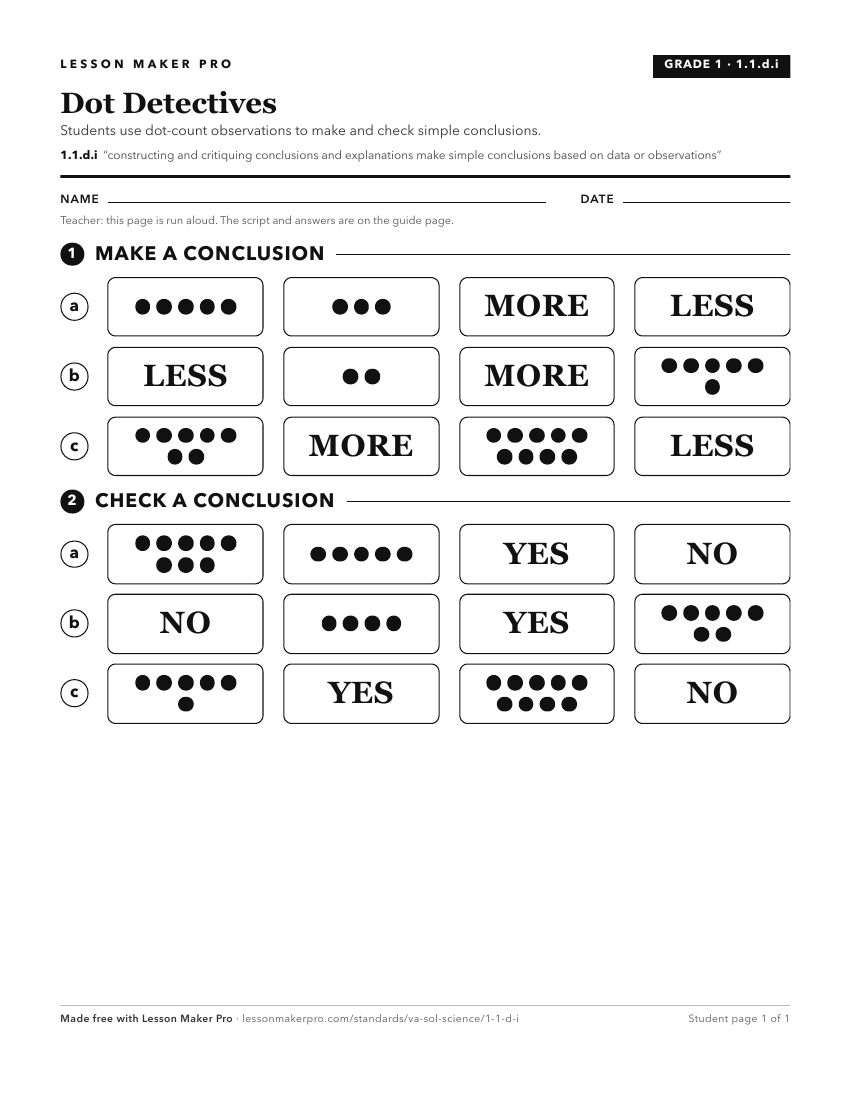
A ready-to-print activity worksheet aligned to 1.1.d.i, with an answer key for the teacher on its own page. No account needed.
PDF, US Letter, prints cleanly in black and white.
Download the worksheetKeep exploring
Related Standards
Turn this exact standard into a lesson
Grade, subject, topic, and the complete standard are prefilled. Create one free, no account needed.
Also for this standard:Make a WorksheetMake a QuizMake a Sub Lesson