Virginia SOL WG.17.c
The Standard
- WG.17
- The student will apply history and social science skills to analyze strategic geographic features and resources by
analyzing the types of conflicts and cooperation that can occur over the use of rivers and bodies of water.
Virginia Standards of Learning for History and Social Science · The student will apply history and social science skills to analyze strategic geographic features and resources by
Teacher's field guide
What This Standard Means
What Students Need to Do
- Students explain why countries or regions may compete over shared water, including access, dams, pollution, fishing, and shipping. They also analyze ways groups cooperate through treaties, shared management, and conservation plans.
What Mastery Looks Like
- Students can identify upstream and downstream interests in a water dispute. They can explain each side’s concerns and propose a workable agreement supported by map or case evidence.
Common Misconceptions
- Students may assume water conflicts happen only because there is too little water. They may overlook water quality, border claims, dam control, fishing rights, shipping routes, and unequal access.
How to Assess It
- Give students a map showing two countries sharing a river and a proposed upstream dam. Ask them to name one likely conflict and one cooperation plan, then explain each choice.
Lesson moves
Ways to Teach It
Use cups, tubing, and colored water to model how an upstream dam or pollutant affects communities farther downstream.
Ask students to write which stakeholder should control a shared river and defend their answer with two geographic reasons.
Run a treaty challenge where teams draw water dispute cards and negotiate agreements involving dams, pollution, fishing, or shipping.
Examine a short news report about the Nile River and list the interests of Egypt, Sudan, and Ethiopia.
Free download
Printable WG.17.c Worksheet
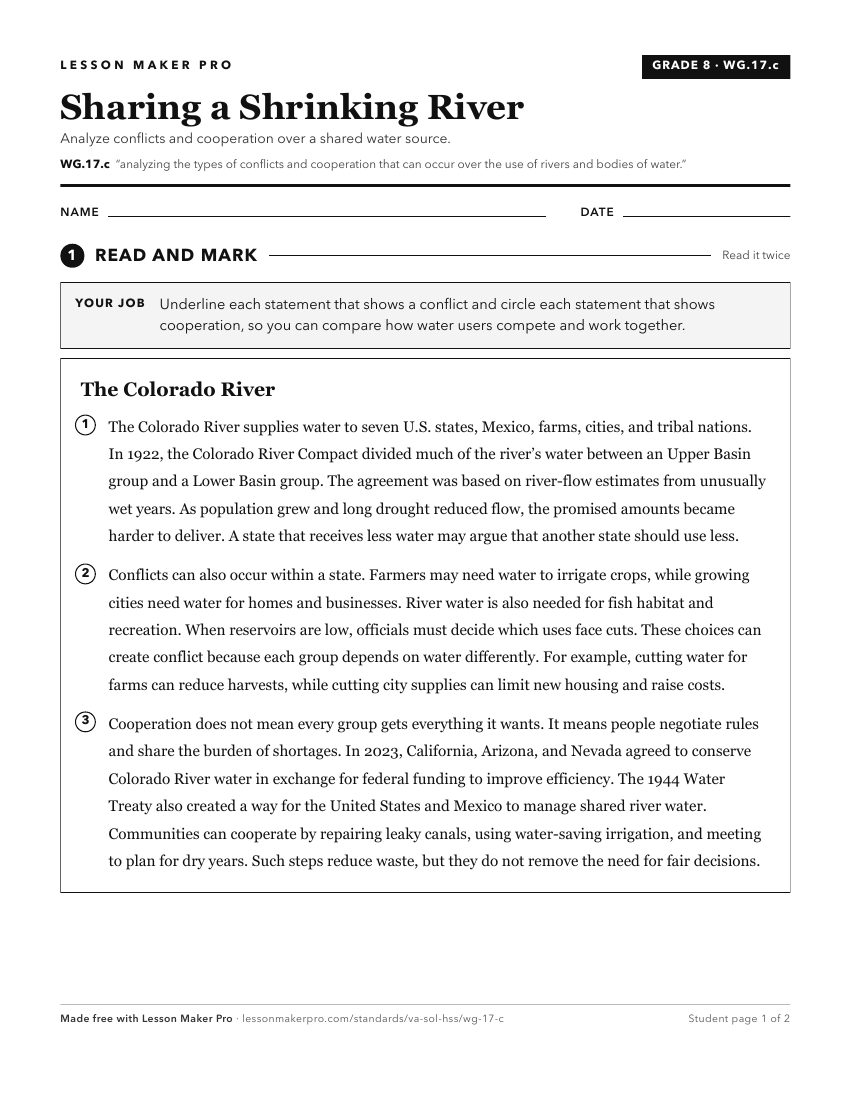
A ready-to-print activity worksheet aligned to WG.17.c, with an answer key for the teacher on its own page. No account needed.
PDF, US Letter, prints cleanly in black and white.
Download the worksheetKeep exploring
Related Standards
- CE.4.c
comparing and contrasting powers and responsibilities of local, state, federal, and tribal governments including, but not limited to citizen engagement, how eac...
- WG.2.c
evaluating perspectives regarding the use of resources.
- WG.17.b
describing and explaining examples of the different types of conflicts that may erupt between and among nations
- WG.17.a
identifying and describing examples of disputed borders and explaining the reasons for the disputes
Turn this exact standard into a lesson
Grade, subject, topic, and the complete standard are prefilled. Create one free, no account needed.
Also for this standard:Make a WorksheetMake a QuizMake a Sub Lesson