Virginia SOL S.2.e
The Standard
- S.2
- The student will apply history and social science skills to the content by
identifying similarities and differences to clarify and explain content
Virginia Standards of Learning for History and Social Science
Teacher's field guide
What This Standard Means
What Students Need to Do
- Students compare two people, places, events, or ideas from social studies. They name shared features and differences, then use those details to explain what they learned.
What Mastery Looks Like
- A student can sort accurate details into same and different groups. The student can make a clear comparison using evidence from a picture, map, short text, or class lesson.
Common Misconceptions
- Students may list facts about each subject without directly comparing them. They may focus on picture colors or other details that do not relate to the topic. They may think one shared feature makes two subjects exactly alike.
How to Assess It
- Give students pictures and two facts about a farm community and a city community. Ask them to write one similarity, one difference, and why the difference matters.
Lesson moves
Ways to Teach It
Give pairs picture cards of schools, homes, and transportation, then have them place each card on a floor Venn diagram.
Show two community photographs and ask, "What is alike, what is different, and what detail helped you decide?"
Play Compare and Claim: students draw two topic cards, name one similarity or difference, and earn a point by citing a source detail.
Display photos of a local grocery store and farmers market, then ask how each serves people's needs in similar and different ways.
Free download
Printable S.2.e Worksheet
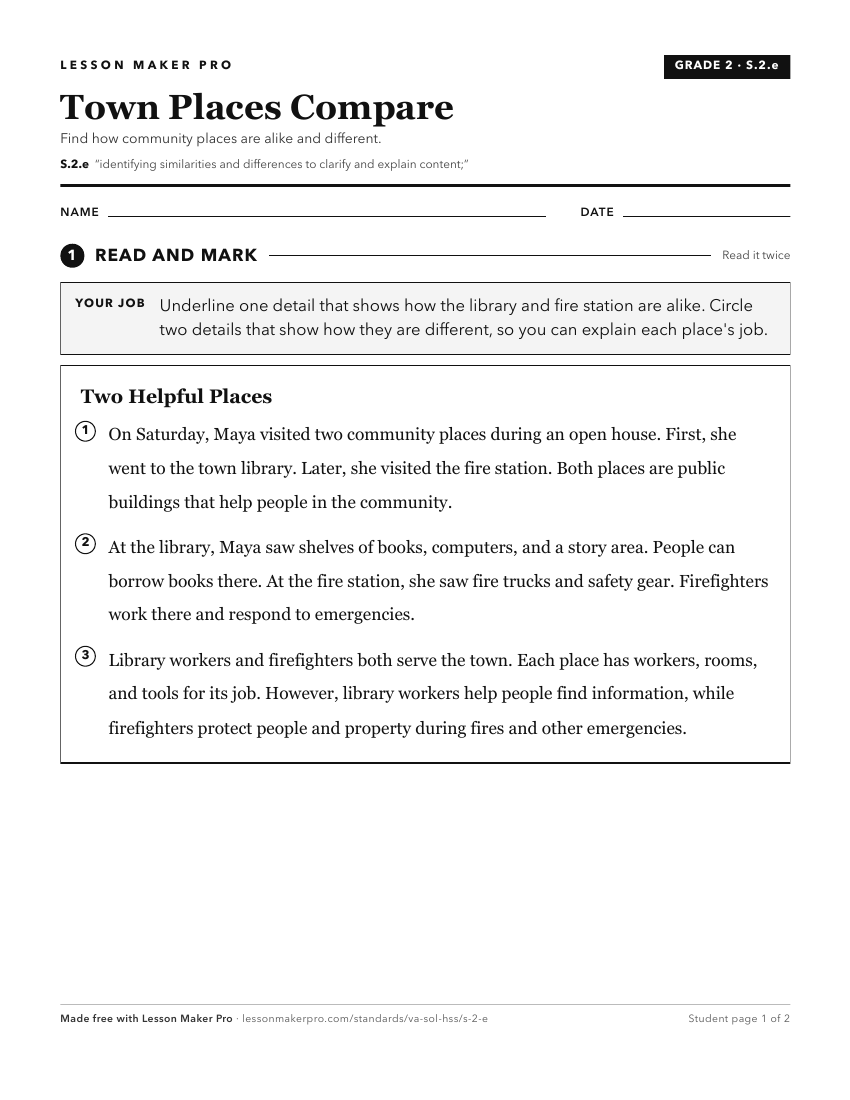
A ready-to-print activity worksheet aligned to S.2.e, with an answer key for the teacher on its own page. No account needed.
PDF, US Letter, prints cleanly in black and white.
Download the worksheetKeep exploring
Related Standards
Turn this exact standard into a lesson
Grade, subject, topic, and the complete standard are prefilled. Create one free, no account needed.
Also for this standard:Make a WorksheetMake a QuizMake a Sub Lesson