Virginia SOL CE.8.c
The Standard
- CE.8
- The student will apply history and social science skills to examine the political process at the local, state, and national levels of government by
explaining the role of campaign contributions and the cost of campaigns
Virginia Standards of Learning for History and Social Science · The student will apply history and social science skills to examine the political process at the local, state, and national levels of government by
Teacher's field guide
What This Standard Means
What Students Need to Do
- Students explain why candidates need money for advertising, staff, travel, events, and voter outreach. They identify common funding sources and describe how high costs can affect who runs and whose concerns receive attention.
What Mastery Looks Like
- Students can connect campaign expenses to fundraising by candidates. They can explain that contributions may increase access or influence, but do not legally purchase a candidate’s vote.
Common Misconceptions
- Students may think campaigns receive all funding from the government or that every contribution is illegal bribery. They may also assume the candidate who spends the most always wins.
How to Assess It
- Give students this prompt: Name two campaign expenses, one source of contributions, and one way high campaign costs can affect elections.
Lesson moves
Ways to Teach It
Give groups $100 in play money to divide among campaign ads, staff, travel, events, and voter outreach, then defend their budget.
Ask students to write whether large campaign contributions create influence, then support their answer with one specific example.
Play a matching game that pairs campaign expenses with funding sources, contribution limits, or possible effects on candidates and voters.
Compare the cost of reaching 10,000 voters through mailed flyers, online ads, and a public event using sample price cards.
Free download
Printable CE.8.c Worksheet
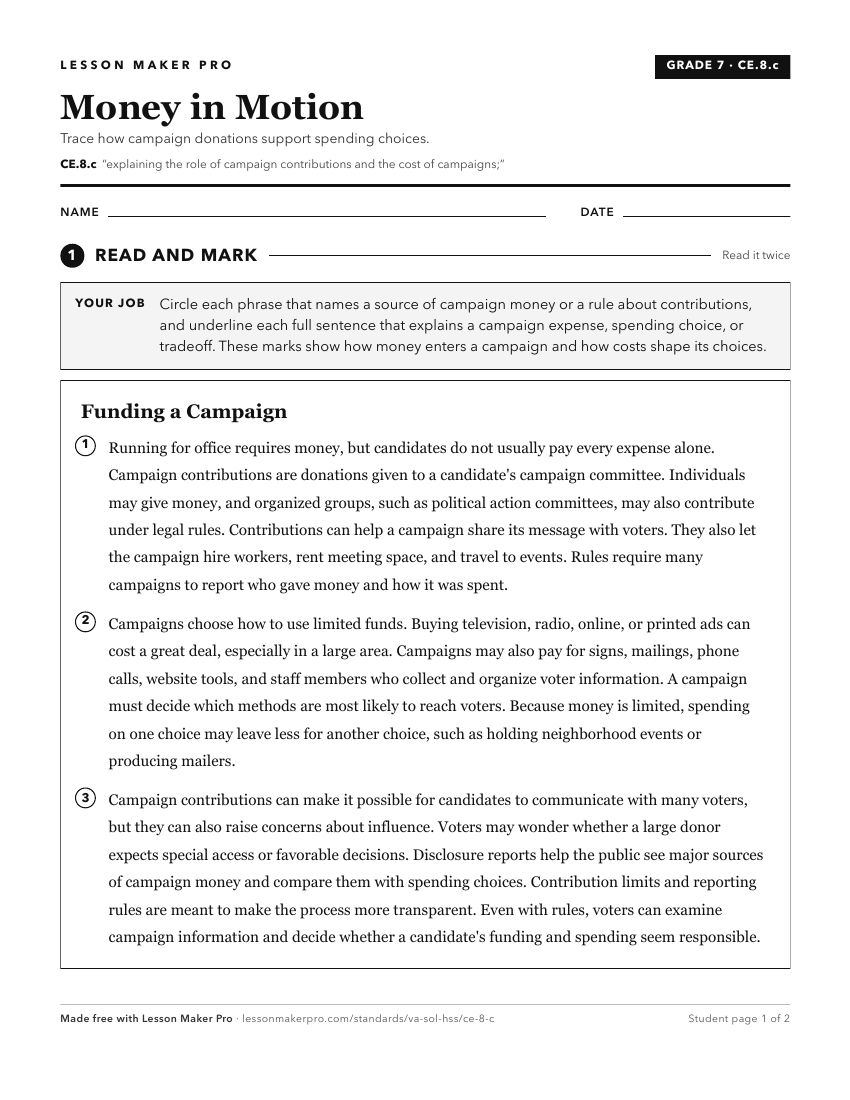
A ready-to-print activity worksheet aligned to CE.8.c, with an answer key for the teacher on its own page. No account needed.
PDF, US Letter, prints cleanly in black and white.
Download the worksheetKeep exploring
Related Standards
- CE.9.c
explaining the role that individuals play in the political policy-making process by expressing their opinions formally or informally via print media, electronic...
- CE.8.b
analyzing campaigns for elective office, with emphasis on the roles of candidates, volunteers, the media, voters, and poll watchers
- CE.3.b
explaining the state lawmaking process
- CE.9.d
evaluating the effect of social media on political campaigns, politics, and civic discourse
Turn this exact standard into a lesson
Grade, subject, topic, and the complete standard are prefilled. Create one free, no account needed.
Also for this standard:Make a WorksheetMake a QuizMake a Sub Lesson