Virginia SOL 8.RV.1.E
The Standard
Analyze the construction and meaning of an author’s use of symbols, analogy, and figurative language such as simile, metaphor, personification, hyperbole, and idiom.
Virginia Standards of Learning for English · Vocabulary Development and Word Analysis
Teacher's field guide
What This Standard Means
What Students Need to Do
- Students identify symbols, analogies, similes, metaphors, personification, hyperbole, and idioms in context. They explain the literal and implied meanings and show how the author’s wording creates tone, emphasis, or a larger idea.
What Mastery Looks Like
- A student accurately names the technique, explains its literal and implied meanings, and shows how specific words shape the effect. The student can also trace how a symbol develops across a passage.
Common Misconceptions
- Students often name the device but stop before explaining its effect. They may treat every object as a symbol, confuse personification with animal behavior, or read idioms literally. They may call any comparison an analogy without explaining the relationship between its parts.
How to Assess It
- Exit ticket: Display, “The rumor was a spark, leaping from desk to desk until the whole school burned with it.” Ask students to name one technique, explain its implied meaning, and cite two words that create the effect.
Lesson moves
Ways to Teach It
Give pairs six quote cards and colored sticky notes; students label each device, mark key words, and post a one-sentence explanation of its effect.
After a short passage with a repeated storm image, ask: How does the storm’s meaning change, and which words show that change?
Play Device Detective: teams draw a sentence card, identify the device, then earn a point only by explaining its effect.
Compare figurative language in two advertisements, then have students explain how each phrase shapes the product’s image or audience response.
Free download
Printable 8.RV.1.E Worksheet
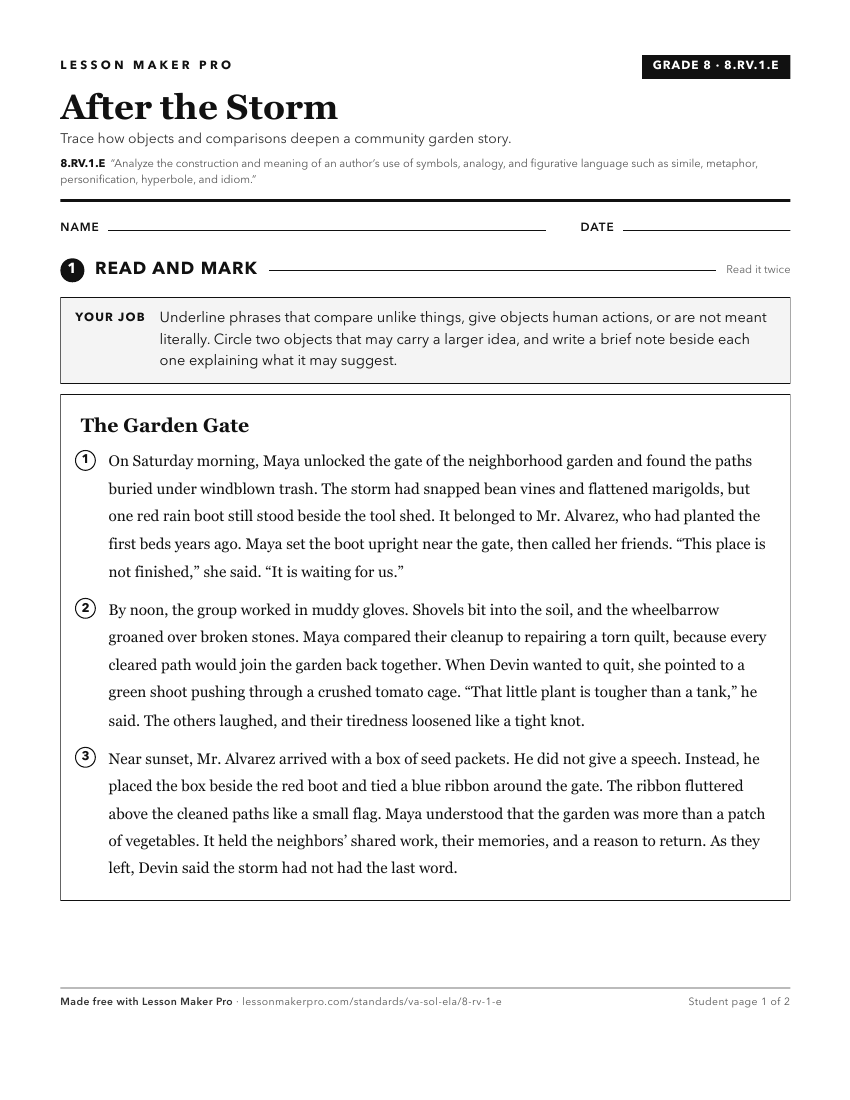
A ready-to-print activity worksheet aligned to 8.RV.1.E, with an answer key for the teacher on its own page. No account needed.
PDF, US Letter, prints cleanly in black and white.
Download the worksheetKeep exploring
Related Standards
- 7.RV.1.E
Analyze the construction and meaning of figurative language, including simile, hyperbole, metaphor, and personification.
- 10.RL.2.B
Analyze how authors use literary devices and figurative language, including allusion, allegory, and paradox to impact the meaning of the text.
- 5.RL.2.B
Analyze the author’s use of language (e.g., synonyms, figurative language, sensory words, dialogue, dialect) and their impact on understanding characters, setti...
- 6.RV.1.E
Explain the construction and meaning of figurative language, including simile, hyperbole, metaphor, and personification.
Turn this exact standard into a lesson
Grade, subject, topic, and the complete standard are prefilled. Create one free, no account needed.
Also for this standard:Make a WorksheetMake a QuizMake a Sub Lesson