Virginia SOL 10.RL.2.B
The Standard
Analyze how authors use literary devices and figurative language, including allusion, allegory, and paradox to impact the meaning of the text.
Virginia Standards of Learning for English · Craft and Style
Teacher's field guide
What This Standard Means
What Students Need to Do
- Students identify allusion, allegory, and paradox in literary passages. They explain how each device shapes theme, tone, character, conflict, or the reader’s understanding using textual evidence.
What Mastery Looks Like
- Students accurately identify allusion, allegory, and paradox in context. They cite specific words and explain how the device develops theme, tone, character, or conflict.
Common Misconceptions
- Students may label a device without explaining its effect on meaning. They may call any symbol an allegory, treat paradox as faulty logic, or miss allusions they do not recognize.
How to Assess It
- Exit ticket: Read, “To keep his crown, Marcus became a prisoner to it.” Identify the device and explain how it shapes the sentence’s meaning.
Lesson moves
Ways to Teach It
Give groups quotation cards to match with device labels, plain-language meanings, and effects on the reader.
Ask students to explain how replacing an allusion with a direct statement would change a passage’s tone or meaning.
Run a device sort relay using short passages labeled allusion, allegory, paradox, or none, then require one-sentence justifications.
Have students find an allusion or paradox in a song, advertisement, or speech and explain its intended effect.
Free download
Printable 10.RL.2.B Worksheet
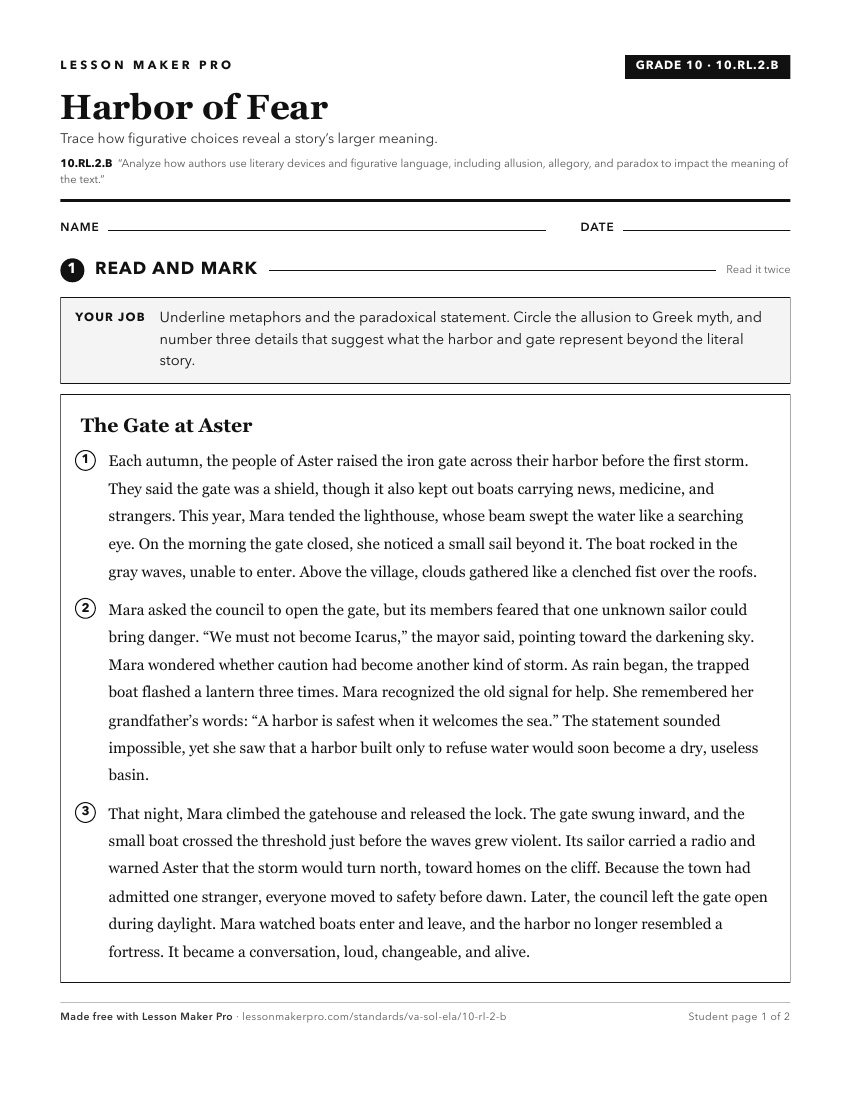
A ready-to-print activity worksheet aligned to 10.RL.2.B, with an answer key for the teacher on its own page. No account needed.
PDF, US Letter, prints cleanly in black and white.
Download the worksheetKeep exploring
Related Standards
- 12.RV.1.F
Interpret the meaning of figurative language and literary and classical allusions and analyze their role in texts.
- 10.RI.2.C
Analyze the author’s purpose and impact of literary techniques such as hyperbole, analogy, and paradox as they appear in texts.
- 8.RV.1.E
Analyze the construction and meaning of an author’s use of symbols, analogy, and figurative language such as simile, metaphor, personification, hyperbole, and i...
- 11.RL.2.C
Critique how authors use key literary devices (e.g., imagery, personification, symbolism) to contribute to the meaning of a text, including its character develo...
Turn this exact standard into a lesson
Grade, subject, topic, and the complete standard are prefilled. Create one free, no account needed.
Also for this standard:Make a WorksheetMake a QuizMake a Sub Lesson