Virginia SOL 11.RL.2.C
The Standard
Critique how authors use key literary devices (e.g., imagery, personification, symbolism) to contribute to the meaning of a text, including its character development, theme, conflict, and archetypes.
Virginia Standards of Learning for English · Craft and Style
Teacher's field guide
What This Standard Means
What Students Need to Do
- Students identify where an author uses imagery, personification, or symbolism. They explain how each device shapes character, theme, conflict, or an archetype, then judge how effectively it creates meaning.
What Mastery Looks Like
- Students cite precise words or passages and trace how a device affects character, theme, conflict, or an archetype. They judge the author's choice and support that judgment with clear evidence.
Common Misconceptions
- Students often name a device but stop before explaining its effect. They may treat symbols as having one fixed meaning or retell the plot instead of judging the author's choices.
How to Assess It
- Use the passage from “The Story of an Hour” beginning with the view through the open window. Ask students how the imagery shapes character or theme, whether it works effectively, and to cite two details.
Lesson moves
Ways to Teach It
Give pairs color coded sticky notes to mark imagery, symbols, and personification in a printed passage, then connect each note to an effect.
Discuss: Which recurring image most changes your view of the protagonist, and what evidence makes that reading convincing?
Run a card sort matching quoted devices to effects on character, theme, conflict, or archetype, with teams defending disputed matches.
Compare symbolism in a protest poster with symbolism in the text, then explain how each guides an audience toward a message.
Free download
Printable 11.RL.2.C Worksheet
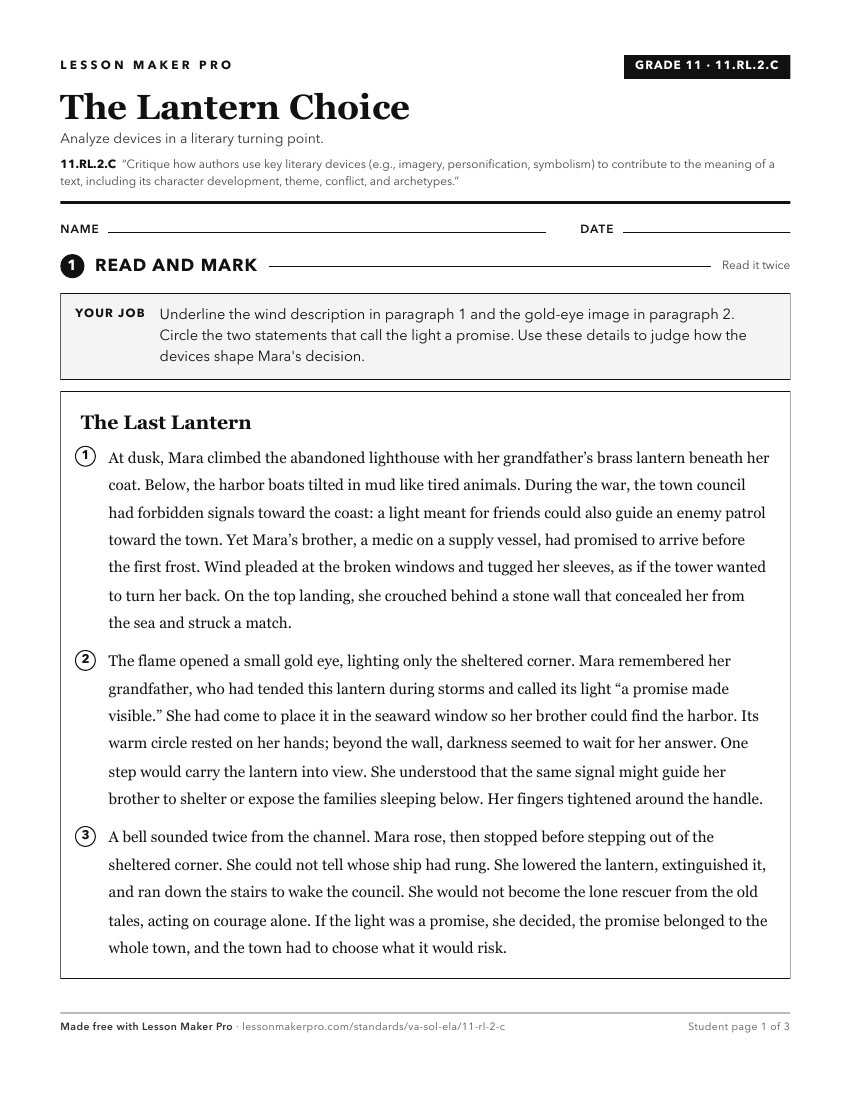
A ready-to-print activity worksheet aligned to 11.RL.2.C, with an answer key for the teacher on its own page. No account needed.
PDF, US Letter, prints cleanly in black and white.
Download the worksheetKeep exploring
Related Standards
- 10.RL.2.B
Analyze how authors use literary devices and figurative language, including allusion, allegory, and paradox to impact the meaning of the text.
- 5.RL.2.B
Analyze the author’s use of language (e.g., synonyms, figurative language, sensory words, dialogue, dialect) and their impact on understanding characters, setti...
- 10.RI.2.C
Analyze the author’s purpose and impact of literary techniques such as hyperbole, analogy, and paradox as they appear in texts.
- 8.RL.2.D
Analyze how an author’s use of literary devices including foreshadowing, flashback, symbolism, and irony are used to build mystery, suspense, or surprise.
Turn this exact standard into a lesson
Grade, subject, topic, and the complete standard are prefilled. Create one free, no account needed.
Also for this standard:Make a WorksheetMake a QuizMake a Sub Lesson