Virginia SOL 11.RI.2.C
The Standard
Recognize and analyze the author’s purpose and impact of ambiguity, contradiction, paradox, oxymoron, irony, sarcasm, overstatement, and understatement in informational texts.
Virginia Standards of Learning for English · Craft and Style
Teacher's field guide
What This Standard Means
What Students Need to Do
- Students spot ambiguity, contradiction, irony, and related devices in nonfiction. They connect each choice to the author’s purpose and explain its effect on readers.
What Mastery Looks Like
- Students identify the device using evidence from the text. They explain why the author used it and how it affects tone, meaning, emphasis, or reader response.
Common Misconceptions
- Students may label any humorous line as irony or sarcasm. They may identify a device correctly but fail to explain how it shapes tone, meaning, or credibility.
How to Assess It
- Give students this line: “The new parking plan solved everything, except parking.” Ask them to name the device and explain its purpose and impact in two sentences.
Lesson moves
Ways to Teach It
Give pairs labeled device cards and short nonfiction excerpts to sort, then require one written justification for each match.
Ask students to explain how a columnist’s sarcasm changes the reader’s view of the subject and the author.
Play device bingo using projected headlines, reviews, and commentary, with students naming evidence before marking each square.
Have students annotate an advertisement or opinion article for overstatement and understatement, then explain how each choice shapes audience response.
Free download
Printable 11.RI.2.C Worksheet
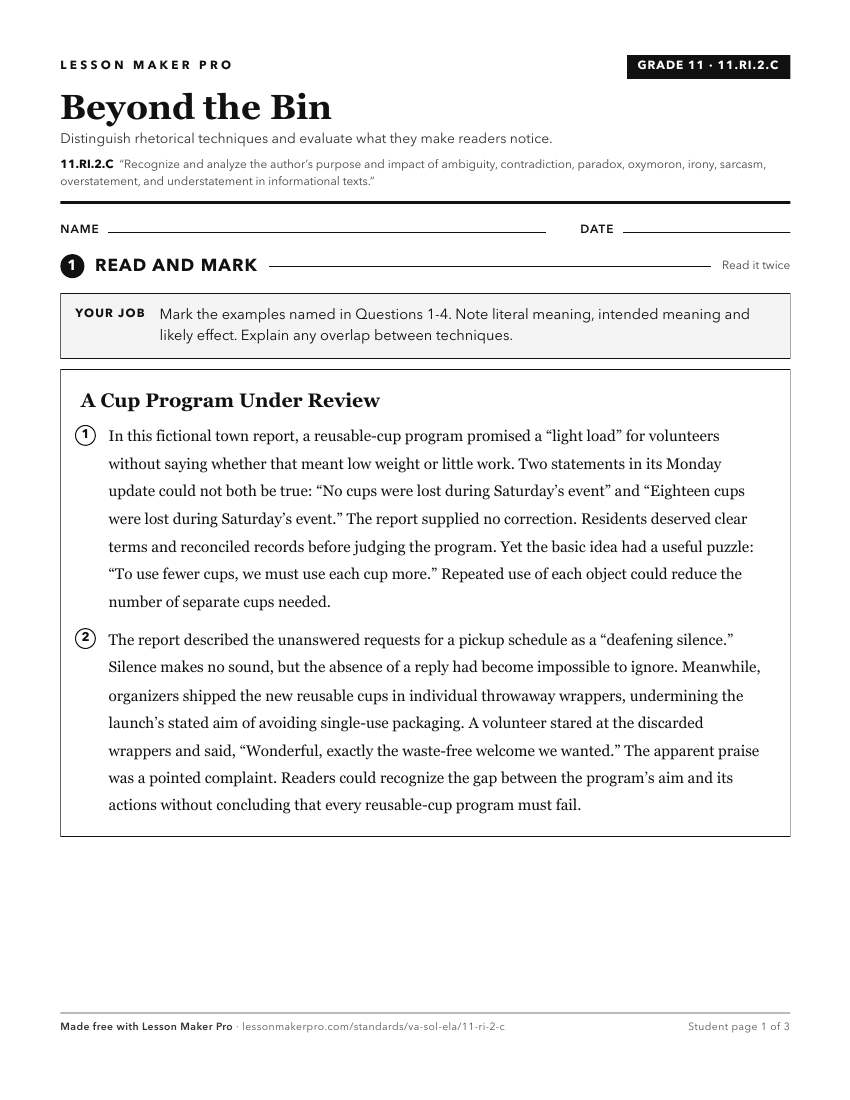
A ready-to-print activity worksheet aligned to 11.RI.2.C, with an answer key for the teacher on its own page. No account needed.
PDF, US Letter, prints cleanly in black and white.
Download the worksheetKeep exploring
Related Standards
- 10.RL.2.B
Analyze how authors use literary devices and figurative language, including allusion, allegory, and paradox to impact the meaning of the text.
- 7.RI.2.C
Analyze how an author’s purpose(s) reflects the author’s perspective (e.g., beliefs, assumptions, biases) and influences the meaning of an informational text.
- 9.RI.3.B
Evaluate the clarity and accuracy of information found in informational texts, corroborating or challenging conclusions with other sources of information.
- 10.RI.2.C
Analyze the author’s purpose and impact of literary techniques such as hyperbole, analogy, and paradox as they appear in texts.
Turn this exact standard into a lesson
Grade, subject, topic, and the complete standard are prefilled. Create one free, no account needed.
Also for this standard:Make a WorksheetMake a QuizMake a Sub Lesson