Virginia SOL 10.C.4
SOL Standard (Knowledge and Skills Cluster)
Examining Media Messages
Virginia Standards of Learning for English
Cluster contents
Knowledge and Skills in This Standard
10.C.4 is a Standards of Learning standard. These are the knowledge and skills expectations under it.
- 10.C.4.A
Analyze the viewpoint of print and digital publications (e.g., advertisements, editorials, blogs, and websites).
- 10.C.4.B
Analyze, compare, and contrast visual and verbal media messages for content (e.g., word choice and choice of information), intent (e.g., persuasive techniques, ...
- 10.C.4.C
Examine and analyze how media messages are constructed based on varying opinions, values, and viewpoints.
- 10.C.4.D
Evaluate the motives (e.g., social, commercial, and political) behind media messages used to determine author’s purpose, factual content, opinion, and/or possib...
- 10.C.4.E
Describe possible cause-and- effect relationships between mass media coverage and public opinion trends.
Teacher's field guide
What This Cluster Means
What Students Need to Do
- Students identify the viewpoint, purpose, audience, and motive behind print and digital messages. They compare words, images, selected facts, and persuasive techniques. They evaluate bias, effectiveness, and claims about media influence on public opinion.
What Mastery Looks Like
- Students compare how words, images, and selected facts shape two messages. They explain the purpose, audience, motive, and possible bias with specific evidence. They also judge effectiveness and avoid unsupported claims about public opinion.
Common Misconceptions
- Students may treat opinion as false and factual content as unbiased. They may name a persuasive technique without explaining its effect. They may assume media coverage caused an opinion shift when the evidence shows only a correlation.
How to Assess It
- Give students an advertisement and an editorial on the same issue. Ask them to identify each viewpoint, one persuasive technique, the likely motive, and one piece of evidence.
Lesson moves
Ways to Teach It
Give pairs printed ads, highlighters, and sticky notes to label claims, images, omitted facts, target audience, and possible bias.
Ask students to write which of two posts is more persuasive, then defend their choice with one visual and one verbal detail.
Run a card sort where students match sample arguments to ad hominem, red herring, strawman, fact, opinion, or bias.
Compare a local news headline with public comments or poll results, then discuss whether the coverage caused, reflected, or merely accompanied opinion changes.
Free download
Printable 10.C.4 Worksheet
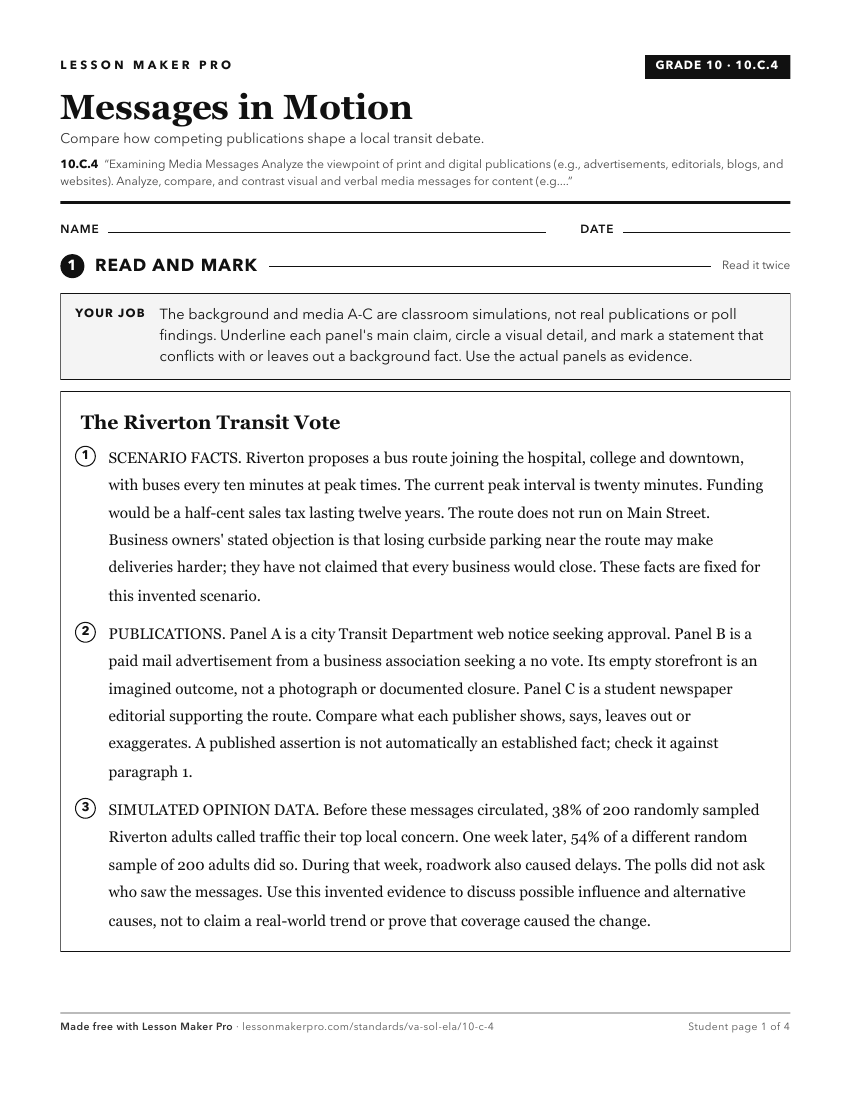
A ready-to-print activity worksheet aligned to 10.C.4, with an answer key for the teacher on its own page. No account needed.
PDF, US Letter, prints cleanly in black and white.
Download the worksheetKeep exploring
Related Standards
Turn this cluster into a lesson
Grade, subject, and topic are prefilled; the lesson picks the standards under this heading. Create one free, no account needed.
Also for this cluster:Make a WorksheetMake a QuizMake a Sub Lesson