Virginia SOL 10.C.4.A
The Standard
Analyze the viewpoint of print and digital publications (e.g., advertisements, editorials, blogs, and websites).
Virginia Standards of Learning for English · Examining Media Messages
Teacher's field guide
What This Standard Means
What Students Need to Do
- Students identify the viewpoint presented in an advertisement, editorial, blog, or website. They explain how word choice, images, layout, evidence, source selection, and omitted details shape that viewpoint.
What Mastery Looks Like
- Students clearly state a publication's viewpoint and support their claim with details from language, images, layout, sources, or links. They can compare two publications and explain how each presents the same issue differently.
Common Misconceptions
- Students may treat the topic as the viewpoint or label any opinion as bias. They may rely on one loaded word while ignoring images, source details, selected facts, and missing voices.
How to Assess It
- Show a screenshot of an online article. Ask students to name its viewpoint, cite two specific features, and explain how each feature supports that viewpoint.
Lesson moves
Ways to Teach It
Give pairs a printed advertisement and colored markers to label loaded words, images, claims, and information the advertiser leaves out.
Ask students to compare two headlines about one event and write which viewpoint each suggests, using one word choice as evidence.
Play viewpoint evidence sort, where teams match cards showing headlines, images, quotations, and source details to possible viewpoints.
Have students compare a local news article with a community organization's post about the same issue and identify differences in framing.
Free download
Printable 10.C.4.A Worksheet
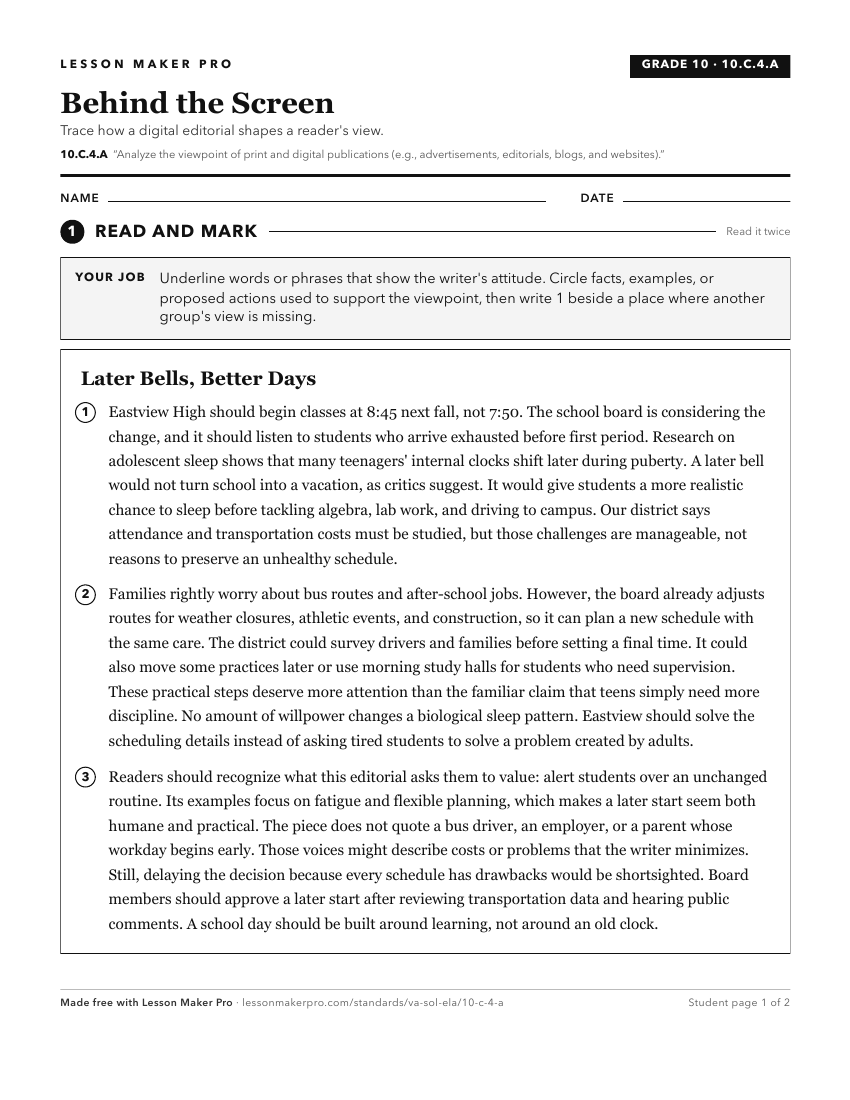
A ready-to-print activity worksheet aligned to 10.C.4.A, with an answer key for the teacher on its own page. No account needed.
PDF, US Letter, prints cleanly in black and white.
Download the worksheetKeep exploring
Related Standards
- 11.C.4.A
Analyze the sources and viewpoint(s) of publications including advertisements, editorials, blogs, and websites.
- 11.C.4.C
Analyze, compare, and contrast visual and verbal media messages for content (e.g., word choice and choice of information), intent (e.g., persuasive techniques),...
- 11.C.4.B
Analyze and critique how media reach the targeted audience for specific purposes
- 7.C.4.B
Analyze media messages for facts, opinions, persuasive messages, word choice, and viewpoint.
Turn this exact standard into a lesson
Grade, subject, topic, and the complete standard are prefilled. Create one free, no account needed.
Also for this standard:Make a WorksheetMake a QuizMake a Sub Lesson