Virginia SOL 11.C.4.A
The Standard
Analyze the sources and viewpoint(s) of publications including advertisements, editorials, blogs, and websites.
Virginia Standards of Learning for English · Examining Media Messages
Teacher's field guide
What This Standard Means
What Students Need to Do
- Students trace who created and published a media message, what evidence it uses, and whose interests may shape it. They compare perspectives and explain how language, images, funding, and omitted information influence the audience.
What Mastery Looks Like
- Students can explain who produced a message, why it was published, and how the publisher's interests affect its claims. They support their judgment with details such as word choice, evidence, links, funding, dates, and omitted perspectives.
Common Misconceptions
- Students may treat a polished design or familiar website as proof of reliability. They may label any opinion as bias without explaining how wording, evidence, ownership, or missing voices shape the message. Some confuse the person quoted with the person or group responsible for publishing.
How to Assess It
- Give students a screenshot of an online advertisement or editorial. Ask them to identify the creator, publisher, intended audience, supporting evidence, viewpoint, and one perspective left out.
Lesson moves
Ways to Teach It
Give pairs printed ads and website pages to mark the creator, publisher, evidence, emotional appeals, audience, and missing voices with colored sticky notes.
Ask students to write: How would this message change if it were published by a consumer group instead of the company involved?
Play Source Sleuth by awarding points when teams verify an author's credentials, publication ownership, funding, evidence, date, and linked sources.
Compare a local news report, business advertisement, and community blog post about the same issue, then identify each publisher's interests and audience.
Free download
Printable 11.C.4.A Worksheet
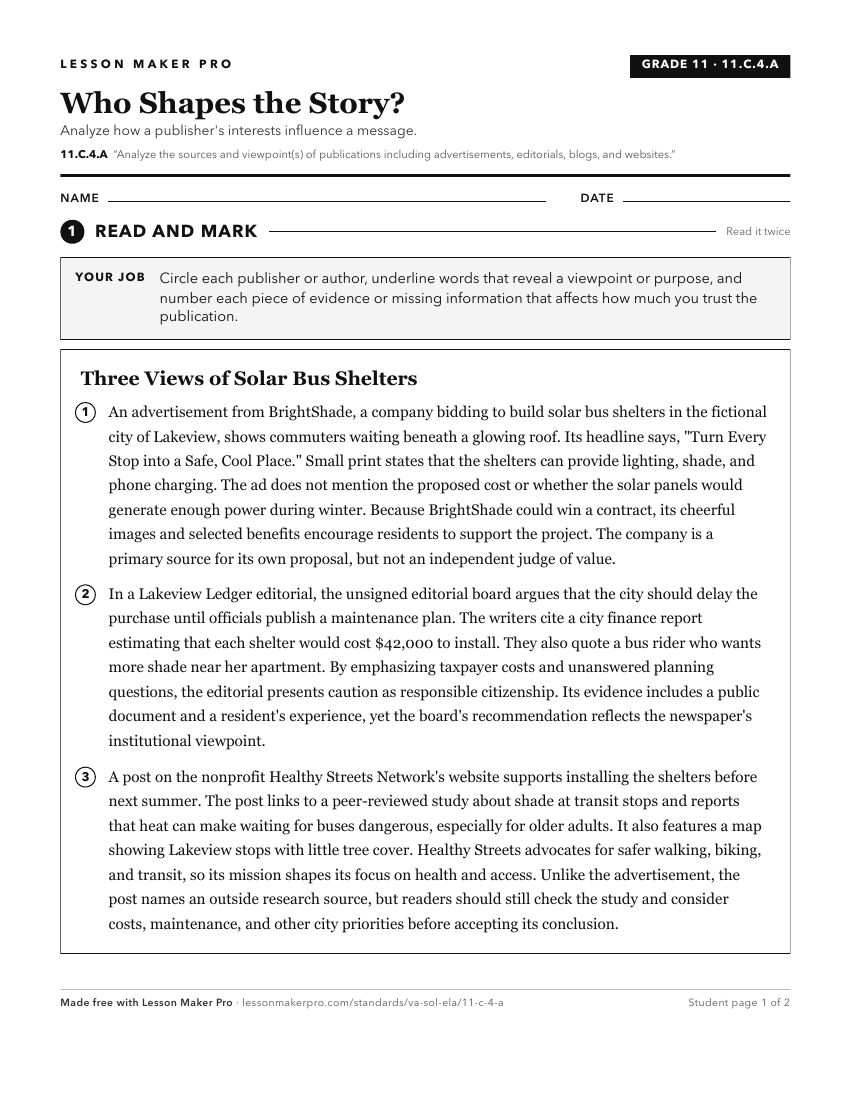
A ready-to-print activity worksheet aligned to 11.C.4.A, with an answer key for the teacher on its own page. No account needed.
PDF, US Letter, prints cleanly in black and white.
Download the worksheetKeep exploring
Related Standards
- 8.R.1.C
Evaluate and analyze the relevance, validity, and credibility of sources (primary, secondary, digital, and print) identifying main and supporting ideas, conflic...
- 10.C.4.A
Analyze the viewpoint of print and digital publications (e.g., advertisements, editorials, blogs, and websites).
- 9.C.4.E
Evaluate sources including advertisements, editorials, political cartoons, and feature stories for relationships between intent and factual content.
- 7.C.4.B
Analyze media messages for facts, opinions, persuasive messages, word choice, and viewpoint.
Turn this exact standard into a lesson
Grade, subject, topic, and the complete standard are prefilled. Create one free, no account needed.
Also for this standard:Make a WorksheetMake a QuizMake a Sub Lesson