Virginia SOL 10.C.4.E
The Standard
Describe possible cause-and- effect relationships between mass media coverage and public opinion trends.
Virginia Standards of Learning for English · Examining Media Messages
Teacher's field guide
What This Standard Means
What Students Need to Do
- Students compare changes in news coverage with shifts in polls, comments, or other measures of public opinion. They explain a plausible link while considering timing, audience, and other causes.
What Mastery Looks Like
- A student can use dated headlines and polling results to show whether coverage came before an opinion shift. The student cites specific evidence, explains the likely influence, and names at least one competing explanation.
Common Misconceptions
- Students may treat correlation as proof that coverage caused an opinion shift. They may ignore outside events, prior beliefs, audience choices, or the possibility that coverage followed public interest.
How to Assess It
- Give students three dated headlines and a four-point poll trend about the same issue. Ask: “What relationship is plausible, what evidence supports it, and what other factor could explain the trend?”
Lesson moves
Ways to Teach It
Give groups headline, event, and poll cards to arrange on a timeline, then draw arrows showing possible influence and label uncertain links.
Discuss: When does repeated coverage shape opinion, and when does it merely reflect what the public already believes?
Play “Cause, Correlation, or Both?” using brief media and polling scenarios, with teams defending each choice using timing and evidence.
Compare local news posts about a school or community issue with public comments, noting tone, frequency, timing, and alternative explanations.
Free download
Printable 10.C.4.E Worksheet
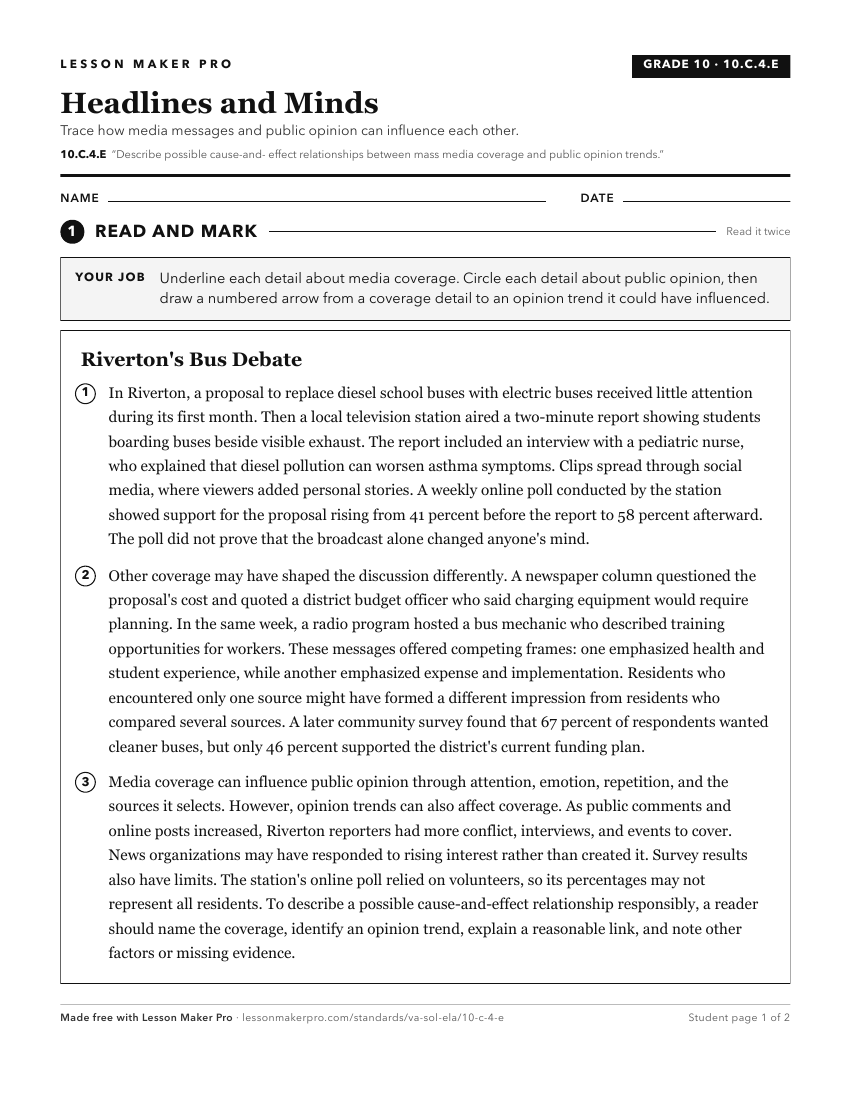
A ready-to-print activity worksheet aligned to 10.C.4.E, with an answer key for the teacher on its own page. No account needed.
PDF, US Letter, prints cleanly in black and white.
Download the worksheetKeep exploring
Related Standards
- 12.C.4.E
Analyze media to determine the cause-and-effect relationship(s) between media coverage and public opinion trends.
- 9.C.4.F
Identify the possible cause and effect relationships between mass media coverage and public opinion trends in media messages.
- 8.C.4.A
Examine how the media can influence beliefs, behaviors, and interpretations by using persuasive techniques (e.g., name calling, innuendo, glittering generalitie...
- 6.C.4.C
Explain the characteristics and analyze the effectiveness of a variety of media messages by considering the results and/or impact on the intended audience.
Turn this exact standard into a lesson
Grade, subject, topic, and the complete standard are prefilled. Create one free, no account needed.
Also for this standard:Make a WorksheetMake a QuizMake a Sub Lesson