Texas TEKS 8.20.B
The Standard
- 8.20
- Citizenship. The student understands the importance of voluntary individual participation in the democratic process. The student is expected to:
analyze reasons for and the impact of selected examples of civil disobedience in U.S. history such as the Boston Tea Party and Henry David Thoreau's refusal to pay a tax.
Texas Essential Knowledge and Skills for Social Studies
Teacher's field guide
What This Standard Means
What Students Need to Do
- Students identify the law or government policy being challenged and explain why participants believed resistance was justified. They trace immediate reactions and longer-term effects, then compare how each act influenced public opinion, government action, or later protests.
What Mastery Looks Like
- A student can explain that Tea Party participants challenged British taxation and control, while Thoreau withheld a poll tax over slavery and the Mexican War. The student distinguishes intended goals from actual results and supports claims with source evidence.
Common Misconceptions
- Students may call any protest civil disobedience, even when no law is deliberately broken, or assume civil disobedience must involve violence. They may also confuse an intended result with an actual impact or claim one action directly caused every later event.
How to Assess It
- Exit ticket: Choose the Boston Tea Party or Thoreau's tax refusal. In four sentences, name the policy challenged, the reason, an immediate consequence, and one later impact.
Lesson moves
Ways to Teach It
Give pairs cause, action, reaction, and legacy cards for both cases, then have them build and explain two evidence chains.
Ask students to write: When is breaking a law justified, and what evidence from one historical case supports your rule?
Play Civil Disobedience Sort: teams classify scenario cards as lawful protest, civil disobedience, or rebellion and earn points by defending each choice.
Read a current news report about nonviolent lawbreaking, then identify the policy challenged, intended audience, legal consequence, and possible public impact.
Free download
Printable 8.20.B Worksheet
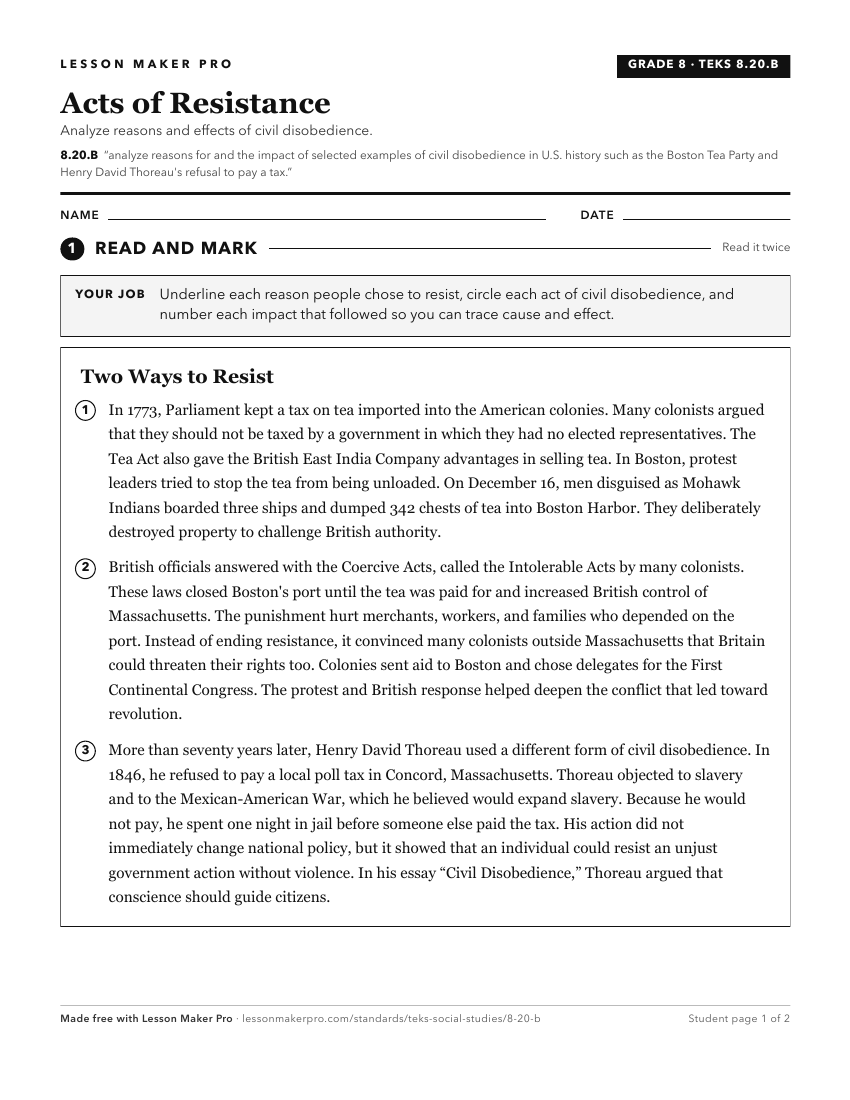
A ready-to-print activity worksheet aligned to 8.20.B, with an answer key for the teacher on its own page. No account needed.
PDF, US Letter, prints cleanly in black and white.
Download the worksheetKeep exploring
Related Standards
- 5.2.A
analyze the causes and effects of events prior to and during the American Revolution, including the taxation resulting from the French and Indian War and the co...
- 2.10.B
identify historical figures and other individuals who have exemplified good citizenship such as Paul Revere, Abigail Adams, World War II Women Airforce Service ...
- 8.4.A
analyze causes of the American Revolution, including the Proclamation of 1763, the Intolerable Acts, the Stamp Act, mercantilism, lack of representation in Parl...
- 5.20.A
identify significant examples of art, music, and literature from various periods in U.S. history such as the painting American Progress, "Yankee Doodle," and "P...
Turn this exact standard into a lesson
Grade, subject, topic, and the complete standard are prefilled. Create one free, no account needed.
Also for this standard:Make a WorksheetMake a QuizMake a Sub Lesson