Texas TEKS 8.16.B
The Standard
- 8.16
- Government. The student understands the purpose of changing the U.S. Constitution and the impact of amendments on American society. The student is expected to:
describe the impact of the 13th, 14th, and 15th amendments.
Texas Essential Knowledge and Skills for Social Studies
Teacher's field guide
What This Standard Means
What Students Need to Do
- Students explain how the three Reconstruction Amendments changed slavery, citizenship, legal protection, and voting rights. They also connect those legal changes to freedom and political participation after the Civil War.
What Mastery Looks Like
- Students accurately match each amendment to its main effect. They explain that the amendments expanded rights while discrimination, violence, and restrictive state laws still limited those rights.
Common Misconceptions
- Students often mix up the citizenship protections of the 14th Amendment with the voting protections of the 15th Amendment. They may also assume the amendments immediately ended racial inequality or gave women voting rights.
How to Assess It
- Give students a three-row exit ticket labeled 13th, 14th, and 15th. Ask them to write one legal change and one historical impact for each.
Lesson moves
Ways to Teach It
Have pairs sort amendment summaries, Reconstruction scenarios, and historical outcomes into three labeled folders.
Ask students to write which amendment most changed the relationship between citizens, states, and the federal government, using two facts.
Play an amendment match game with cards showing legal language, rights, limits, and Reconstruction-era examples.
Examine a current voter registration form and discuss how citizenship, equal protection, and voting rights connect to its questions.
Free download
Printable 8.16.B Worksheet
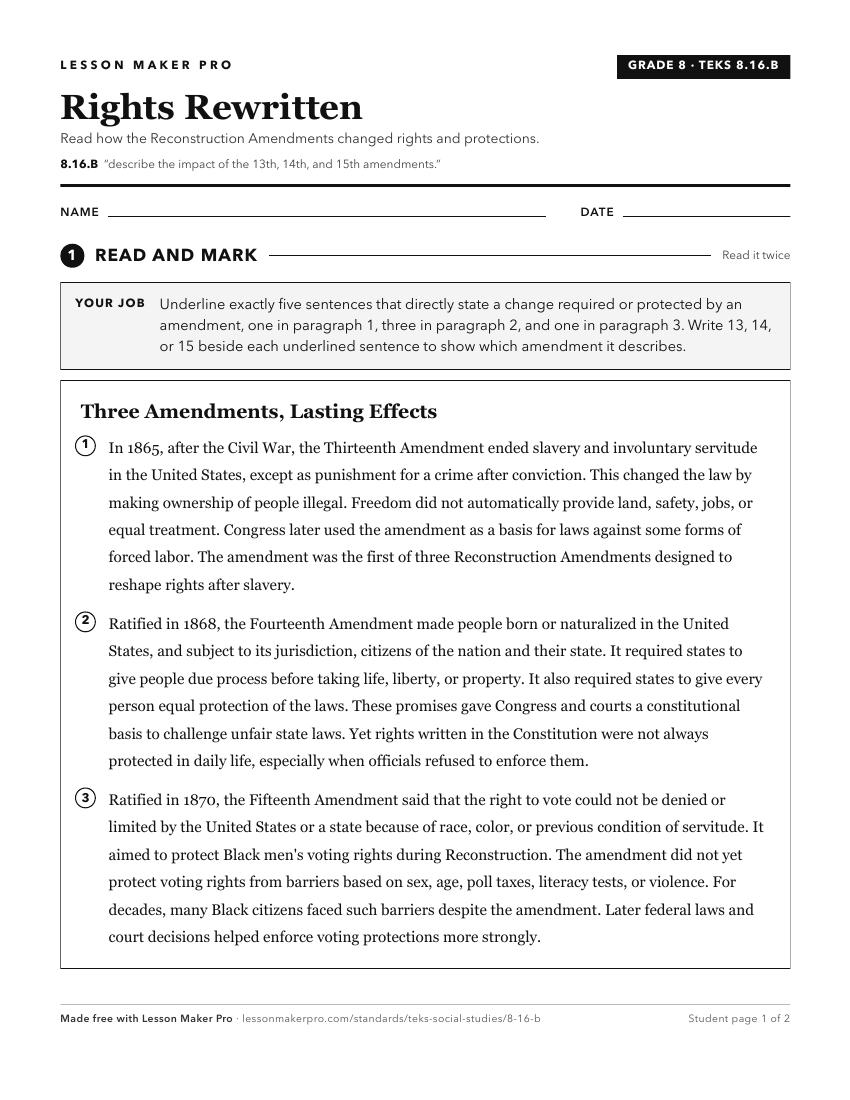
A ready-to-print activity worksheet aligned to 8.16.B, with an answer key for the teacher on its own page. No account needed.
PDF, US Letter, prints cleanly in black and white.
Download the worksheetKeep exploring
Related Standards
- 8.5.G
explain the impact of the election of Andrew Jackson, including expanded suffrage
- 8.9.C
explain the economic, political, and social problems during Reconstruction and evaluate their impact on different groups.
- 5.4.E
explain the effects of the Civil War, including Reconstruction and the 13th, 14th, and 15th amendments to the U.S. Constitution
- 8.9.B
explain the impact of the election of African Americans from the South such as Hiram Rhodes Revels
Turn this exact standard into a lesson
Grade, subject, topic, and the complete standard are prefilled. Create one free, no account needed.
Also for this standard:Make a WorksheetMake a QuizMake a Sub Lesson