Texas TEKS 8.14.B
The Standard
- 8.14
- Economics. The student understands the origins and development of the free enterprise system in the United States. The student is expected to:
describe the characteristics and the benefits of the U.S. free enterprise system through 1877.
Texas Essential Knowledge and Skills for Social Studies
Teacher's field guide
What This Standard Means
What Students Need to Do
- Students identify private property, competition, voluntary exchange, profit, entrepreneurship, and limited government involvement. They explain how these features encouraged choice, innovation, investment, and economic growth before 1877.
What Mastery Looks Like
- Students match historical examples to specific free enterprise characteristics. They explain a benefit of each feature and recognize that access to those benefits was unequal.
Common Misconceptions
- Students may think free enterprise means government played no economic role. They may also assume everyone benefited equally, ignoring slavery, discrimination, and limits on property ownership.
How to Assess It
- Give students one scenario about a pre-1877 shop owner. Ask them to name two free enterprise characteristics and explain one benefit shown.
Lesson moves
Ways to Teach It
Give groups labeled cards for characteristics, benefits, and historical examples, then have them build and defend matching sets.
Ask students to write: Which free enterprise characteristic most encouraged economic growth before 1877, and what evidence supports your choice?
Run a matching relay where teams pair historical business scenarios with competition, profit, private property, entrepreneurship, or voluntary exchange.
Have students compare choices at a modern farmers market with choices available to buyers and sellers at an antebellum town market.
Free download
Printable 8.14.B Worksheet
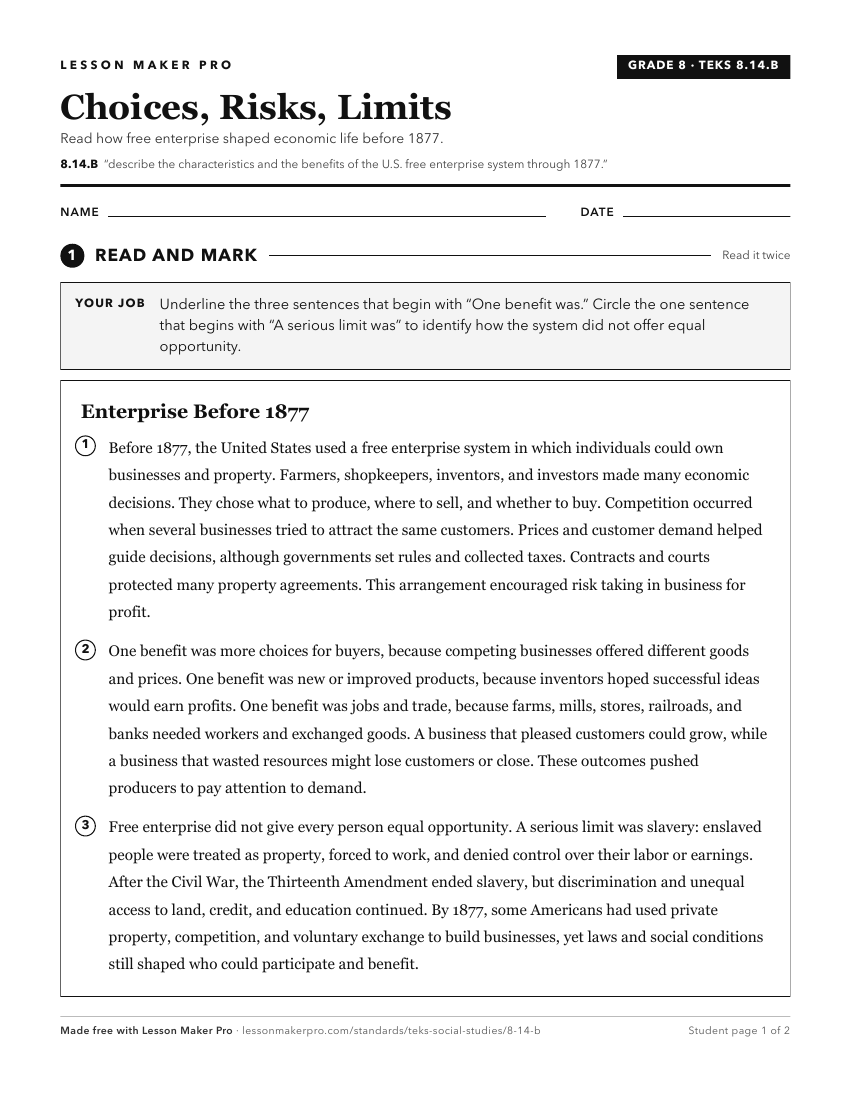
A ready-to-print activity worksheet aligned to 8.14.B, with an answer key for the teacher on its own page. No account needed.
PDF, US Letter, prints cleanly in black and white.
Download the worksheetKeep exploring
Related Standards
- 5.10.B
describe how the free enterprise system works in the United States
- 5.10.C
give examples of the benefits of the free enterprise system in the United States.
- 8.14.A
explain why a free enterprise system of economics developed in the new nation, including minimal government regulation, taxation, and property rights
- 5.10.A
identify the development of the free enterprise system in colonial America and the United States
Turn this exact standard into a lesson
Grade, subject, topic, and the complete standard are prefilled. Create one free, no account needed.
Also for this standard:Make a WorksheetMake a QuizMake a Sub Lesson