Texas TEKS 8.11.B
The Standard
- 8.11
- Geography. The student understands the physical characteristics of North America and how humans adapted to and modified the environment through the mid-19th century. The student is expected to:
describe the positive and negative consequences of human modification of the physical environment of the United States.
Texas Essential Knowledge and Skills for Social Studies
Teacher's field guide
What This Standard Means
What Students Need to Do
- Students explain how projects such as dams, canals, farming, mining, and city growth change land and water. They identify benefits and costs for people, habitats, and resources.
What Mastery Looks Like
- Students connect a specific environmental change to at least one positive and one negative result. They support each connection with accurate facts and clear cause-and-effect reasoning.
Common Misconceptions
- Students may label every change as entirely good or bad. They may confuse a natural event, such as a hurricane, with a human action or name an effect without explaining its cause.
How to Assess It
- Give an exit ticket asking: How did building a large dam change its surrounding area? Name one benefit, one cost, and explain each connection.
Lesson moves
Ways to Teach It
Pour water over two soil trays, one bare and one covered with sponges, then record differences in runoff and erosion.
Write a claim answering: Should communities build levees in flood-prone areas, even if wetlands may be damaged?
Sort cards showing dams, highways, irrigation, mining, and urban growth with their likely benefits and costs.
Compare dated aerial images of a nearby developed area, then list changes to land, water flow, vegetation, and human use.
Free download
Printable 8.11.B Worksheet
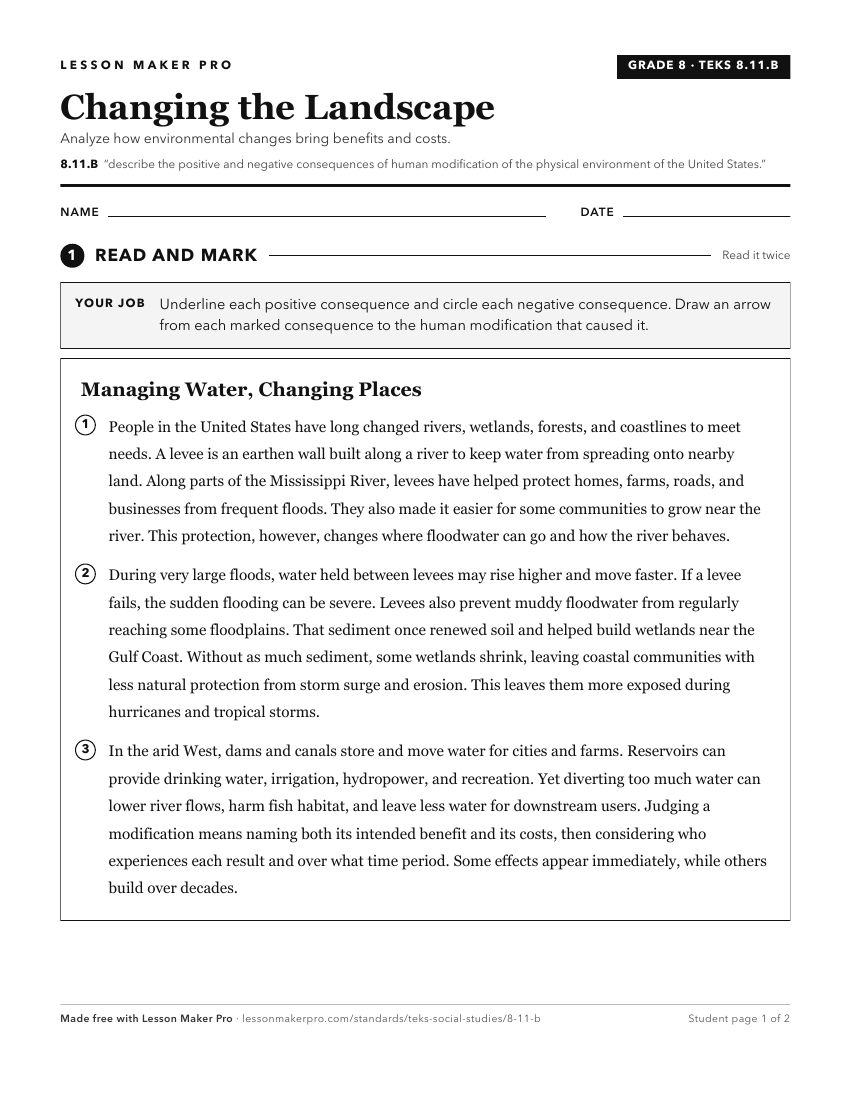
A ready-to-print activity worksheet aligned to 8.11.B, with an answer key for the teacher on its own page. No account needed.
PDF, US Letter, prints cleanly in black and white.
Download the worksheetKeep exploring
Related Standards
- 5.8.B
analyze the positive and negative consequences of human modification of the environment in the United States.
- 7.9.A
identify ways in which Texans have adapted to and modified the environment and explain the positive and negative consequences of the modifications
- 4.8.C
compare the positive and negative consequences of human modification of the environment in Texas, past and present.
- 2.5.B
identify consequences of human modification of the physical environment
Turn this exact standard into a lesson
Grade, subject, topic, and the complete standard are prefilled. Create one free, no account needed.
Also for this standard:Make a WorksheetMake a QuizMake a Sub Lesson