Texas TEKS 7.14.B
The Standard
- 7.14
- Government. The student understands the structure and functions of government created by the Texas Constitution. The student is expected to:
identify major sources of revenue for state and local governments such as property taxes, sales taxes, bonds, and fees.
Texas Essential Knowledge and Skills for Social Studies
Teacher's field guide
What This Standard Means
What Students Need to Do
- Students sort public income by where it comes from and which level of government commonly collects it. They explain how taxes, service charges, and borrowed money differ.
What Mastery Looks Like
- Students correctly classify a homeowner’s tax bill, a store receipt, a park entry charge, and a road bond. They can explain that bonds provide borrowed funds that must be repaid.
Common Misconceptions
- Students may think all government money comes from income taxes or that every charge is a tax. They may also treat bonds as free money rather than debt repaid over time.
How to Assess It
- Give students four items: property tax bill, sales receipt, permit fee, and school bond notice. Ask them to label each funding source and explain one label.
Lesson moves
Ways to Teach It
Give groups sample receipts, tax bills, permit charges, and bond notices to sort by revenue type and government level.
Ask students to write which funding source should pay for a new fire station and defend their choice in three sentences.
Play a matching game pairing local services with property taxes, sales taxes, fees, or bonds, then require students to justify each match.
Examine a city budget summary and highlight where money comes from before comparing the largest and smallest revenue sources.
Free download
Printable 7.14.B Worksheet
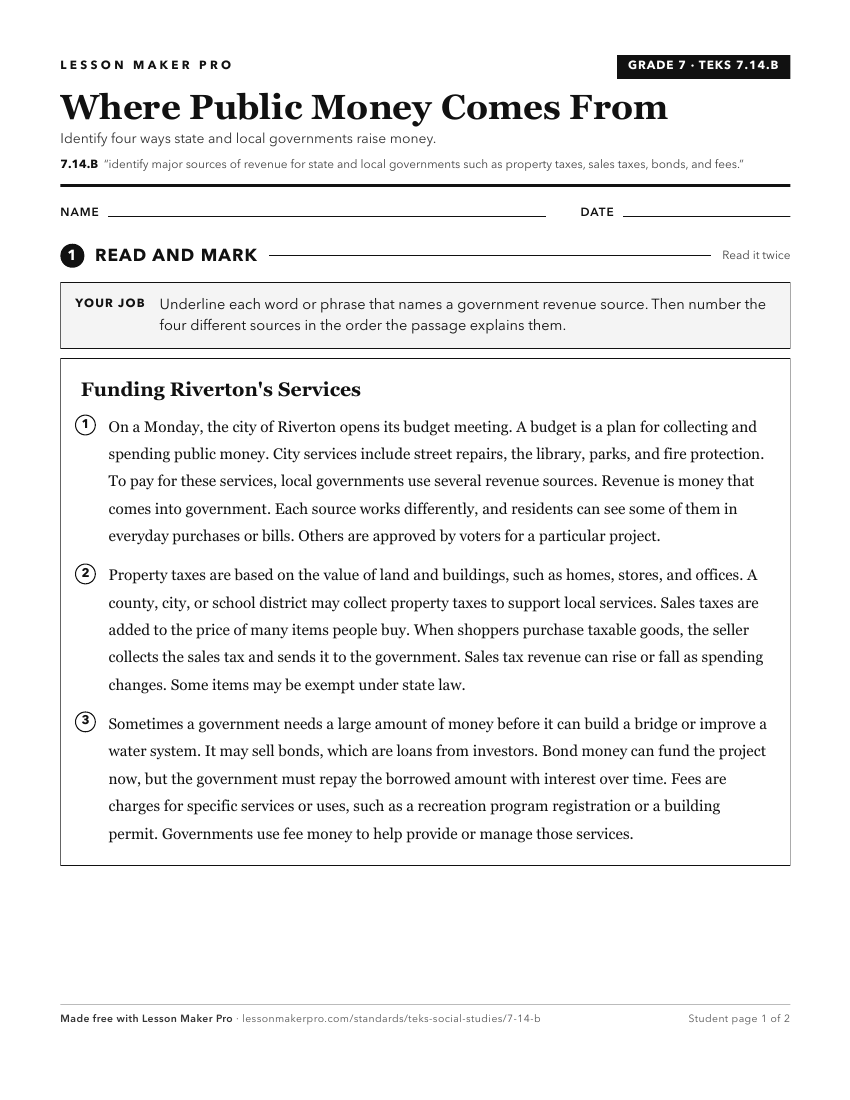
A ready-to-print activity worksheet aligned to 7.14.B, with an answer key for the teacher on its own page. No account needed.
PDF, US Letter, prints cleanly in black and white.
Download the worksheetKeep exploring
Related Standards
- 2.8.B
identify governmental services in the community such as police and fire protection, libraries, schools, and parks and explain their value to the community.
- 3.2.B
compare ways in which people in the local community and other communities meet their needs for government, education, communication, transportation, and recreat...
- 7.14.A
describe the structure and functions of government at municipal, county, and state levels
- 3.7.C
identify services commonly provided by local, state, and national governments.
Turn this exact standard into a lesson
Grade, subject, topic, and the complete standard are prefilled. Create one free, no account needed.
Also for this standard:Make a WorksheetMake a QuizMake a Sub Lesson