Texas TEKS 6.3.B
The Standard
- 6.3
- The student understands the factors that influence the locations and characteristics of locations of various contemporary societies on maps and/or globes
explain ways in which human migration influences the character of places and regions
Texas Essential Knowledge and Skills for Social Studies
Teacher's field guide
What This Standard Means
What Students Need to Do
- Students connect the movement of people to changes in a place's language, food, religion, work, population, and neighborhoods. They explain these cause-and-effect links with examples from maps, images, data, or short case studies.
What Mastery Looks Like
- Given a map or short case study, students identify who moved, from where, and where they settled. They explain at least two effects on culture, population, economy, or the built environment using source details.
Common Misconceptions
- Students may treat migration as only crossing national borders and overlook movement within a country. They may assume changes are always immediate, permanent, or harmful, or confuse a migrant group's presence with evidence of influence.
How to Assess It
- Use this exit ticket: A town receives 2,000 new residents from another region. Explain one cultural change and one economic change that may result.
Lesson moves
Ways to Teach It
Give pairs a world map, yarn, and migration cards; they trace each route and add sticky notes showing cultural and economic changes.
Write: How could newcomers change a city's food, language, jobs, and neighborhoods, and how might the city change them?
Play a cause-and-effect card match, then require each team to defend one match with a because statement.
Compare local census birthplace data with nearby business signs or festival calendars, then list visible effects of migration.
Free download
Printable 6.3.B Worksheet
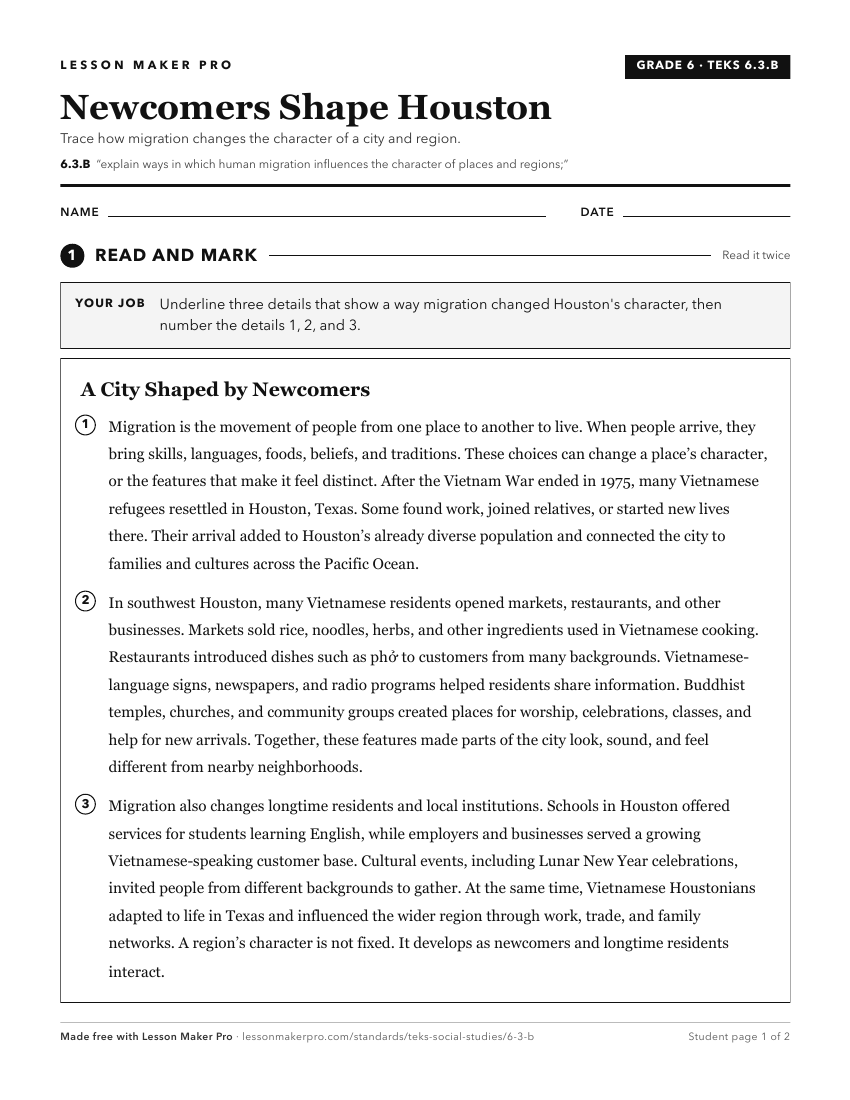
A ready-to-print activity worksheet aligned to 6.3.B, with an answer key for the teacher on its own page. No account needed.
PDF, US Letter, prints cleanly in black and white.
Download the worksheetKeep exploring
Related Standards
- K.4.B
identify how geographic location influences human characteristics of place such as shelter, clothing, food, and activities.
- 6.5.B
identify and analyze ways people have adapted to the physical environment in various places and regions
- 6.3.A
identify and explain the geographic factors responsible for patterns of population in places and regions
- 1.5.B
identify and describe how geographic location influences the human characteristics of place such as shelter, clothing, food, and activities.
Turn this exact standard into a lesson
Grade, subject, topic, and the complete standard are prefilled. Create one free, no account needed.
Also for this standard:Make a WorksheetMake a QuizMake a Sub Lesson