Texas TEKS K.3.A
The Standard
- K.3
- Scientific and engineering practices. The student develops evidence-based explanations and communicates findings, conclusions, and proposed solutions. The student is expected to:
develop explanations and propose solutions supported by data and models
Texas Essential Knowledge and Skills for Science
Teacher's field guide
What This Standard Means
What Students Need to Do
- Students observe a test, picture, chart, or model and say what it shows. They use that evidence to explain what happened. They suggest a fix to a simple problem and tell how the evidence supports it.
What Mastery Looks Like
- Given two tested designs, a student chooses one and cites a visible result, such as holding more blocks. The student uses a drawing or built model to show the idea and explain why it should work.
Common Misconceptions
- Students may give a guess or preference instead of pointing to an observation or result. They may treat a model as a toy rather than a representation. They may name a solution without explaining why it fits the problem.
How to Assess It
- Show a picture chart of two paper roofs: Roof A leaks 5 drops and Roof B leaks 1 drop. Ask, “Which roof would you choose, and what result supports your choice?”
Lesson moves
Ways to Teach It
Build two play dough bridges, test each with counting bears, then use the counts to explain which design works better.
Show two plant drawings and ask, “Which plant had enough water, and what details in the drawings support your answer?”
Play Evidence Match by pairing claim cards, such as “the ramp is faster,” with picture cards showing test results.
Test two paper towels on equal spills, count the remaining drops, and recommend one for cleaning the classroom.
Free download
Printable K.3.A Worksheet
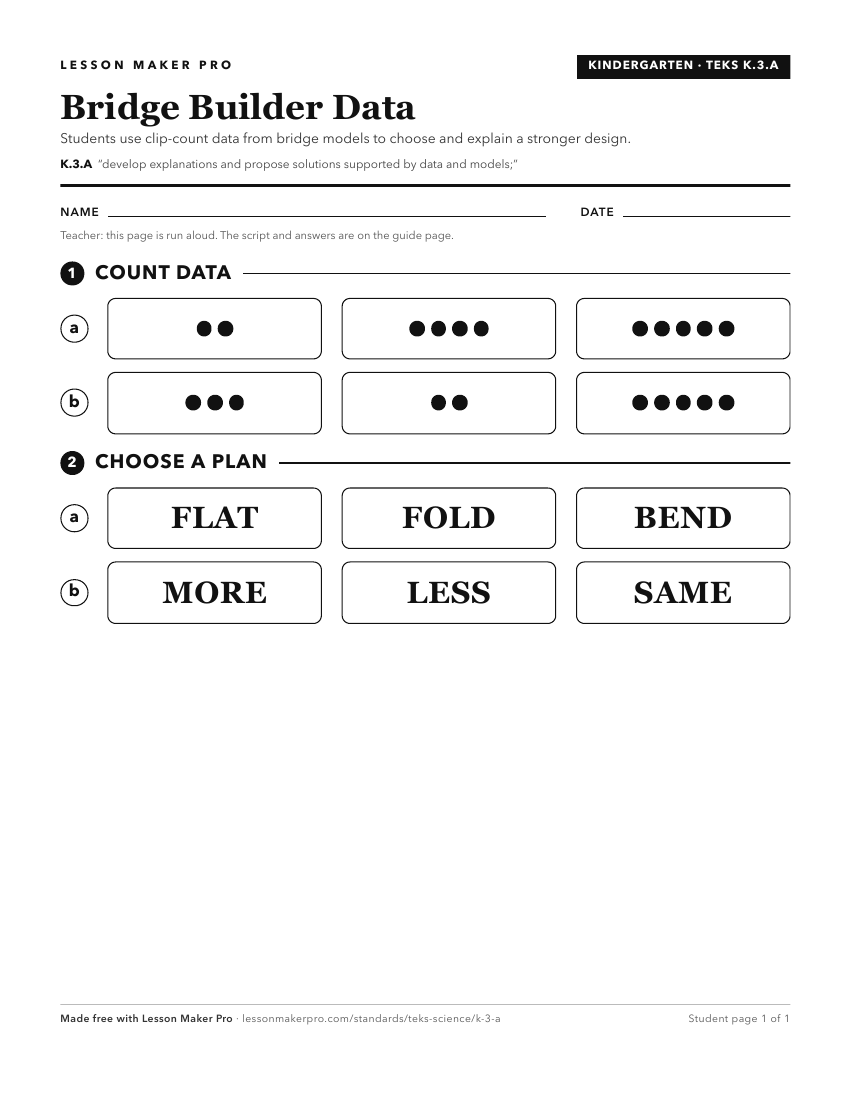
A ready-to-print activity worksheet aligned to K.3.A, with an answer key for the teacher on its own page. No account needed.
PDF, US Letter, prints cleanly in black and white.
Download the worksheetKeep exploring
Related Standards
Turn this exact standard into a lesson
Grade, subject, topic, and the complete standard are prefilled. Create one free, no account needed.
Also for this standard:Make a WorksheetMake a QuizMake a Sub Lesson