Texas TEKS 1.3.A
The Standard
- 1.3
- Scientific and engineering practices. The student develops evidence-based explanations and communicates findings, conclusions, and proposed solutions. The student is expected to:
develop explanations and propose solutions supported by data and models
Texas Essential Knowledge and Skills for Science
Teacher's field guide
What This Standard Means
What Students Need to Do
- Students use what they observe, count, record, or draw to tell why something happened. They suggest a fix and point to evidence that supports it.
What Mastery Looks Like
- A student can make a clear claim, cite a result from a simple test, and use a labeled drawing or object model. The proposed fix matches the problem and the evidence.
Common Misconceptions
- Students may give a guess without naming an observation or result. They may treat a model as decoration instead of showing how something works. They may propose a fix that does not address the problem.
How to Assess It
- Give students this data: cotton cloth absorbed 8 drops, paper towel 5, wax paper 0. Ask, “Which material should clean a spill, and why? Use one number and draw your solution.”
Lesson moves
Ways to Teach It
Build index-card bridges, test each with pennies, record the totals, then change one feature and explain why the change should help.
Show two plant photos and a height chart, then ask, “Why did one grow taller, and what evidence supports your idea?”
Play Evidence Match: students pair problem cards with observation, model, and solution cards, then defend each match to a partner.
Count litter near classroom trash bins, map the results, and recommend one new bin location using the map.
Free download
Printable 1.3.A Worksheet
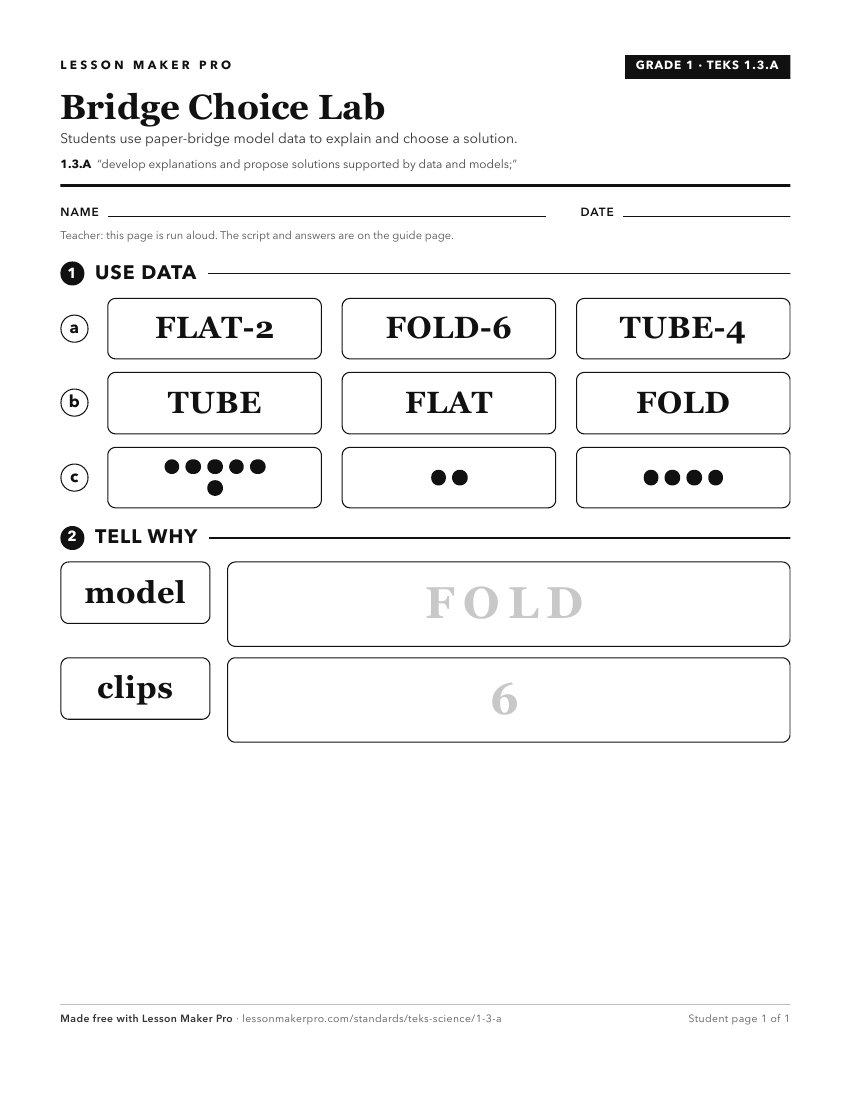
A ready-to-print activity worksheet aligned to 1.3.A, with an answer key for the teacher on its own page. No account needed.
PDF, US Letter, prints cleanly in black and white.
Download the worksheetKeep exploring
Related Standards
Turn this exact standard into a lesson
Grade, subject, topic, and the complete standard are prefilled. Create one free, no account needed.
Also for this standard:Make a WorksheetMake a QuizMake a Sub Lesson