Texas TEKS 8.12.C
The Standard
- 8.12
- The student understands stability and change in populations and ecosystems
describe how biodiversity contributes to the stability and sustainability of an ecosystem and the health of the organisms within the ecosystem.
Texas Essential Knowledge and Skills for Science
Teacher's field guide
What This Standard Means
What Students Need to Do
- Students compare ecosystems with different numbers and types of species. They use food webs and evidence to explain why varied communities usually recover better from disease, disturbance, or resource loss.
What Mastery Looks Like
- A student can trace how losing one species changes food, shelter, competition, and population size for others. They can explain why alternate food sources and overlapping roles make recovery more likely.
Common Misconceptions
- Students may think biodiversity means only the number of species, not genetic variety or different ecological roles. They may confuse a large population of one species with high biodiversity. They may also assume every species affects an ecosystem equally.
How to Assess It
- Give students two food webs, one with six species and one with twelve, including several shared feeding roles. Ask, “A disease removes one producer from each web. Which ecosystem is more likely to maintain its populations, and why?”
Lesson moves
Ways to Teach It
Give groups organism cards and yarn to build two food webs, then remove one producer and count the broken feeding links.
Have students write: How could greater variety among pollinators help a prairie after one insect species declines?
Run a food web challenge where teams earn points by naming alternate food sources after a species card is removed.
Compare local monoculture crops with a native prairie, using photos to predict pest spread, soil protection, and recovery after drought.
Free download
Printable 8.12.C Worksheet
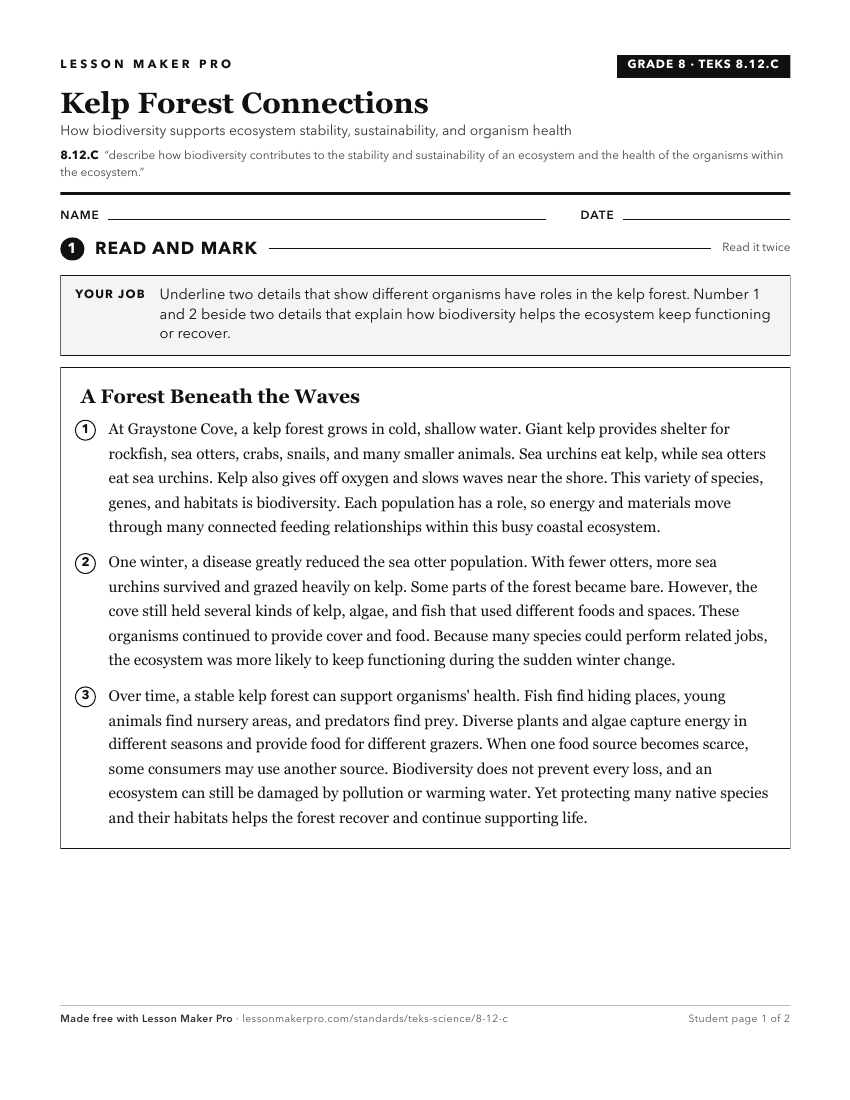
A ready-to-print activity worksheet aligned to 8.12.C, with an answer key for the teacher on its own page. No account needed.
PDF, US Letter, prints cleanly in black and white.
Download the worksheetKeep exploring
Related Standards
- 2.12.A
describe how the physical characteristics of environments, including the amount of rainfall, support plants and animals within an ecosystem
- 7.12.B
describe how ecosystems are sustained by the continuous flow of energy and the recycling of matter and nutrients within the biosphere.
- 5.12.A
observe and describe how a variety of organisms survive by interacting with biotic and abiotic factors in a healthy ecosystem
- 5.12.C
describe a healthy ecosystem and how human activities can be beneficial or harmful to an ecosystem.
Turn this exact standard into a lesson
Grade, subject, topic, and the complete standard are prefilled. Create one free, no account needed.
Also for this standard:Make a WorksheetMake a QuizMake a Sub Lesson