Texas TEKS 8.12.B
The Standard
- 8.12
- The student understands stability and change in populations and ecosystems
describe how primary and secondary ecological succession affect populations and species diversity after ecosystems are disrupted by natural events or human activity
Texas Essential Knowledge and Skills for Science
Teacher's field guide
What This Standard Means
What Students Need to Do
- Students distinguish recovery on bare surfaces from recovery where soil remains. They explain how pioneer species, changing habitats, and competition affect population sizes and species diversity over time.
What Mastery Looks Like
- Given a wildfire, flood, abandoned field, or lava flow, students can identify the recovery pattern and support their choice with evidence about soil. They can predict likely species changes and explain why diversity may rise or fall.
Common Misconceptions
- Students often think primary succession means the first species to appear, rather than recovery where soil is absent. They may expect every population to grow steadily or assume the final community never changes.
How to Assess It
- Exit ticket: Compare a cooled lava flow with a burned forest. Identify each recovery pattern, name one likely pioneer species, and predict how diversity changes.
Lesson moves
Ways to Teach It
Arrange cards showing bare rock, lichens, grasses, shrubs, and trees into two recovery timelines, then graph species richness for each.
Write a claim explaining why a forest usually recovers faster after fire than an island formed from cooled lava.
Play a succession card game where teams match disturbance cards with soil conditions, pioneer species, and likely population changes.
Compare photos from before and after the 2011 Bastrop wildfire, then identify surviving soil, returning species, and evidence of changing diversity.
Free download
Printable 8.12.B Worksheet
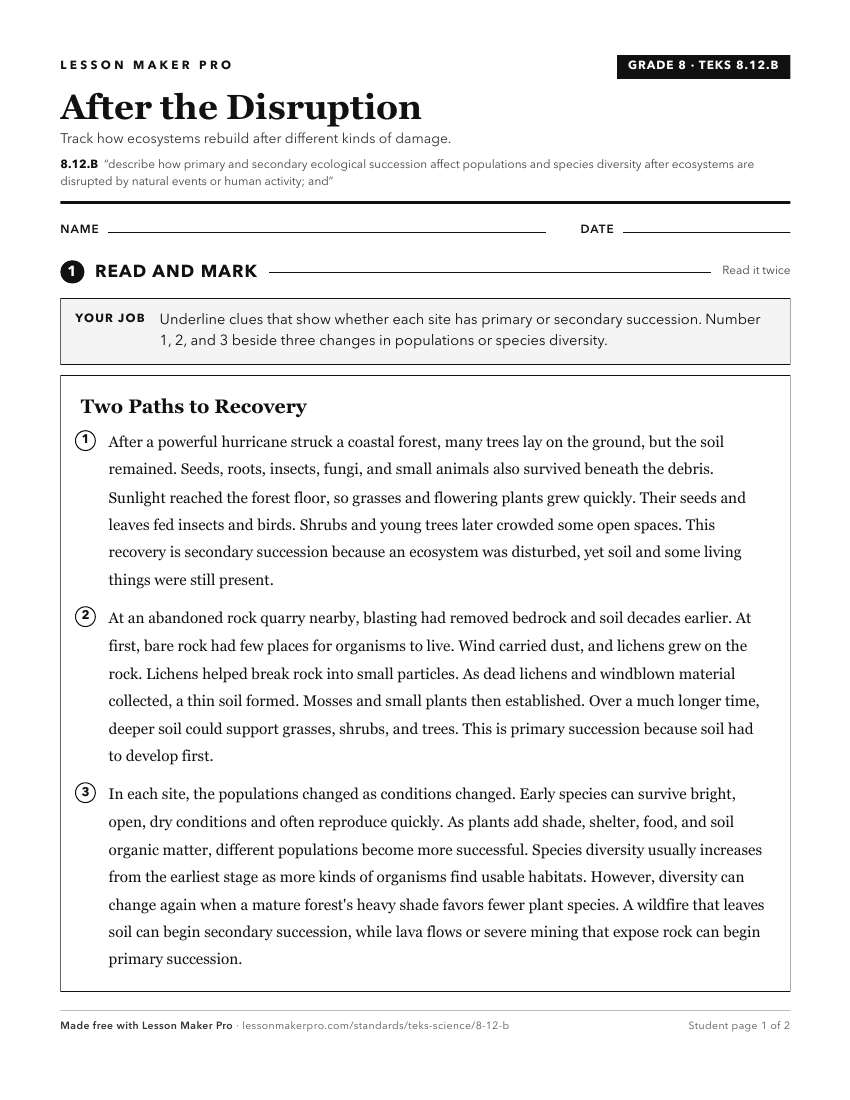
A ready-to-print activity worksheet aligned to 8.12.B, with an answer key for the teacher on its own page. No account needed.
PDF, US Letter, prints cleanly in black and white.
Download the worksheetKeep exploring
Related Standards
- 8.12.C
describe how biodiversity contributes to the stability and sustainability of an ecosystem and the health of the organisms within the ecosystem
- 3.12.C
describe how natural changes to the environment such as floods and droughts cause some organisms to thrive and others to perish or move to new locations
- 8.12.A
explain how disruptions such as population changes, natural disasters, and human intervention impact the transfer of energy in food webs in ecosystems
- 5.12.C
describe a healthy ecosystem and how human activities can be beneficial or harmful to an ecosystem.
Turn this exact standard into a lesson
Grade, subject, topic, and the complete standard are prefilled. Create one free, no account needed.
Also for this standard:Make a WorksheetMake a QuizMake a Sub Lesson