Texas TEKS 4.9.A
The Standard
- 4.9
- Earth and space. The student recognizes patterns among the Sun, Earth, and Moon system and their effects. The student is expected to:
collect and analyze data to identify sequences and predict patterns of change in seasons such as change in temperature and length of daylight
Texas Essential Knowledge and Skills for Science
Teacher's field guide
What This Standard Means
What Students Need to Do
- Students organize temperature and daylight data by month, then look for repeating increases and decreases. They use those patterns to predict what will happen in later months.
What Mastery Looks Like
- A student can graph monthly data, describe the seasonal sequence, and support a prediction with values from the graph. The student can identify when daylight or temperature will likely rise, fall, or reach a high or low point.
Common Misconceptions
- Students may think summer happens because Earth is closer to the Sun. They may assume temperature and daylight always change by the same amount or peak on the same date. Some may confuse daily weather changes with seasonal patterns.
How to Assess It
- Give students a graph with monthly temperature and daylight data through October. Ask them to predict November and December trends and cite two data points as evidence.
Lesson moves
Ways to Teach It
Give pairs twelve month cards with local temperatures and daylight hours, then have them arrange, graph, and label repeating rises and falls.
Ask students to write which season comes next and support their answer with one temperature pattern and one daylight pattern.
Play Pattern Detective by hiding two months on a yearly graph and having teams predict the missing values from nearby data.
Have students choose the best month for a school garden event using local temperature and daylight charts, then defend their choice.
Free download
Printable 4.9.A Worksheet
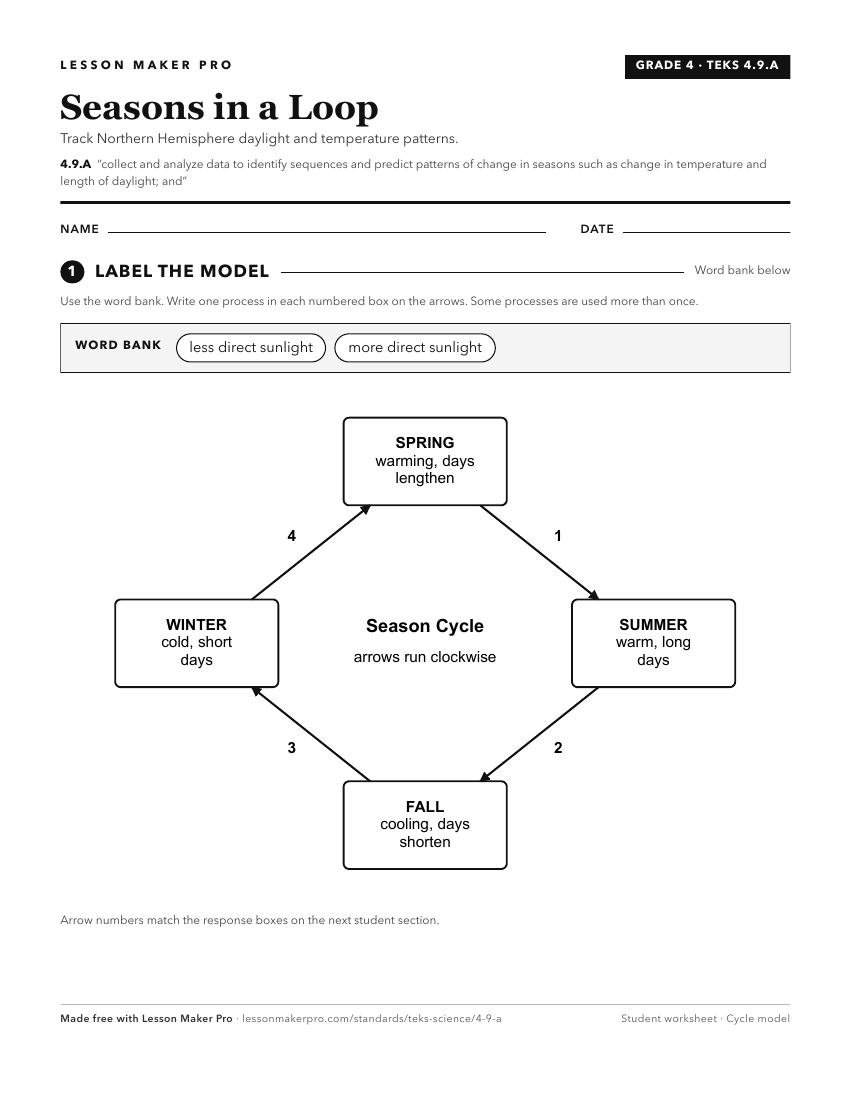
A ready-to-print activity worksheet aligned to 4.9.A, with an answer key for the teacher on its own page. No account needed.
PDF, US Letter, prints cleanly in black and white.
Download the worksheetKeep exploring
Related Standards
- 4.9.B
collect and analyze data to identify sequences and predict patterns of change in the observable appearance of the Moon from Earth.
- 2.10.B
measure, record, and graph weather information, including temperature and precipitation
- K.10.B
observe and describe weather changes from day to day and over seasons
- K.9.A
identify, describe, and predict the patterns of day and night and their observable characteristics
Turn this exact standard into a lesson
Grade, subject, topic, and the complete standard are prefilled. Create one free, no account needed.
Also for this standard:Make a WorksheetMake a QuizMake a Sub Lesson