Texas TEKS 3.6.D
The Standard
- 3.6
- Matter and energy. The student knows that matter has measurable physical properties that determine how matter is identified, classified, changed, and used. The student is expected to:
demonstrate that materials can be combined based on their physical properties to create or modify objects such as building a tower or adding clay to sand to make a stronger brick and justify the selection of materials based on their physical properties.
Texas Essential Knowledge and Skills for Science
Teacher's field guide
What This Standard Means
What Students Need to Do
- Students compare properties such as strength, flexibility, texture, absorbency, and hardness. They choose and combine materials to solve a design problem, then explain why each material fits its job.
What Mastery Looks Like
- Given a design goal, students select suitable materials, build or modify an object, and test whether it works. They use test results and named physical properties to defend their choices.
Common Misconceptions
- Students may choose materials by color or appearance instead of useful properties. They may assume combining materials always improves an object or name a material without explaining why it works.
How to Assess It
- Exit ticket: Sketch a basket made from two of these materials: paper, foil, craft sticks, and fabric. Label each material and explain one useful property.
Lesson moves
Ways to Teach It
Build a bridge spanning 20 centimeters using paper, craft sticks, clay, and foil, then test it with counters and explain each choice.
Ask: Which two materials would make the best rain hat, paper, foil, cotton, or plastic, and what properties support your choice?
Play Material Match: teams pair material cards with property and design-goal cards, then earn a point by defending each match.
Examine a sneaker and explain how rubber, fabric, and foam work together to provide grip, flexibility, and cushioning.
Free download
Printable 3.6.D Worksheet
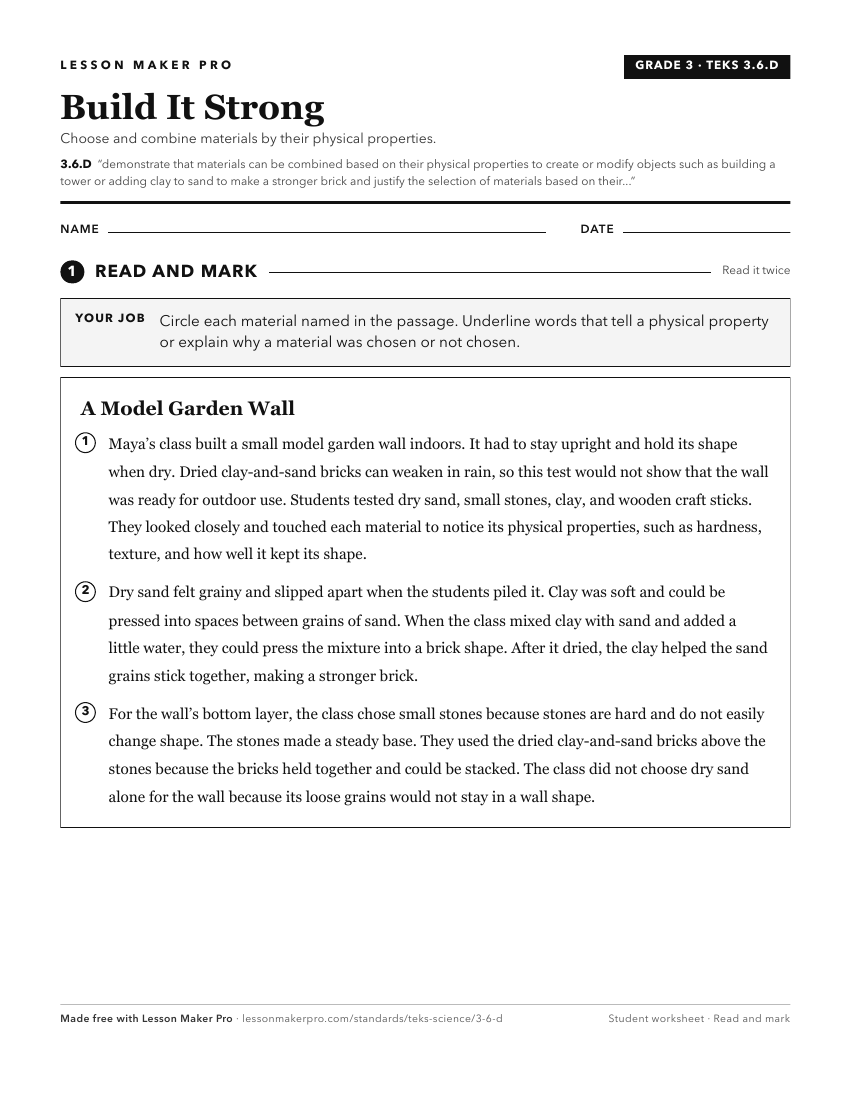
A ready-to-print activity worksheet aligned to 3.6.D, with an answer key for the teacher on its own page. No account needed.
PDF, US Letter, prints cleanly in black and white.
Download the worksheetKeep exploring
Related Standards
- 5.6.B
demonstrate and explain that some mixtures maintain physical properties of their substances such as iron filings and sand or sand and water
- 2.6.B
conduct a descriptive investigation to explain how physical properties can be changed through processes such as cutting, folding, sanding, melting, or freezing
- 2.6.C
demonstrate that small units such as building blocks can be combined or reassembled to form new objects for different purposes and explain the materials chosen ...
- 5.6.A
compare and contrast matter based on measurable, testable, or observable physical properties, including mass, magnetism, relative density (sinking and floating ...
Turn this exact standard into a lesson
Grade, subject, topic, and the complete standard are prefilled. Create one free, no account needed.
Also for this standard:Make a WorksheetMake a QuizMake a Sub Lesson