Texas TEKS 3.10.A
The Standard
- 3.10
- Earth and space. The student knows that there are recognizable processes that change Earth over time. The student is expected to:
compare and describe day-to-day weather in different locations at the same time, including air temperature, wind direction, and precipitation
Texas Essential Knowledge and Skills for Science
Teacher's field guide
What This Standard Means
What Students Need to Do
- Students read weather observations from two or more places taken at the same time. They compare temperature, wind direction, and precipitation using measurements and weather terms.
What Mastery Looks Like
- A student identifies which place is warmer, where each wind comes from, and whether precipitation occurred. The student supports each comparison with data from matching observation times.
Common Misconceptions
- Students may compare observations taken on different days or at different times. They may think a north wind blows toward the north rather than from the north. They may mistake cloudy skies for precipitation or confuse rain chance with measured rainfall.
How to Assess It
- Use this exit ticket: At noon, Austin is 82°F with a south wind and no rain; Amarillo is 68°F with a north wind and 0.2 inch of rain. Write one comparison for each weather feature.
Lesson moves
Ways to Teach It
Students measure schoolyard conditions with a thermometer, windsock, and rain gauge, then compare readings with a same-time report from another Texas city.
Students write three sentences explaining which 10 a.m. location feels colder or wetter, citing temperature, wind direction, and precipitation data.
Give pairs same-time weather cards; one student draws two cards, and the partner earns a point by making three accurate comparisons.
Show forecasts for two cities with Saturday noon games, then students choose clothing and rain gear for each team and explain why.
Free download
Printable 3.10.A Worksheet
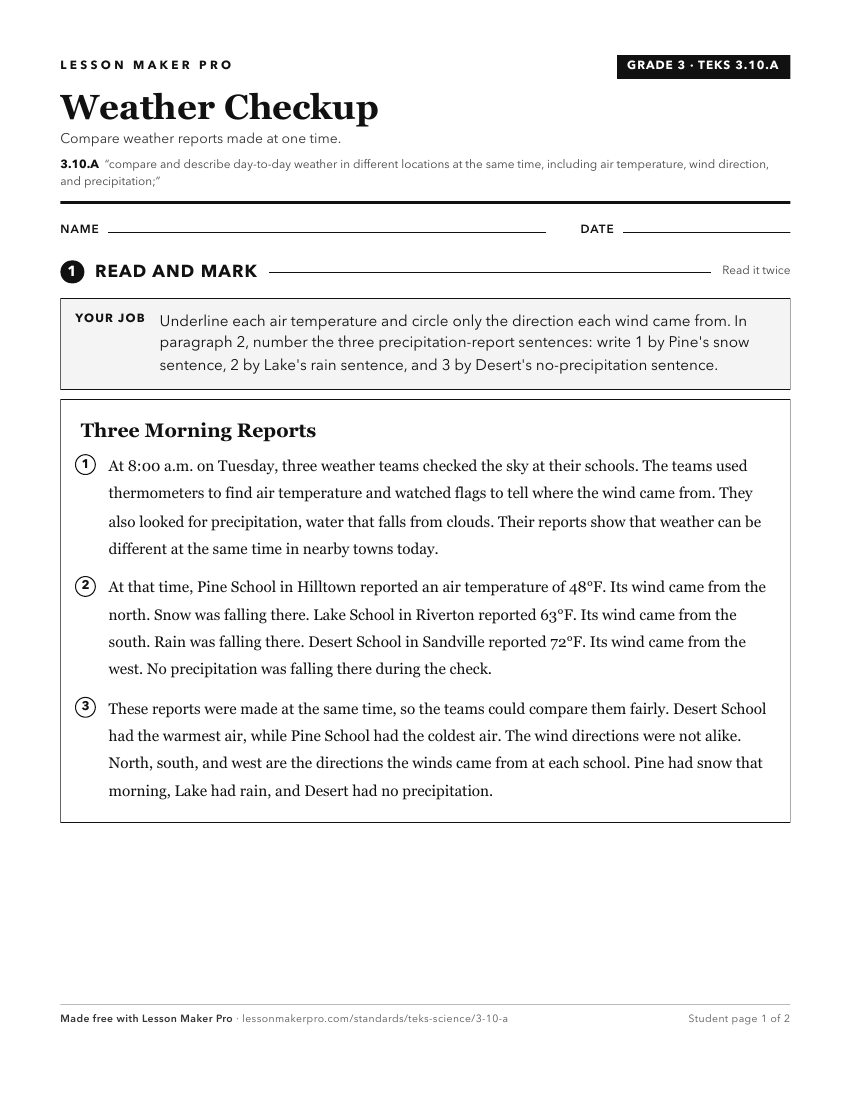
A ready-to-print activity worksheet aligned to 3.10.A, with an answer key for the teacher on its own page. No account needed.
PDF, US Letter, prints cleanly in black and white.
Download the worksheetKeep exploring
Related Standards
- 2.10.B
measure, record, and graph weather information, including temperature and precipitation
- 1.10.D
describe and record observable characteristics of weather, including hot or cold, clear or cloudy, calm or windy, and rainy or icy, and explain the impact of we...
- K.10.B
observe and describe weather changes from day to day and over seasons
- K.9.A
identify, describe, and predict the patterns of day and night and their observable characteristics
Turn this exact standard into a lesson
Grade, subject, topic, and the complete standard are prefilled. Create one free, no account needed.
Also for this standard:Make a WorksheetMake a QuizMake a Sub Lesson