Texas TEKS 1.10.D
The Standard
- 1.10
- Earth and space. The student knows that the natural world includes earth materials that can be observed in systems and processes. The student is expected to:
describe and record observable characteristics of weather, including hot or cold, clear or cloudy, calm or windy, and rainy or icy, and explain the impact of weather on daily choices.
Texas Essential Knowledge and Skills for Science
Teacher's field guide
What This Standard Means
What Students Need to Do
- Students observe the sky, air, and precipitation, then record what they notice with words, pictures, or symbols. They connect weather conditions to choices about clothing, travel, and outdoor plans.
What Mastery Looks Like
- A student can accurately label a day using more than one weather feature, such as cold, cloudy, and windy. The student can explain a sensible choice, such as wearing a coat or moving recess indoors.
Common Misconceptions
- Students may think sunny always means hot or cloudy always means rainy. They may confuse weather with seasons or describe temperature when asked about wind.
How to Assess It
- Show a picture of a windy, cloudy day. Ask students to name two weather features and draw or write one suitable clothing or activity choice.
Lesson moves
Ways to Teach It
Take students outside with a windsock, thermometer, and weather chart to observe and record the conditions.
Ask, "How would today's weather change what you wear or do after school?" Students draw and label their answer.
Play a matching game using weather picture cards and cards showing clothing, transportation, or activity choices.
Give students a pretend family picnic plan and have them revise it using a simple weather forecast.
Free download
Printable 1.10.D Worksheet
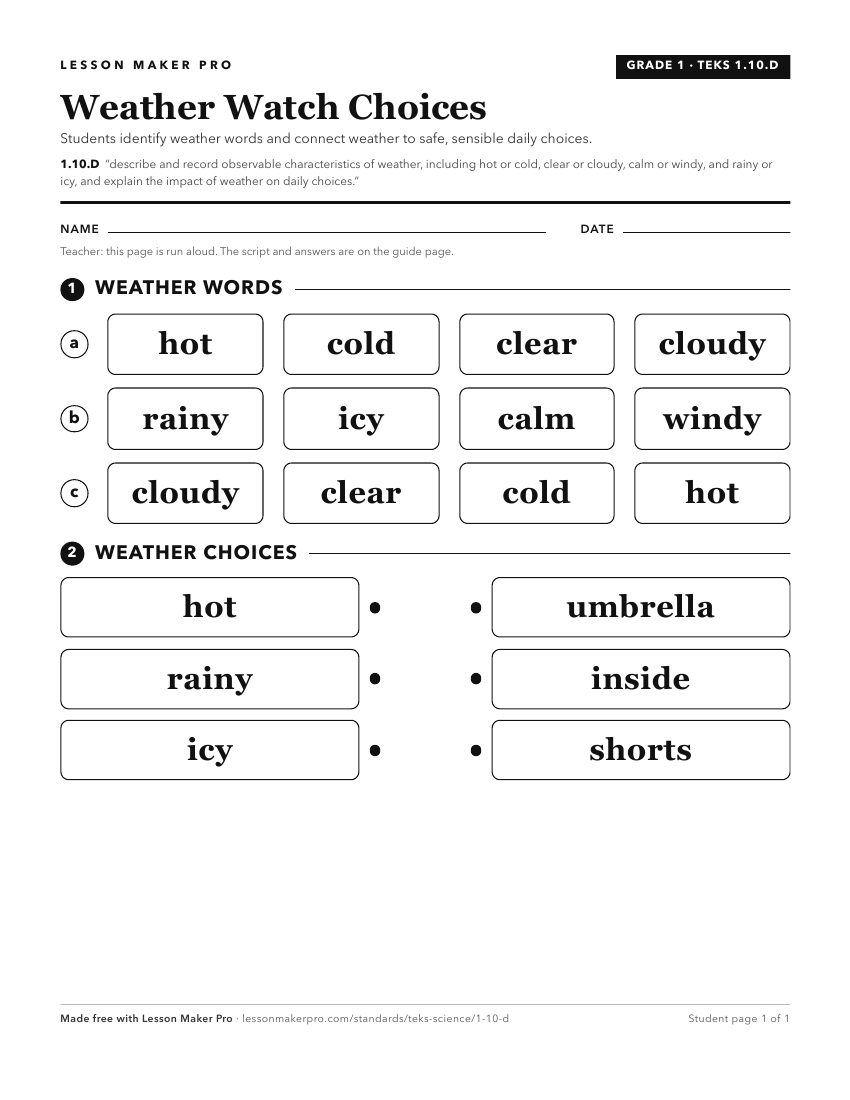
A ready-to-print activity worksheet aligned to 1.10.D, with an answer key for the teacher on its own page. No account needed.
PDF, US Letter, prints cleanly in black and white.
Download the worksheetKeep exploring
Related Standards
- 2.10.B
measure, record, and graph weather information, including temperature and precipitation
- 8.10.B
identify global patterns of atmospheric movement and how they influence local weather
- K.10.B
observe and describe weather changes from day to day and over seasons
- 3.10.A
compare and describe day-to-day weather in different locations at the same time, including air temperature, wind direction, and precipitation
Turn this exact standard into a lesson
Grade, subject, topic, and the complete standard are prefilled. Create one free, no account needed.
Also for this standard:Make a WorksheetMake a QuizMake a Sub Lesson