TEKS Math 6.13.B
The Standard
distinguish between situations that yield data with and without variability
Texas Essential Knowledge and Skills for Mathematics
Teacher's field guide
What This Standard Means
What Students Need to Do
- Students decide whether collecting data for a question is likely to produce different values or one fixed value. They explain what causes the values to differ or stay the same.
What Mastery Looks Like
- Students correctly predict whether collected results will differ across people, objects, or repeated trials. They justify each choice by naming what could change or remain fixed.
Common Misconceptions
- Students may think every question produces a range of answers. They may also confuse variation in collected measurements with mistakes made while measuring.
How to Assess It
- Give students three questions: “How many students are present?”, “What are their heights?”, and “What grade are they in?” Ask them to label each result as varying or fixed and explain why.
Lesson moves
Ways to Teach It
Have groups measure five classmates’ hand spans, then record whether the values differ and explain why.
Ask students to compare “What is our class size?” with “How many siblings do students have?” and explain which answers can differ.
Play a sorting game with question cards, placing each under “same result” or “different results,” then defend disputed choices.
Compare one cereal box’s printed net weight with the actual weights of several boxes and discuss why measured results may vary.
Free download
Printable 6.13.B Worksheet
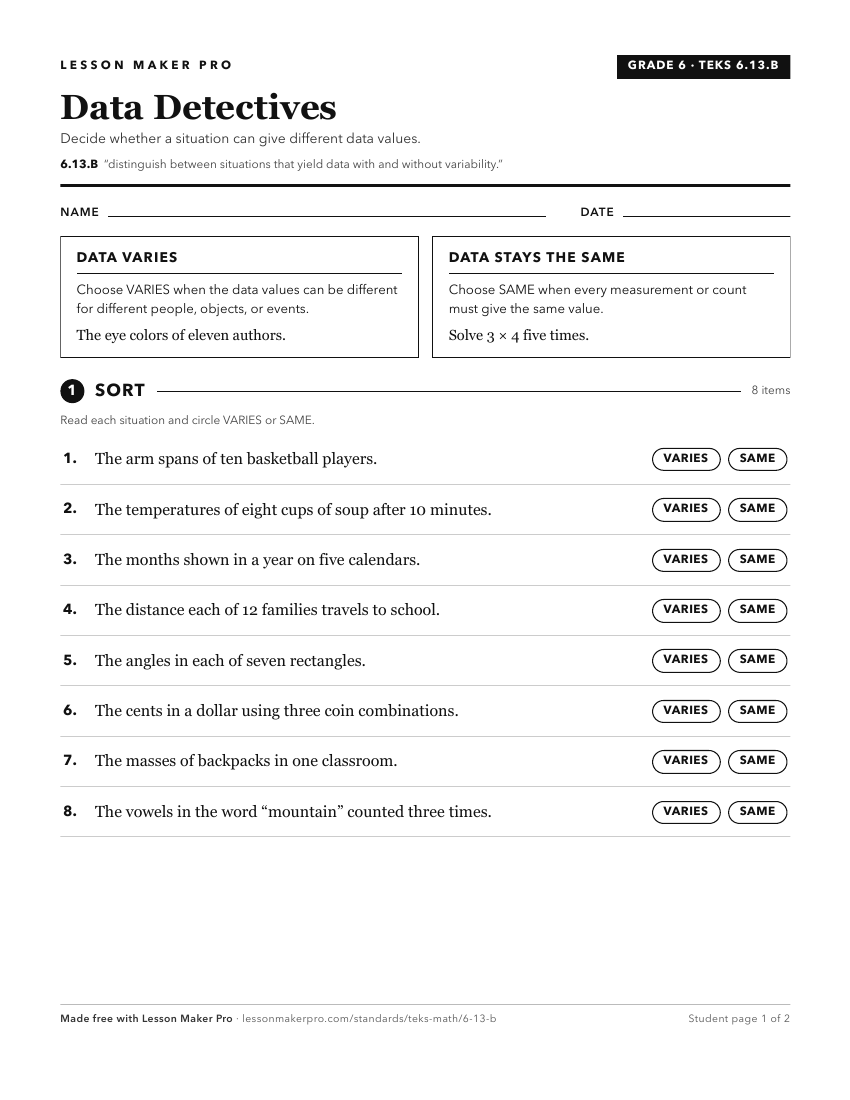
A ready-to-print activity worksheet aligned to 6.13.B, with an answer key for the teacher on its own page. No account needed.
PDF, US Letter, prints cleanly in black and white.
Download the worksheetKeep exploring
Related Standards
- K.7.B
compare two objects with a common measurable attribute to see which object has more of/less of the attribute and describe the difference
- 4.10.A
distinguish between fixed and variable expenses
- 8.5.C
contrast bivariate sets of data that suggest a linear relationship with bivariate sets of data that do not suggest a linear relationship from a graphical repres...
- 6.6.A
identify independent and dependent quantities from tables and graphs
Turn this exact standard into a lesson
Grade, subject, topic, and the complete standard are prefilled. Create one free, no account needed.
Also for this standard:Make a WorksheetMake a QuizMake a Sub Lesson