TEKS Math 1.9.D
The Standard
consider charitable giving
Texas Essential Knowledge and Skills for Mathematics
Teacher's field guide
What This Standard Means
What Students Need to Do
- Students identify ways people can give money, goods, or time to help others. They explain how giving can benefit both the receiver and the giver.
What Mastery Looks Like
- Given a simple situation, students can choose a helpful gift and name who may receive it. They can explain one benefit for the receiver and one positive effect on the giver.
Common Misconceptions
- Students may think people can give only money or expensive items. They may think giving always earns a prize, or that one person must give away everything they have.
How to Assess It
- Use this exit ticket: “Ben gives $2 to an animal shelter. Draw or write how his gift could help Ben and the animals.”
Lesson moves
Ways to Teach It
Give pairs play coins and three charity cards, then have them choose where to donate and explain their choice.
Ask, “How can giving help the person who gives and the person who receives?” and record two student examples.
Play a matching game in which students pair donation cards, such as books or food, with people or groups who could use them.
Show a local food bank wish list, then have students select one item their class could collect and explain why.
Free download
Printable 1.9.D Worksheet
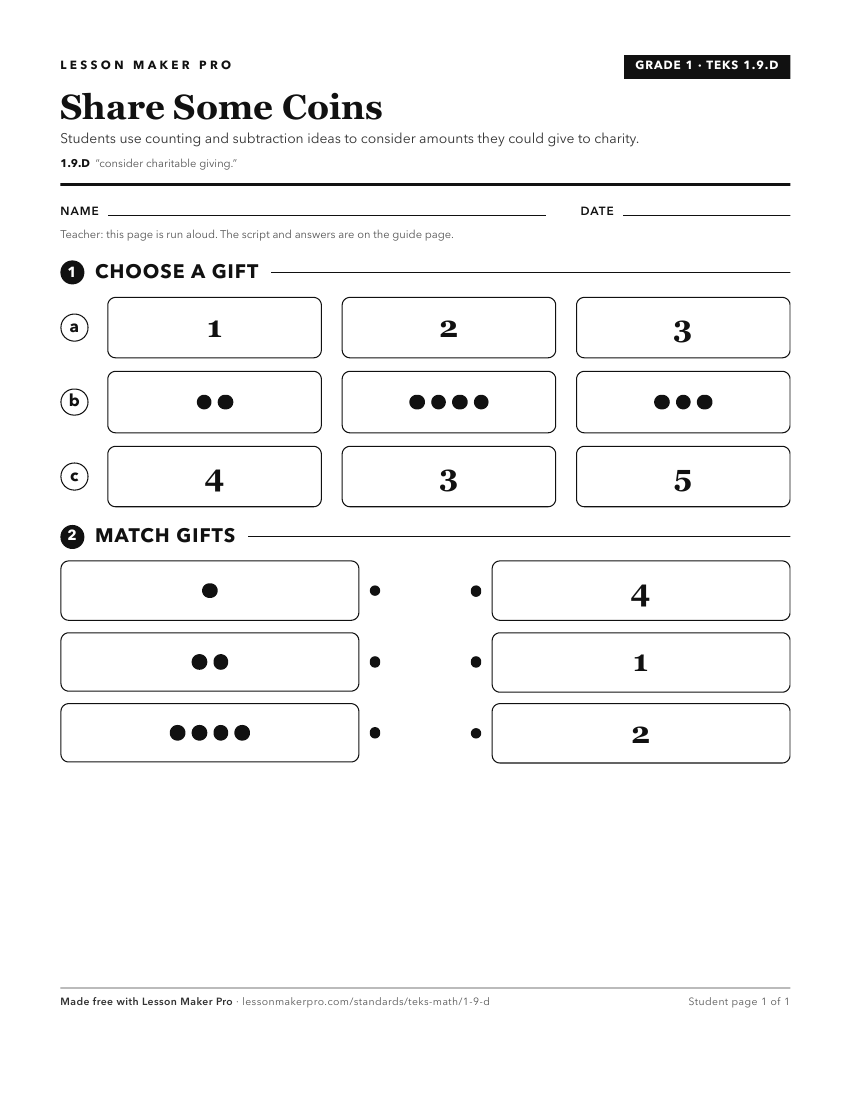
A ready-to-print activity worksheet aligned to 1.9.D, with an answer key for the teacher on its own page. No account needed.
PDF, US Letter, prints cleanly in black and white.
Download the worksheetKeep exploring
Related Standards
- 4.10.D
describe how to allocate a weekly allowance among spending; saving, including for college; and sharing
- 3.9.F
identify decisions involving income, spending, saving, credit, and charitable giving
- K.9.A
identify ways to earn income
- K.9.B
differentiate between money received as income and money received as gifts
Turn this exact standard into a lesson
Grade, subject, topic, and the complete standard are prefilled. Create one free, no account needed.
Also for this standard:Make a WorksheetMake a QuizMake a Sub Lesson