TEKS Math 1.7.C
The Standard
measure the same object/distance with units of two different lengths and describe how and why the measurements differ
Texas Essential Knowledge and Skills for Mathematics
Teacher's field guide
What This Standard Means
What Students Need to Do
- Students measure one object using a shorter unit and then a longer unit. They compare the counts and explain why the shorter unit gives a larger number.
What Mastery Looks Like
- Students measure accurately with no gaps or overlaps and record both results. They explain that shorter units produce a larger count because more units are needed.
Common Misconceptions
- Students may think the larger number means the object became longer. They may leave gaps, overlap units, or mix unit sizes while measuring.
How to Assess It
- Give each student a paper strip, single cubes, and two-cube rods. Have students measure twice, record both counts, and explain why one count is greater.
Lesson moves
Ways to Teach It
Measure a desk with connecting cubes, then with craft sticks, and compare how many of each unit fit.
Ask, “Why might a pencil measure 10 cubes but only 4 paper clips?” Students draw or write an explanation.
Play Unit Match by pairing picture cards of short and long units with reasonable measurement counts for the same object.
Measure a hallway with a child’s steps and an adult’s steps, then explain why the step counts differ.
Free download
Printable 1.7.C Worksheet
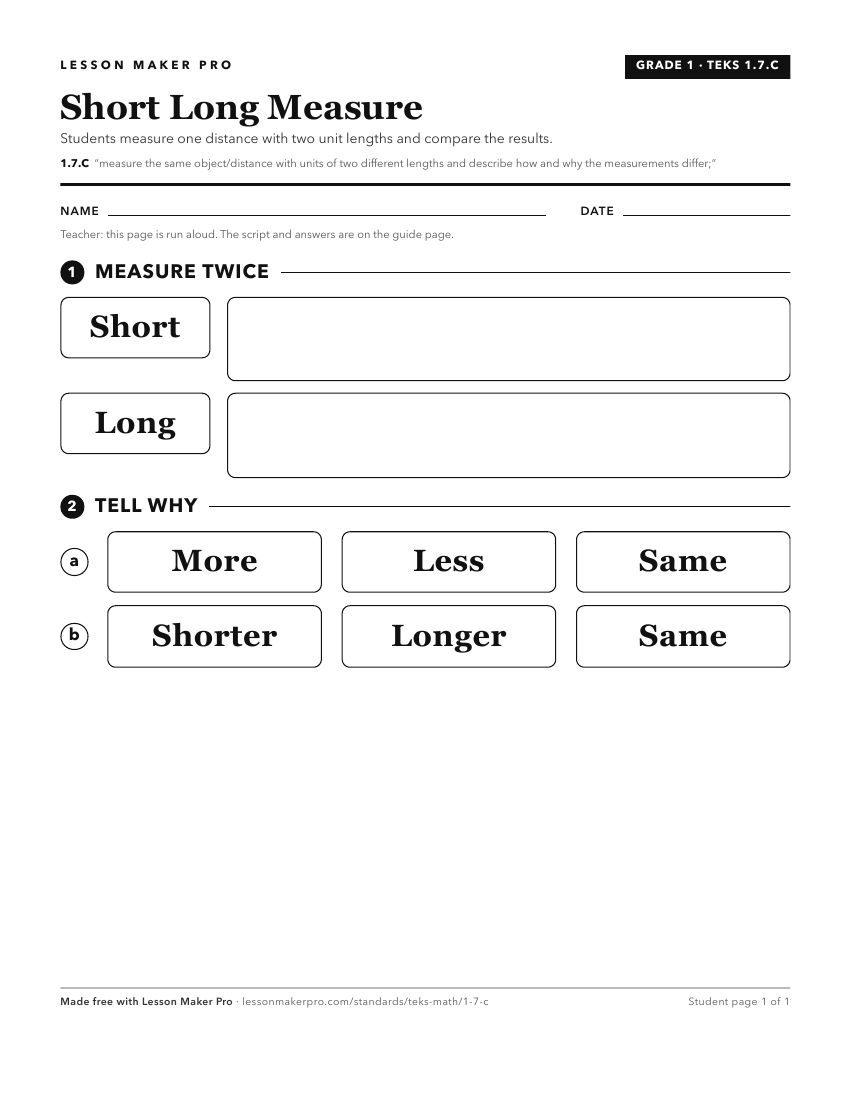
A ready-to-print activity worksheet aligned to 1.7.C, with an answer key for the teacher on its own page. No account needed.
PDF, US Letter, prints cleanly in black and white.
Download the worksheetKeep exploring
Related Standards
- 4.8.A
identify relative sizes of measurement units within the customary and metric systems
- K.7.B
compare two objects with a common measurable attribute to see which object has more of/less of the attribute and describe the difference
- 2.9.A
find the length of objects using concrete models for standard units of length
- 1.7.A
use measuring tools to measure the length of objects to reinforce the continuous nature of linear measurement;
Turn this exact standard into a lesson
Grade, subject, topic, and the complete standard are prefilled. Create one free, no account needed.
Also for this standard:Make a WorksheetMake a QuizMake a Sub Lesson