TEKS ELAR K.8.C
The Standard
discuss main characters in drama
Texas Essential Knowledge and Skills for English Language Arts and Reading
Teacher's field guide
What This Standard Means
What Students Need to Do
- Students name the character or characters the play is mostly about. They tell what each one says, does, wants, or feels, using details from the performance or script.
What Mastery Looks Like
- After hearing or watching a short play, students can name one or more main characters. They support their choices with a clear detail about each character's words, actions, goal, or problem.
Common Misconceptions
- Students may choose the loudest, funniest, or favorite character. They may think the first character shown is always the main character. They may confuse a narrator or helper with the person whose goal or problem shapes the play.
How to Assess It
- Read a three-character play aloud. Ask each student, "Who is the play mostly about, and what did that character say or do that proves it?"
Lesson moves
Ways to Teach It
Use stick puppets to act out a three-character play, then have students hold up the puppet showing the main character.
Ask, "Who is the play mostly about, and what did that character say or do that proves it?"
Play Main or Helper by sorting picture cards from a familiar class play into two labeled hoops.
Compare characters in a school assembly skit, naming whose problem or goal drives what happens.
Free download
Printable K.8.C Worksheet
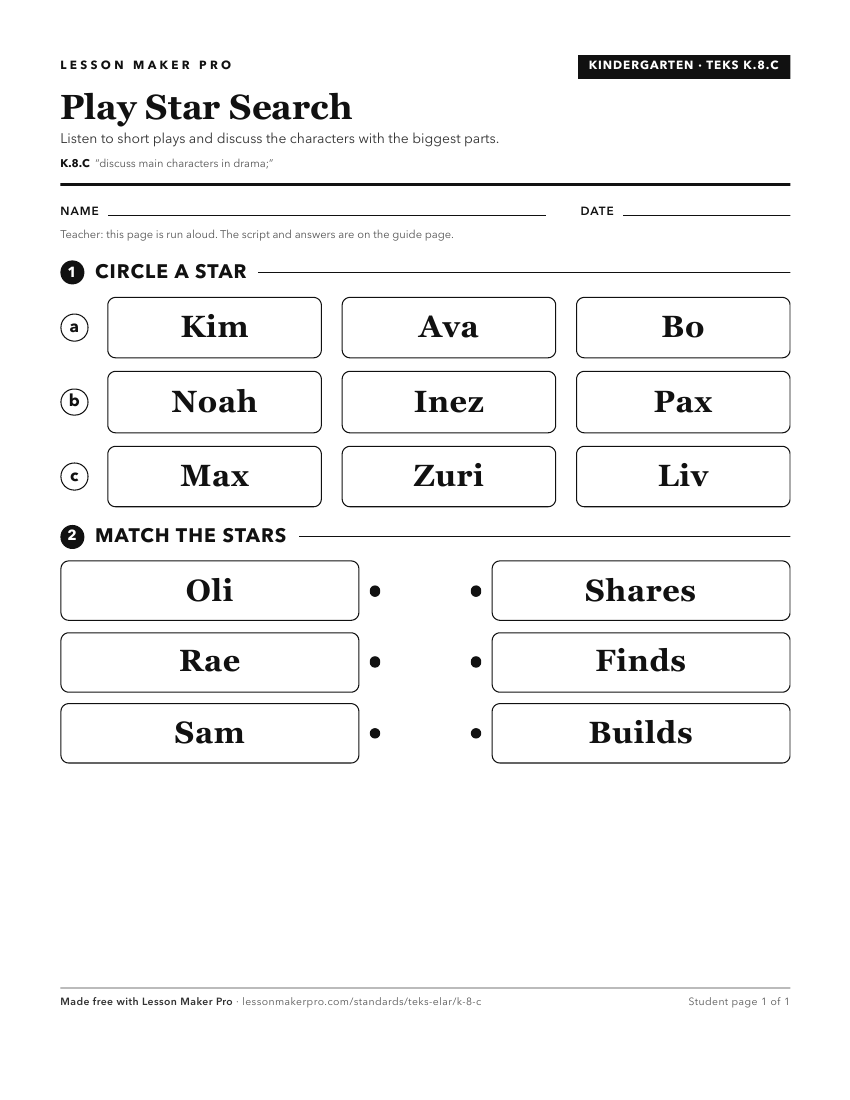
A ready-to-print activity worksheet aligned to K.8.C, with an answer key for the teacher on its own page. No account needed.
PDF, US Letter, prints cleanly in black and white.
Download the worksheetKeep exploring
Related Standards
Turn this exact standard into a lesson
Grade, subject, topic, and the complete standard are prefilled. Create one free, no account needed.
Also for this standard:Make a WorksheetMake a QuizMake a Sub Lesson