TEKS ELAR 1.9.C
The Standard
discuss elements of drama such as characters and setting
Texas Essential Knowledge and Skills for English Language Arts and Reading
Teacher's field guide
What This Standard Means
What Students Need to Do
- Students identify who appears in a play and where or when the action takes place. They share clues from the script or pictures that support their ideas.
What Mastery Looks Like
- Students name the characters in a short play and tell where or when the scene happens. They point to dialogue, stage directions, or pictures that support their answers.
Common Misconceptions
- Students may confuse the actor with the character being played. They may name a place from an illustration without using dialogue or stage directions as evidence.
How to Assess It
- Give students a four-line scene with two named speakers and one setting clue. Ask, “Who are the characters, and where does the scene happen?”
Lesson moves
Ways to Teach It
Give pairs puppets and a paper backdrop, then have them act out a short scene and name each character and setting.
After reading a scene, ask, “How would the story change if one character or the setting changed?”
Play a card sort using character cards and setting cards from three familiar classroom plays.
Watch a short weather report, then identify the people on screen and describe the studio setting using visible clues.
Free download
Printable 1.9.C Worksheet
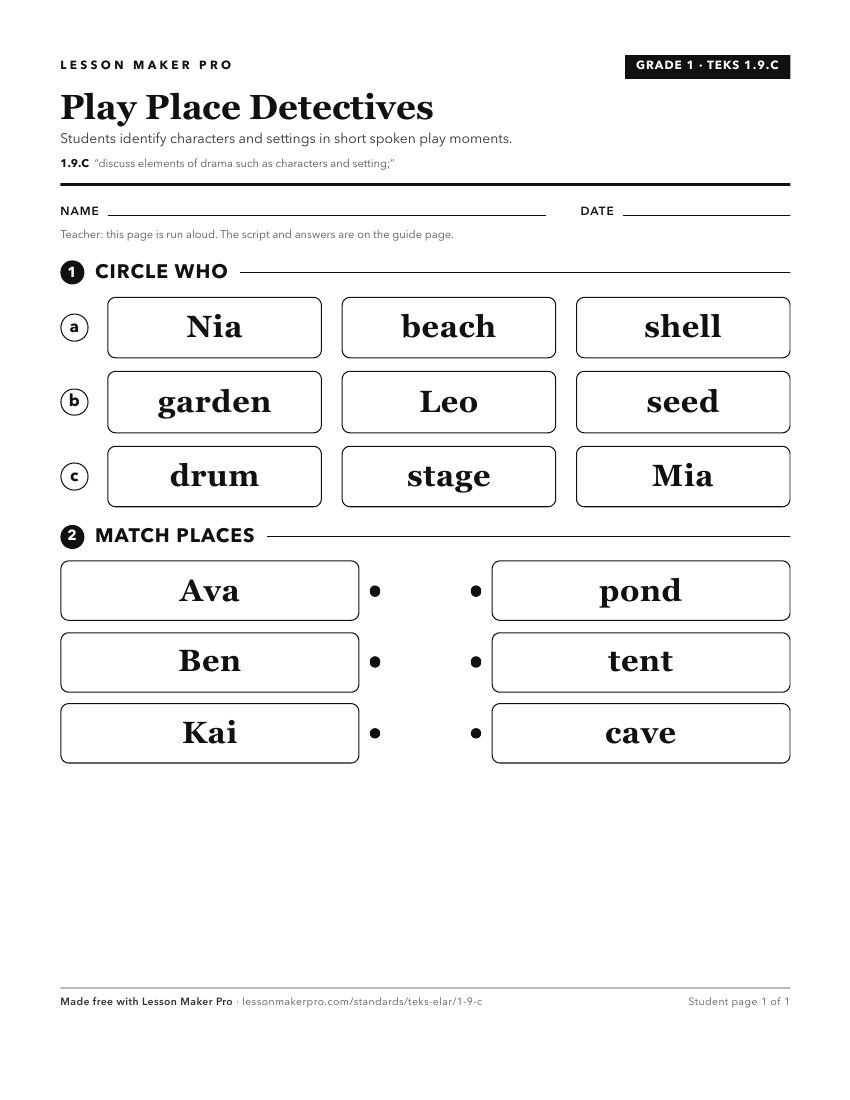
A ready-to-print activity worksheet aligned to 1.9.C, with an answer key for the teacher on its own page. No account needed.
PDF, US Letter, prints cleanly in black and white.
Download the worksheetKeep exploring
Related Standards
Turn this exact standard into a lesson
Grade, subject, topic, and the complete standard are prefilled. Create one free, no account needed.
Also for this standard:Make a WorksheetMake a QuizMake a Sub Lesson